Summary at a glance
Guava is a free-first symptom and records tracker, not a testing service — it aggregates data you already generate rather than selling labs or hardware.
The single most-praised feature is records aggregation: users report full histories importing within minutes, retiring the three-ring binder.
The free tier is unusually generous, and Premium ($8/month or $78/year) adds AI insights, auto-correlations, and lab auto-import.
The most common friction is a busy home screen that overwhelms new users, plus an inability to edit imported data that forces double-logging.
This review aggregates public sentiment from app stores, Reddit, and Trustpilot — it is not first-hand testing.
This review aggregates publicly available user sentiment about Guava Health from app-store reviews, Reddit threads, and Trustpilot. It is not first-hand testing of the app, and it is not medical advice. Pricing and feature facts come from Guava's own published information, verified 2026-07-16. Health-tracking correlations are associations, not diagnoses — talk to a qualified clinician before acting on any pattern you find.
The quick verdict
Guava Health is a symptom and medical-records tracker that pulls your health data into one place. It syncs your wearables, imports records from patient portals, and looks for correlations between what you log and how you feel.
Guava does not test anything. It sells no labs and no measurement hardware beyond a few NFC tags. What you get out depends entirely on the data you already generate.
Across app stores, Reddit, and Trustpilot, the sentiment is strongly positive, especially from people managing chronic illness. Reviewers describe it as the one app that finally holds everything, and they repeatedly single out how generous the free tier is apps.apple.com.
The complaints are real but narrow. A busy home screen scares off some new users, you cannot edit imported data, and one recent reviewer questioned the accuracy of synced sleep data trustpilot.com. The people who keep using Guava do not treat these as dealbreakers.
Guava aggregates the health data you already have. It does not measure or test anything itself, so what you get out depends on the wearables and records you connect.
Best for chronic-illness patients and health-data enthusiasts who want to consolidate records and find symptom triggers. It does not suit anyone wanting at-home lab testing or a wearable that measures biomarkers.
Guava Health (free tier)It centralizes medical records, symptoms, medications, and wearable data in one searchable place, and gives away for free what many rival apps paywall. Reviewers managing complex conditions consistently call it the app that finally holds everything.
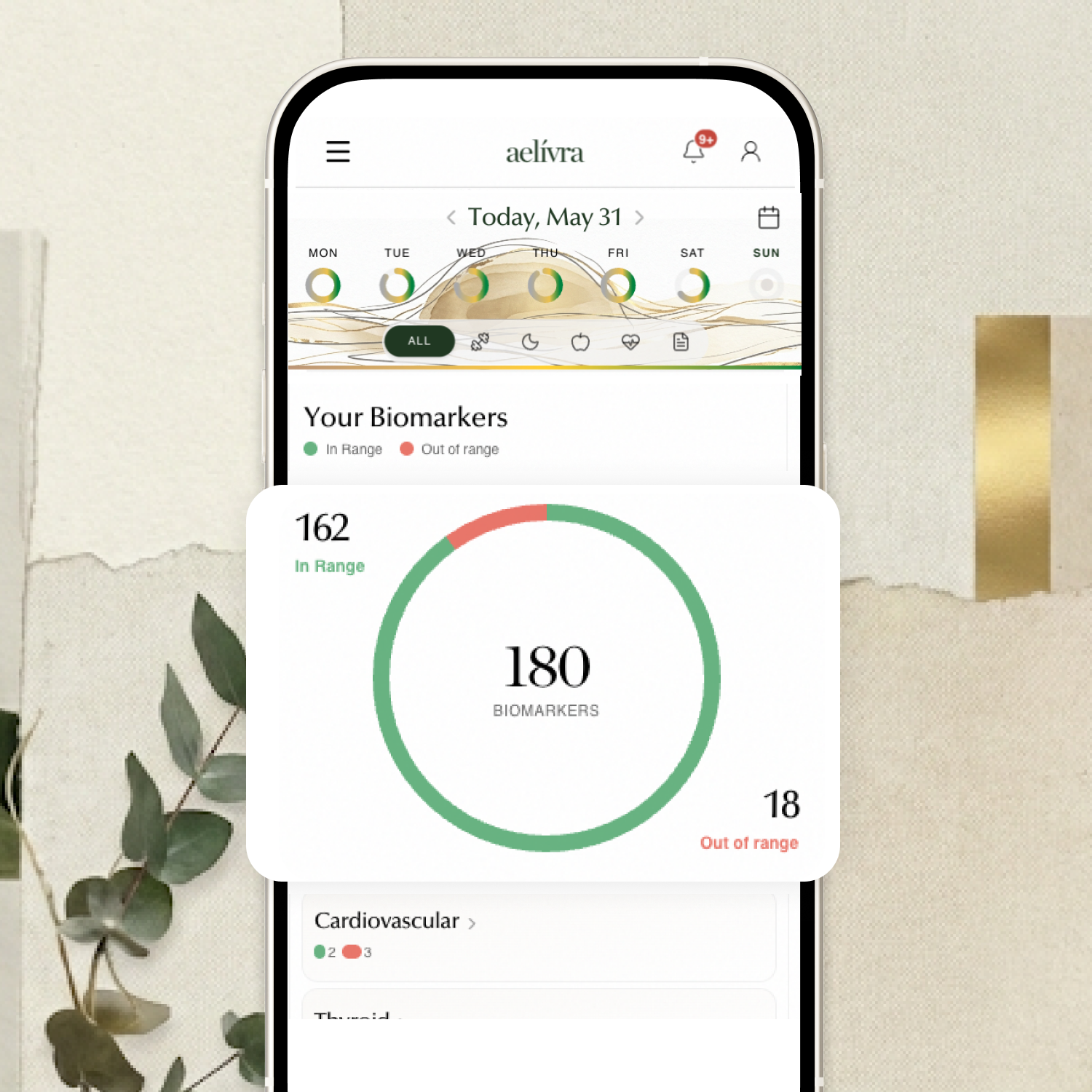
Blood work, scans, test results, medical reports — finally in one place and connected to how you actually feel. aelívra tracks biomarkers and health records over time, so you can see what's trending in the right direction and walk into your next appointment knowing exactly what to discuss.
What is Guava Health?
Guava is a personal health-tracking app for iOS, Android, and web, available in 20+ languages. It does three main things.
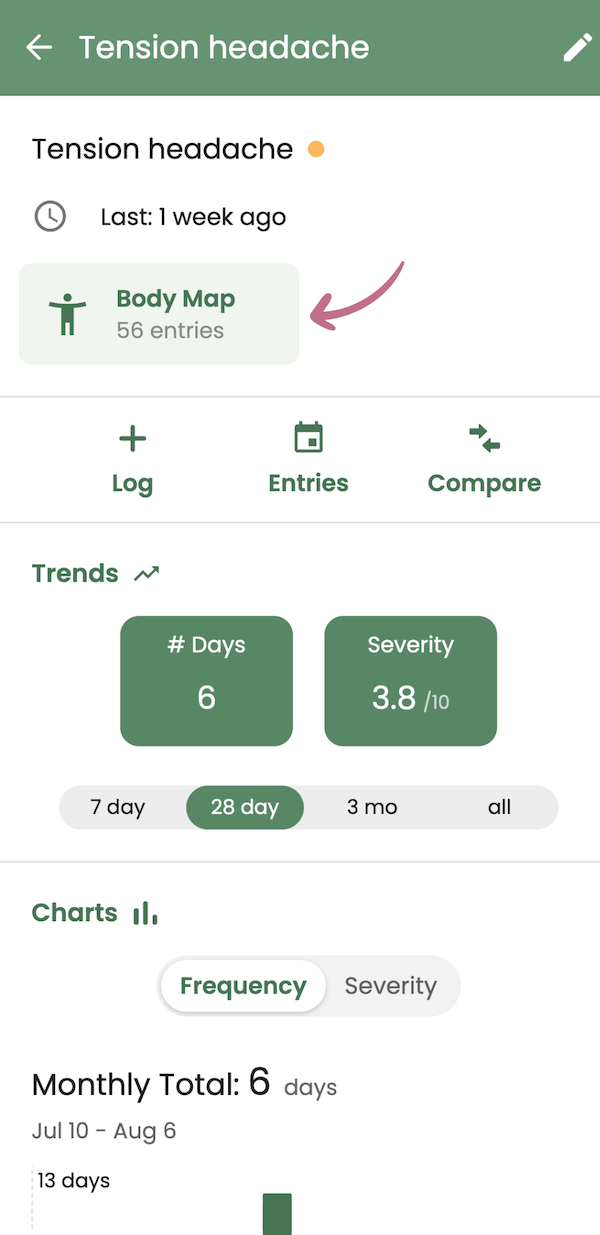
It tracks. You log symptoms on a body heat-map, plus medications, mood, menstrual cycle, food, and custom factors. Reviewers say this breadth is a real draw. One App Store user notes it "tracks my cycle better than most period apps, can log caffeine, medication, symptoms with image of exact place of pains" apps.apple.com.
It aggregates. Guava pulls medical records and labs from patient portals across US health systems, plus data from 18+ named wearables and CGMs like Oura, WHOOP, Garmin, Withings, and Dexcom. Guava has no sensor of its own. It displays HRV and sleep from whatever device you connect.
It correlates. The app looks for associations between your logged data and your symptoms. Guava states in the app that these are associations and do not prove causation.
The audience skews toward chronic and complex illness. Across Reddit, Guava comes up often in communities for POTS, Ehlers-Danlos, and related conditions. As one r/ehlersdanlos commenter put it in a 2024 thread, "guava app! it tracks literally everything/ doctor's appointments, meds, diagnoses, symptoms, and vitals, and you can search/cross reference a lot of it! it's helped me tremendously" reddit.com.
 Guava Health brand banner
What does Guava Health cost?
Guava runs on a freemium model, and the free tier is its main selling point.
Free: $0. You get medical-records sync from patient portals, device and app sync, full symptom/med/cycle/food/activity tracking, summaries and trends, up to 3 pinned correlations, record sharing with doctors or family, document and imaging uploads, 20+ languages, and no ads.
Premium: $8/month, or $78/year (save 19%). This adds the Guava Emergency Card, automatic health insights with unlimited pins, unlimited profile managers for families and caregivers, auto-import of lab results from uploads, the Guava Assistant AI for visit prep and records questions, and Photo AI food nutrient detection.
Family Plan. This plan gives discounted Premium across multiple family members. Guava has not published the price.
Provider Dashboard (B2B). Provider signup is free. The dashboard is $60/month for 10 patients, then $6/month per additional active patient, with bulk discounts up to 50% for larger practices.
The free tier includes a lot. Several long-term users say they never upgrade. One r/ehlersdanlos user explained in a 2025 thread that Guava emails a free monthly recap of trends: "I don't pay for premium to get the auto insights, I find the free monthly ones are good enough" reddit.com. Others pay and find it worth it. A r/disability commenter wrote in 2024, "I do pay for it -- but i think the insights are worth the cost" reddit.com.
The free tier covers records sync, tracking, and a monthly correlation recap. Premium mainly unlocks the AI assistant, auto-correlations, and lab auto-import. Try free first and upgrade only if you want those.
Free
USD $0
Premium
USD $8/month (USD $78/year, save 19%)
Family Plan
discounted Premium (price not published)
Provider Dashboard (B2B)
provider signup free; USD $60/month (10 patients incl., +$6/mo per additional active patient; bulk discount up to 50% for larger practices)
Free
sync patient-portal medical records; sync fitness/medical devices & health apps; track symptoms/meds/cycle/food/activity; summaries + trends + correlations (up to 3 pinned; 2 weeks weather data); share records with doctors or family; upload documents & medical imaging; 20+ languages on web/iOS/Android; no ads
Premium
everything in Free; Guava Emergency Card; automatic health insights (auto-correlations + unlimited pins/weather); unlimited profile managers for families/caregivers; auto-detect & import lab results from uploads; Guava Assistant AI (visit prep; data entry; records Q&A); Photo AI food nutrient detection
Family Plan
Premium features across multiple family members
Provider Dashboard (B2B)
HIPAA-compliant clinical dashboard; labs unified from 100,000+ health systems; AI patient-monitoring; premium patient app for clinic's patients
What users consistently praise
Five themes recur across the sources.
Records aggregation is the most praised feature. Reviewers praise it far more than any other capability. One App Store reviewer describes it: "It pulls together your tests and doctors' notes from all the hospital system, lab company, and medical office portals. You can search, display, and if you want, download your records in clear, organized formats" apps.apple.com. Another was struck by the speed: "Within three minutes of installing Guava, I had records SINCE THE DATE OF MY BIRTH in the app" apps.apple.com.
It helps people with complex illness. Reviewers with hard-to-diagnose conditions call it life-changing. One App Store user credits it with a diagnosis: "My guava app alerted me of the correlation and I brought it to my doctor. I have since received a diagnosis... and have received treatment that I otherwise wouldn't have got without this important data" apps.apple.com. On Reddit, an r/POTS poster wrote in 2025, "I just recently found Guava and it genuinely changed my life", and added, unprompted, "i PROMISE this is not an advertisement" reddit.com.
The free tier gives away what others charge for. One App Store reviewer wrote: "What they offer for free most apps make you pay" apps.apple.com.
Developer support is unusually personal. Reviewers are often surprised by this. "one of the creators of the app responded personally to my generic customer service ticket and wrote back and forth with me several times until and after my issue was resolved," one App Store user wrote apps.apple.com. A long-term Trustpilot reviewer said the same in 2026: "Guava developers are indeed very responsive to requests or troubleshooting" trustpilot.com.
Correlations turn logging into insight for some users. For them, this is the main benefit. "having the auto correlations was a game changer! It gives you information about symptoms, patterns etc that is actually actionable," one App Store reviewer wrote, citing HRV, air pressure, and cycle-day energy apps.apple.com.
The pros-and-cons summary below balances this praise against the friction covered in the next section.
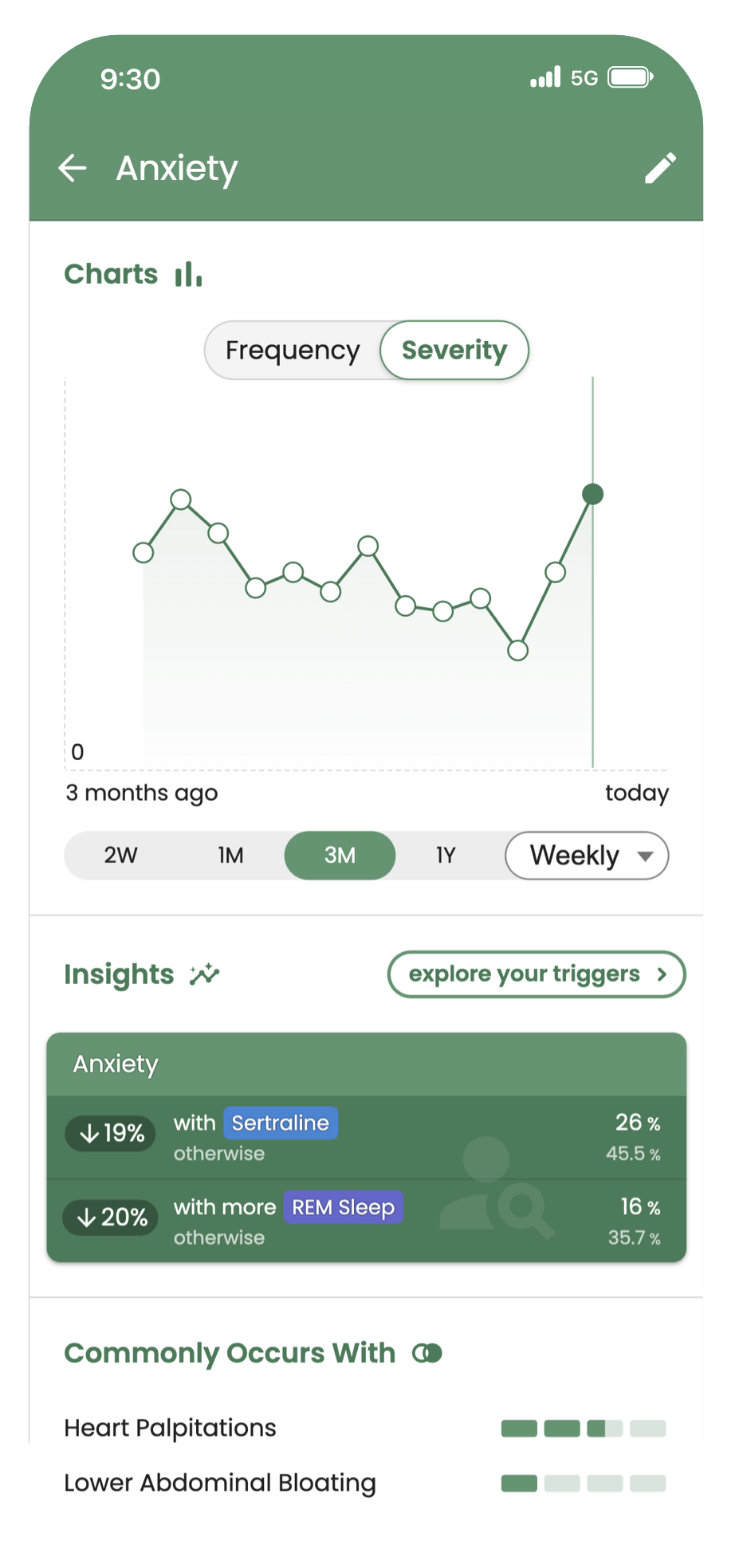 Guava Health app on a phone showing symptom tracking
Guava Health
Records aggregation pulls labs and doctor notes from many patient portals into one searchable place, often importing full histories in minutes
Capable free tier with records sync, tracking, sharing, 20+ languages, and no ads
Broad, customizable tracking of symptoms, meds, mood, and cycle; several users say it beats dedicated period apps
Unusually responsive developers who reply personally and ship requested features
Trusted on privacy: HIPAA-compliant and does not sell data
Guava does no testing and has no sensors of its own, so HRV, sleep, and vitals are only as good as the device you sync
Busy home screen overwhelms some new and brain-foggy users on first open
You cannot edit imported data in-app, which forces double-logging
Correlation insights delight some users and feel useless to others
AI assistant, auto-correlations, and lab auto-import sit behind Premium
Common complaints
The negatives are narrower than the praise, and most concern onboarding and imported data.
The home screen overwhelms new users. This is the most-cited friction, and it affects the people Guava targets: those with brain fog or ADHD. An r/ehlersdanlos commenter described it in a 2024 thread: "There's just so much going on with the Home Screen or whatever you call it currently on my guava app that instantly makes my brain go 'yeah maybe later' and then I never do" reddit.com. The same thread points to a fix. A power user admitted, "I currently use Guava but I had to customize it in every way before it became usable," before calling it "the best tracker out there" reddit.com. The friction comes from the initial setup.
You cannot edit imported data. This is a practical annoyance. "I also wish it let you edit imported data in the app, instead of me having to double log," one Google Play reviewer wrote play.google.com.
Correlations do not work for everyone. Some users love the insights, and others find them useless. "It says it can find correlations between various health factors; I've never found these to be useful," one App Store reviewer wrote apps.apple.com. Another Google Play user flagged a specific flaw: "I don't like that it averages out your self reported energy levels to draw correlations - I have highs and lows, and it ends up averaging to a 3 every day so I don't use it" play.google.com.
Some functions are hard to find. This is a minor complaint. "Sometimes functions are a little hard to find in the interface, especially download options. But they are there if you look," one App Store reviewer wrote apps.apple.com.
One recent, disputed accuracy complaint. The sources contain a single substantive complaint about data accuracy, a Trustpilot 1-star from June 2026: "my Oura Ring and Apple Watch both showed 8+ hours of sleep, but Guava displayed around 5–6 hours and claimed the data came from my Apple Watch" trustpilot.com. Guava's public reply attributes the gap to later sleep stages that had not yet synced. It is one recent, disputed report, and no other source repeats it. Weigh it as a single data point.
Even reviewers who criticise the design rate Guava highly overall. As one App Store reviewer put it, comparing it to a rival: "I will admit that Bearable's UI & UX is a bit more visually appealing and intuitive, but Guava reigns supreme in literally every other way" apps.apple.com.
Guava has no sensors of its own. HRV, sleep, and vitals are only as accurate as the wearable you connect. One recent reviewer reported synced sleep hours that diverged from their Oura and Apple Watch.
Who Guava is for and who it is not
Guava fits you if you are managing a chronic or complex condition and want one place for records, symptoms, meds, and wearable data. Chronic-illness communities recommend it over rivals repeatedly. An r/ehlersdanlos commenter in a 2025 thread said, "Guava! You can track literally everything, it hooks up to records from multiple places, and it's free. 10/10 recommend" reddit.com. Another user switched to it from the Visible armband specifically for symptom tracking in a 2025 thread reddit.com.
It also fits data enthusiasts who already own wearables and want to centralize everything. A Garmin user in a 2025 thread said the emailed monthly recap is what keeps them logging reddit.com.
Guava is not for you if you want the app to measure something. It only aggregates data you already generate. If you are after at-home lab testing or a wearable that reads your biomarkers, Guava is the wrong tool.
It may also frustrate you if you want a polished experience out of the box. Expect to spend time customizing the setup before it works well for you. A minority avoid it for privacy reasons. One r/ehlersdanlos user in a 2025 thread admitted, "I do lowkey have concerns about linking up all my medical records with a private company so I've kind of avoided it for a bit" reddit.com. Most users still feel positive about Guava's privacy.
 Guava Health app symptom heat-map screen
How we researched this review
This review aggregates public user sentiment. We have not used the app ourselves. Every experiential claim above quotes a real reviewer verbatim and names its source.
We gathered the sources on 2026-07-16 from four source types:
App stores (the substantive base). Apple's US App Store shows 4.8/5 across roughly 820 ratings, with 10 full-text reviews captured verbatim. Google Play shows 4.6/5 across about 1,600 reviews and 100,000+ downloads, with 3 individual reviews rendered. Neither store surfaces per-review dates, so we treat every app-store quote as possibly old.
Reddit (the community signal). We read 10 full chronic-illness threads, 152 comments in total, across r/POTS, r/ehlersdanlos, r/eds, r/adhdwomen, and r/disability. Guava is mentioned in roughly 20 comments and is consistently recommended. Comment dates span June 2023 to April 2026; most are more than 12 months old, so we label those quotes with their thread year.
Trustpilot (a thin footprint). This is a small sample: a TrustScore of 3.4 across just 3 reviews. We do not weight that 3.4 against the roughly 2,400 app-store ratings. Two are 5-star and one is a detailed, recent 1-star. That single review is the only substantive accuracy complaint in all our sources, so we cite it as one named data point.
What we could not find. No independent long-form journalist or blogger review with a purchase disclosure surfaced. The social results were Guava's own or promotional, so none are used here.
Two caveats apply. First, the app-store sentiment skews strongly positive, and Guava's developers reply personally to reviewers. Weigh the praise with that in mind, although nothing in our sources looks like coordinated fake reviews. Second, Guava ships features quickly, so any product limitation described here reflects the mid-2026 snapshot and may already have changed.
Frequently asked questions
Is Guava Health free?
Yes, and the free tier is unusually complete. It includes records sync, full tracking, up to 3 pinned correlations, sharing, and no ads. Premium is $8/month or $78/year and adds AI insights, auto-correlations, and lab auto-import.
Does Guava test my blood or measure my vitals?
No. Guava sells no labs and no measurement hardware beyond NFC tags. It aggregates data from records and from wearables you already own. HRV, sleep, and vitals are only as accurate as the device you connect.
Which wearables does Guava sync with?
It syncs 18+ named devices including Oura, WHOOP, Garmin, Withings, and Dexcom, plus thousands more apps through Apple Health, Health Connect, and Google Fit.
Is my data private?
Guava is HIPAA-compliant and states it does not sell data. Reviewers cite this as a reason they trust it. One Google Play user noted it "doesn't share my personal information which is huge because the other health apps I looked at do" play.google.com. A minority still hesitate to link all their records to a private company.
Is Guava good for chronic illness like POTS or EDS?
This is its strongest use case. It comes up repeatedly and positively in POTS and Ehlers-Danlos communities, with a clear focus on chronic conditions. Expect to spend some time customizing the setup before it feels usable.
Sources

Cameron founded aelívra after years of living an unknown no one could answer — navigating chronic health complexity through a medical system that wasn't built for it. That experience became a conviction: everyone deserves to feel truly alive, and no one should have to accept not knowing as a way of life. His work sits at the intersection of data science and functional health and wellbeing, turning the latest trusted medical research across news, health, wearables, biomarkers, and more into advice everyday people can use on their journeys toward feeling better. Every article is grounded in peer-reviewed evidence and linked to its primary source. This content is for informational purposes only and does not replace medical advice.