Summary at a glance
The 2026 wellness optimization backlash represents a shift away from obsessive health tracking toward emotional repair.
Hyper-focusing on perfect device metrics often leads to orthosomnia and worsens actual health outcomes.
Digital fatigue occurs when disjointed health data creates cognitive overload instead of actionable insights.
Using wearable data as an informative reference rather than an absolute truth helps reduce tracking anxiety.
This article provides general information about wellness tracking fatigue and digital health trends. It is not intended to replace professional medical advice, diagnosis, or treatment for anxiety, orthosomnia, or other sleep disorders. Always consult a healthcare provider regarding mental health concerns or significant changes to your wellness routines.
What Is the Wellness Optimization Backlash of 2026?
The 2026 wellness optimization backlash is a cultural shift away from obsessive health tracking toward emotional repair. The Global Wellness Summit (2026) reports that wellbeing has shifted from a felt experience to a performance metric globalwellnesssummit.com. People are actively pushing back against data fatigue, choosing intuitive health management over rigid device scores.
This backlash is a direct rejection of performance-driven health tracking. People are tired of treating their bodies like machines.
Jessica Smith, Wellness Trend Report Author at the Global Wellness Summit (2026), notes that wellness spaces will prioritise meaning over measurement globalwellnesssummit.com.
Health tracking often creates a relentless cycle of checking scores. This constant monitoring separates users from their actual physical sensations. MedCity News (2026) reports that 70% of patients are tuning out digital messages because they receive too many across channels medcitynews.com. The sheer volume of notifications causes complete disengagement. Patients feel overwhelmed by disjointed data that fails to provide clear next steps.
Can Tracking Your Health Actually Cause More Anxiety?
Tracking health data can directly increase anxiety when users fixate on achieving perfect numbers. This hyper-focus creates a feedback loop that worsens the very metrics being measured.
Obsessive tracking often leads to orthosomnia.
Sabra M. Abbott, MD, PhD at Northwestern Medicine states that obsessively chasing perfect sleep can create stress that makes it harder to sleep nm.org. A person wakes up feeling rested but then sees a low sleep score. That single number can ruin their mood and increase daytime stress.
Northwestern Medicine (2025) reports that 35% of Americans have used an electronic sleep tracker nm.org. Many users find that constant feedback from these devices actually creates new sleep problems nm.org.
Orthosomnia occurs when the pursuit of perfect sleep data actively disrupts rest.
What Are the Symptoms of Orthosomnia and Tracking Fatigue?
Orthosomnia and tracking fatigue present in several ways. People might experience physical tension and emotional exhaustion. They may also notice a heavy reliance on wearable data to validate how they feel.
Recognising the signs of data fatigue helps users step back. Look for these common patterns:
| Symptom | Presentation |
|---|---|
| Score Dependency | Trusting a device score over actual physical sensations. |
| Morning Anxiety | Feeling immediate stress when checking sleep data upon waking. |
| Behaviour Rigidity | Refusing social events because they might disrupt a wellness streak. |
| Cognitive Overload | Feeling overwhelmed by conflicting data from multiple apps. |
Treating wellness as a task to perform correctly often separates people from their internal cues.
Ignoring physical hunger or tiredness to maintain a digital wellness streak is a clear sign of optimization fatigue.
How Can You Use Health Data Without Feeling Stressed?
People can use health data without stress by treating it as a reference point rather than an absolute truth. The goal is to build a broader picture of healthy habits.
aelívra helps users track symptoms with context. It connects wearable data to daily life without reducing wellbeing to a single pass-or-fail score. Users can see the patterns connecting sleep, stress, diet, and energy. Patients can bring an aelívra summary to their next appointment.
Wearable data should be informative, not authoritative.
Mapping sleep, diet, and stress alongside physical symptoms reveals the triggers driving those feelings. This approach provides certainty without the pressure of constant optimisation. For more context on balanced routines, read our guide on best intermittent fasting for weight loss.
Limit checking wearable data to once per day to reduce cognitive load and prevent score obsession.
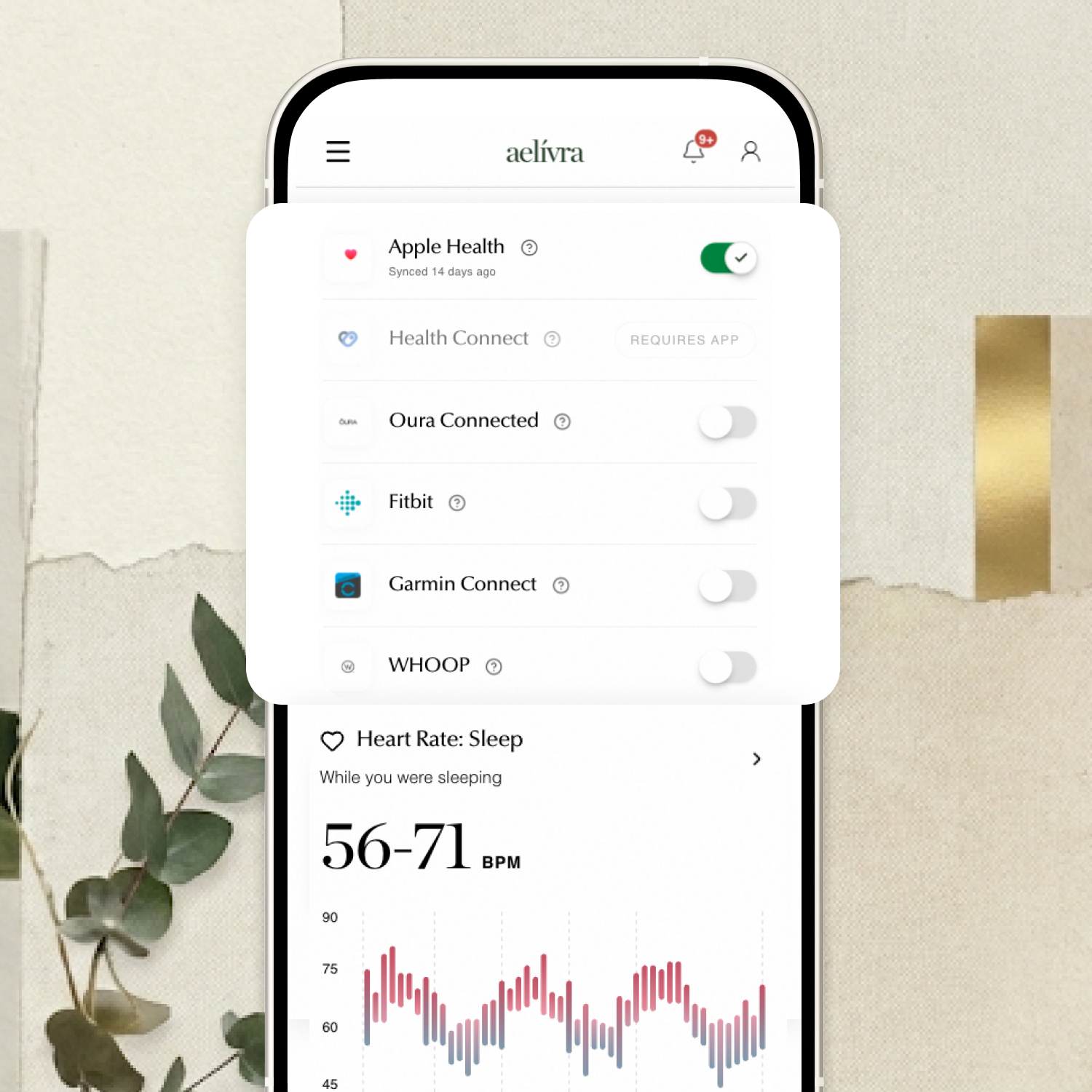
Make the most of your wearables. HRV, resting heart rate, and sleep stages can finally mean something. aelívra connects 500+ wearables and apps (Oura, Apple Health, Garmin, Fitbit, Whoop) and maps that data directly against how you actually feel — your syptoms and your wellbeing first, always.
Why Do Most People Stop Using Wearable Devices?
Most people stop using wearables due to cognitive overload and anxiety. Constant notifications and rigid scoring systems can erode mental health and cause digital fatigue.
What is orthosomnia?
Orthosomnia is an unhealthy obsession with achieving perfect sleep driven by tracker data. It often creates stress that makes sleeping more difficult.
How do people recover from tracking fatigue?
Taking a break from devices for a few days offers immediate relief. Many find success by focusing on natural physical feelings and limiting data checks to once a week.
Sources

Cameron founded aelívra after years of living an unknown no one could answer — navigating chronic health complexity through a medical system that wasn't built for it. That experience became a conviction: everyone deserves to feel truly alive, and no one should have to accept not knowing as a way of life. His work sits at the intersection of data science and functional health and wellbeing, turning the latest trusted medical research across news, health, wearables, biomarkers, and more into advice everyday people can use on their journeys toward feeling better. Every article is grounded in peer-reviewed evidence and linked to its primary source. This content is for informational purposes only and does not replace medical advice.