Summary at a glance
WHOOP is the closest match for Oura's recovery-and-readiness focus, with nightly HRV and strain scoring for $199 a year, hardware included.
Garmin is the strongest pick if you want deep sleep and HRV data with no monthly subscription, starting at $249.99.
Apple Watch trades multi-day battery for an ECG, ecosystem integration, and broad all-round health tracking from $249.
Visible is built for people pacing energy-limiting illness, using a morning HRV check-in and a Stability Score rather than fitness scoring.
If your goal is understanding the numbers rather than collecting more of them, a phone-first platform that syncs your existing wearable can be the better move.
This article compares consumer sleep, HRV, and recovery trackers and is for general education only. It is not medical advice, and it is not based on first-hand device testing. Wearable readiness and HRV metrics are wellness signals, not diagnostic tools. Talk to a qualified clinician before making decisions about sleep problems, heart-rhythm concerns, cycle changes, or a chronic condition such as ME/CFS or Long Covid.
Why do people switch from the Oura Ring?
Most people leave Oura for one of three reasons: the ongoing subscription, the battery, or the workout gap. The Oura Ring 4 costs $349 up front, then adds a $5.99-a-month membership to unlock its scores and trends ouraring.com. Many buyers object to that recurring fee.
The ring is discreet and tracks sleep accurately, which is why people bought it ouraring.com. The ring was not built to show live metrics during a hard workout. Serious exercisers often want strain and effort data on the wrist.
Battery wear is the third theme. A ring's small cell degrades over the years, and there's no room for a bigger one.
Several other trackers now cover the sleep and readiness tracking Oura does well. Some drop the subscription. Some add workout depth. One needs no new hardware.
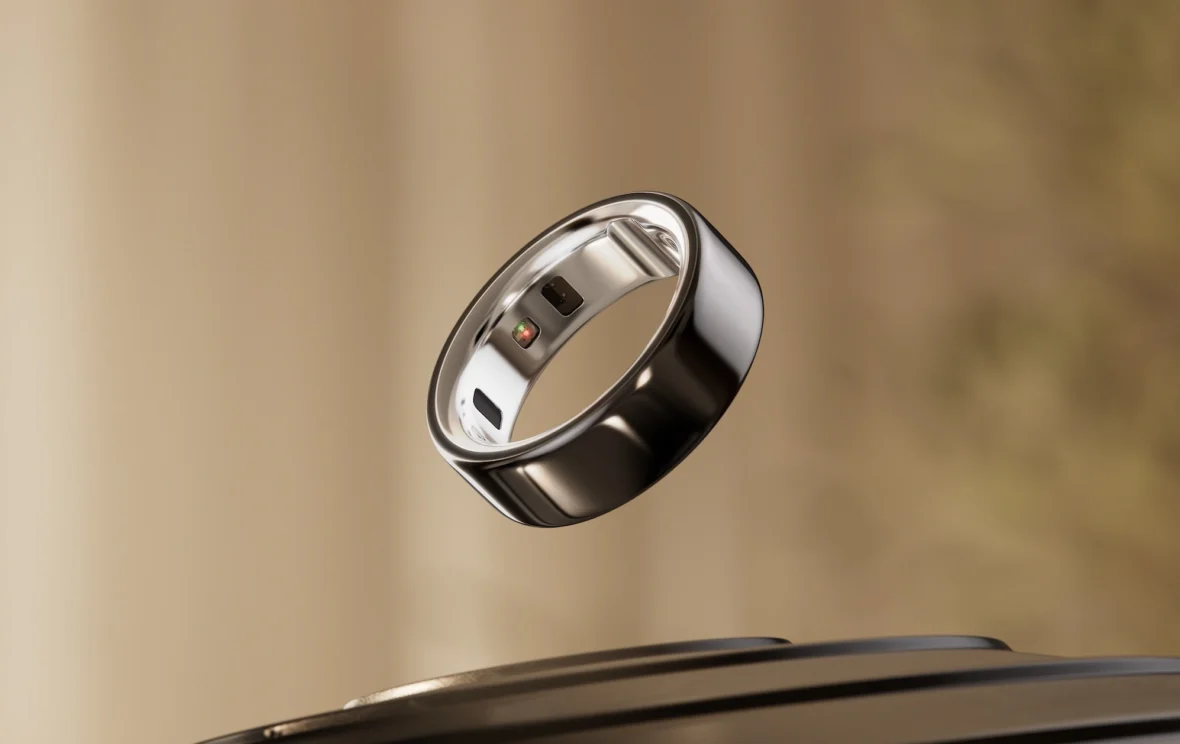 The Oura Ring 4 shown suspended mid-air
 What should you look for in an Oura Ring alternative?
Choose the alternative that does the job you want. Oura's core strengths are overnight HRV, sleep staging, and a readiness score you check in the morning ouraring.com. Start there, then weigh four things.
Cost model. Some trackers are a one-off purchase. Others fold the hardware into a yearly subscription, or add a monthly fee on top of the device.
Sleep and HRV depth. If sleep is your main goal, look for validated sleep staging and continuous or nightly HRV. A once-a-day snapshot tells you less.
Battery and form. Rings and bands last days. Full smartwatches often need a nightly charge, which can conflict with sleep tracking.
Who it's built for. A recovery tracker for athletes and a pacing tool for chronic illness use the same sensors for very different goals. Pick the one built for your goal.
Oura's advanced scores sit behind a $5.99 monthly membership on top of the $349 ring price. Every subscription-free alternative below removes that recurring cost.
WHOOP: the closest recovery-and-readiness match
WHOOP is the nearest thing to Oura. It's a screen-free band focused on recovery, sleep and strain, with no notifications whoop.com. You pay a yearly membership that includes the band, starting at $199 a year whoop.com.
It reads HRV nightly during your deepest sleep and turns that into a daily Recovery score, much like Oura's readiness whoop.com. The downside is its focus. WHOOP puts heavy weight on strain and performance. That focus suits athletes but can feel intense if you want gentle sleep insight.
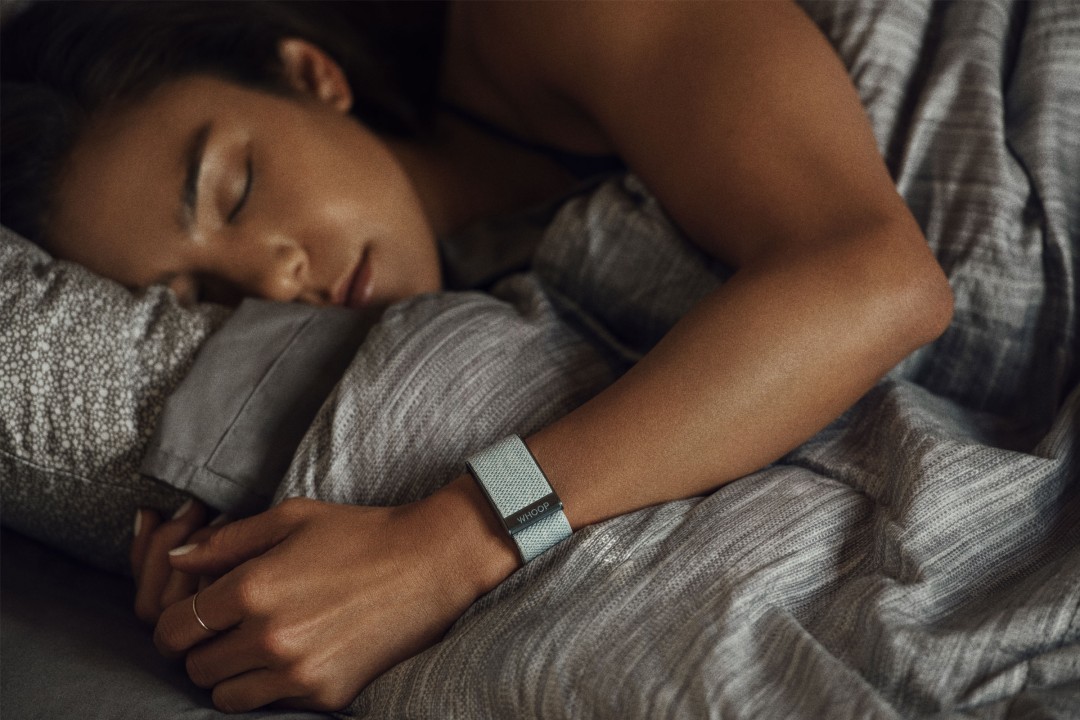 A WHOOP band worn on the wrist, the screen-free recovery tracker offered as a subscription.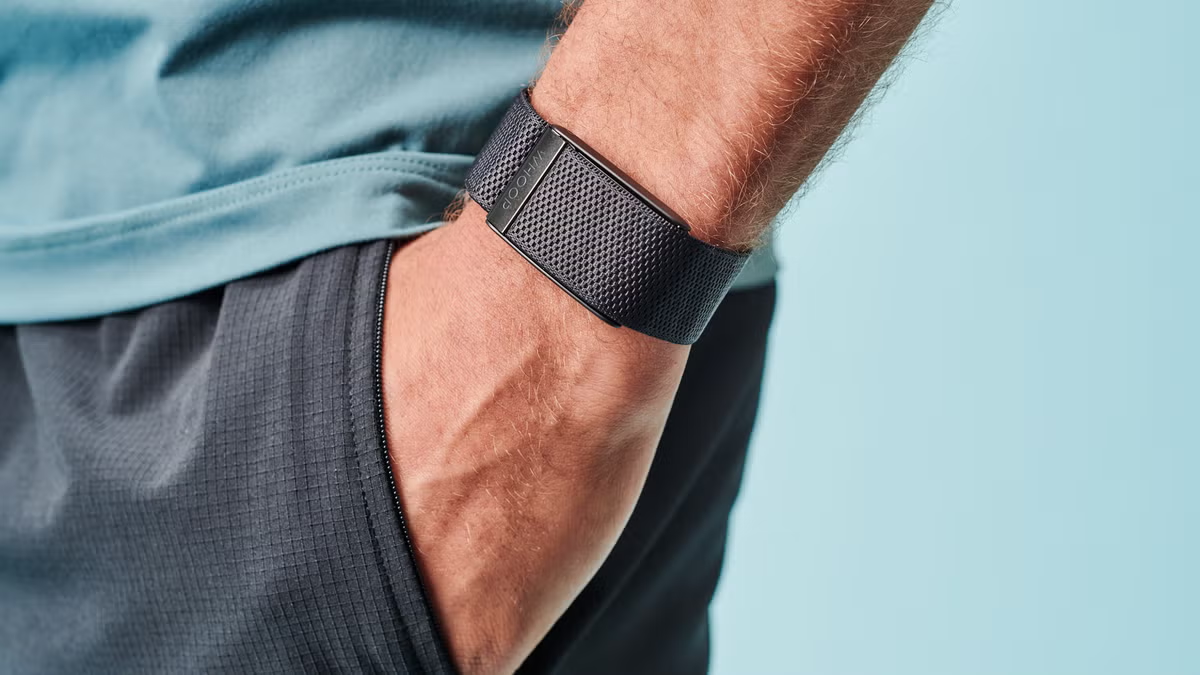
WHOOP
$199/year (subscription, band included)Nightly HRV during deep sleep
Strain and Recovery scoring
Sleep stages plus Sleep Planner guidance
ECG and blood pressure (Life tier)
Performance-focused users wanting continuous biometric monitoring
Garmin: the best Oura alternative with no subscription
Garmin is the best choice if you want to own your tracker outright. You buy the watch once and every feature is yours, with no monthly fee, from $249.99 for entry models up to $549.99 for the Venu 4 garmin.com. No other tracker here matches that.
Garmin performs well on the readiness metrics. Garmin gives you overnight HRV Status, a Sleep Score, and Body Battery, its running estimate of how much energy you have left garmin.com. Multi-day battery means it can track sleep without a nightly charge. The app is the weak point. It shows a lot of data, and beginners can find it overwhelming.
If the recurring cost is your main reason for leaving Oura, Garmin solves that problem. Body Battery gives you a readiness-style number without any subscription attached.
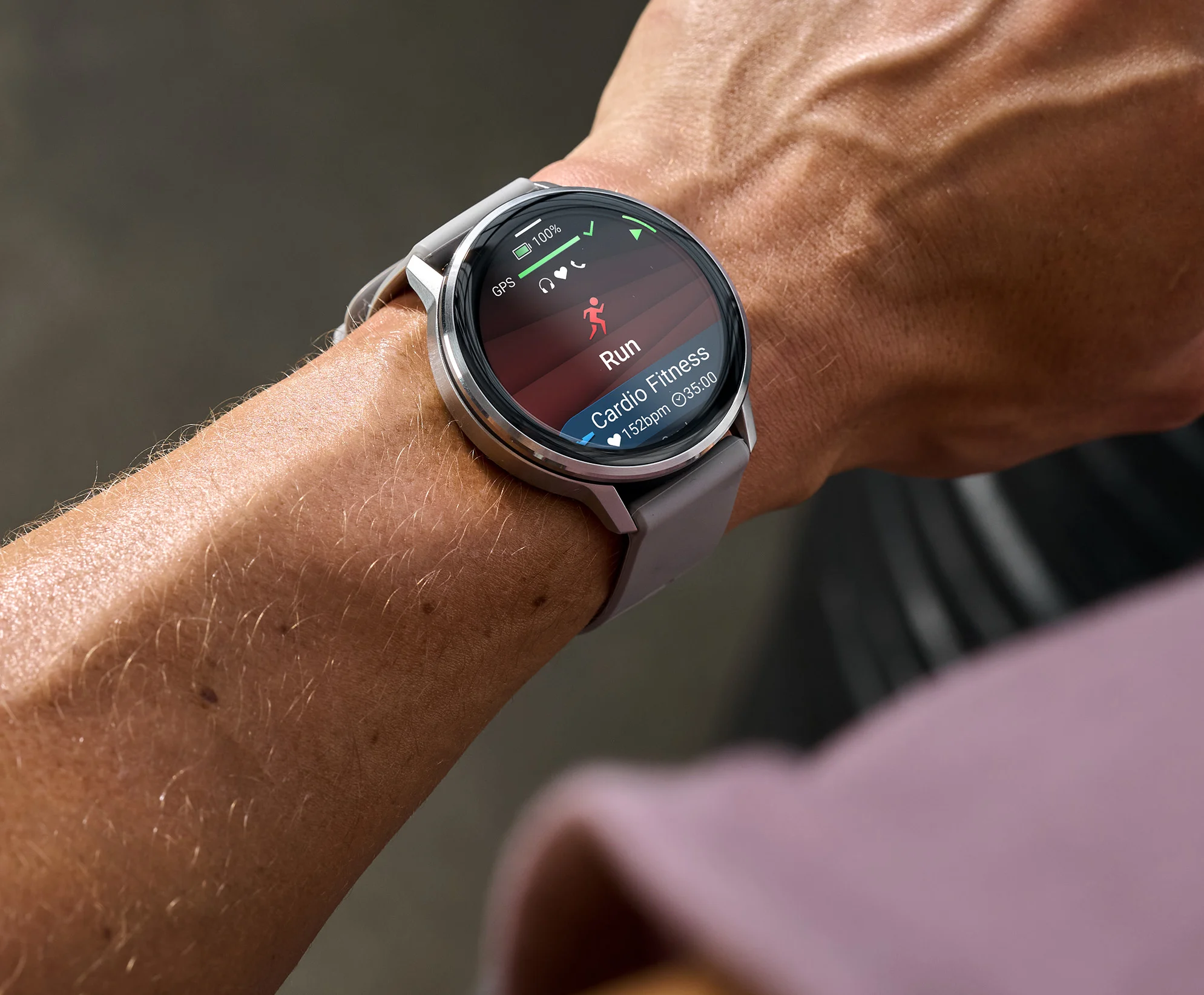
Garmin
From $249.99, no subscriptionOvernight HRV Status
Sleep Score plus Body Battery energy tracking
ECG on supported models
Multi-day battery life
Endurance athletes and data-focused users who want no subscription
Apple Watch: the all-round health alternative
Apple Watch covers the widest range of features. It tracks sleep stages and HRV through the Health app. It also offers an ECG, blood oxygen, and temperature sensing, plus crash detection and deep iPhone integration apple.com. Prices run from $249 for the SE 3 to $799 for the Ultra 3 apple.com.
Apple Watch falls short of Oura on battery life and focus. Normal battery life is about a day, so overnight tracking competes with charging time apple.com. There's no native recovery or readiness score either, so you need third-party apps for a morning readiness number.
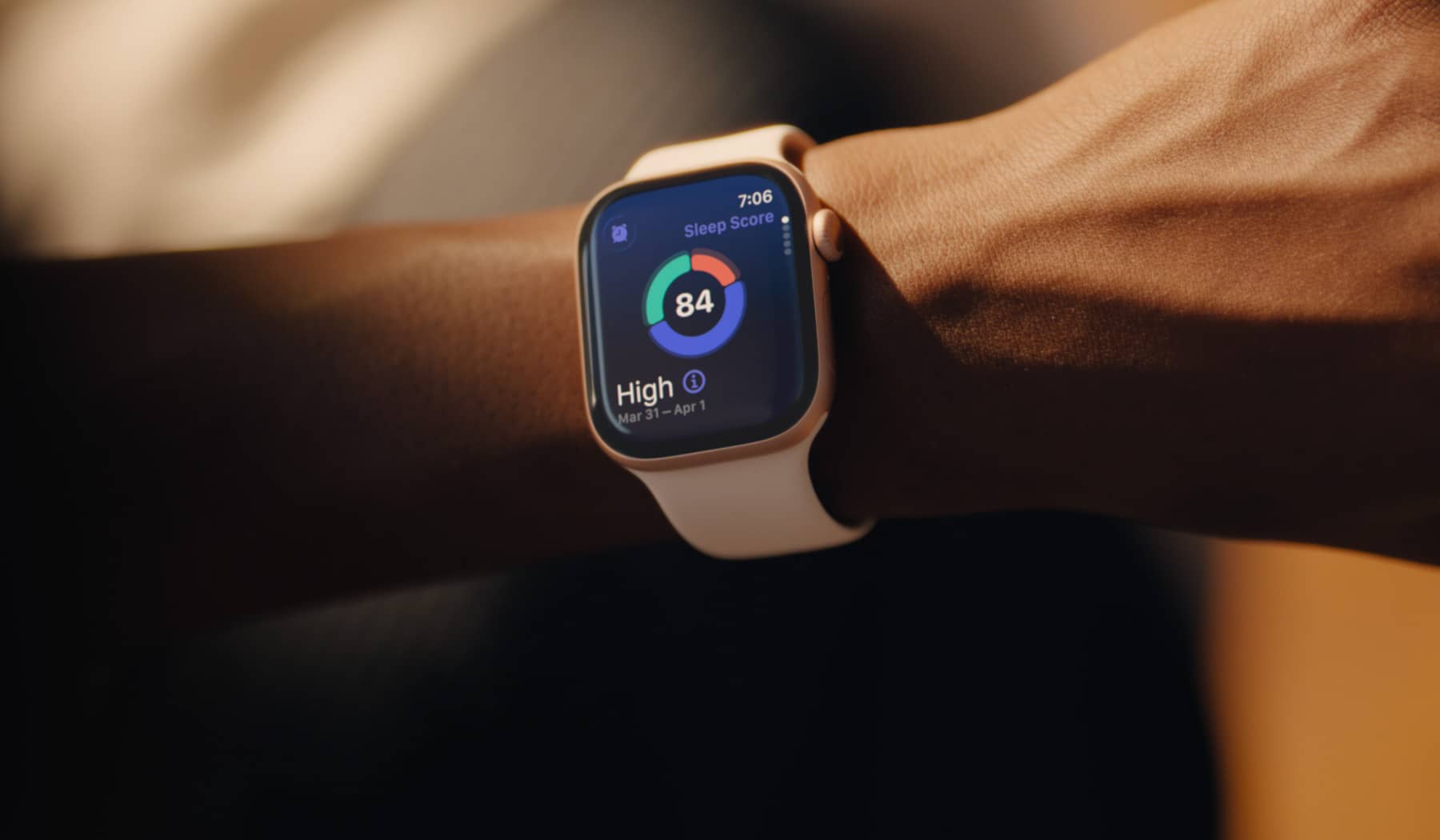
Apple Watch
From $249 (SE 3)Sleep score and stages, plus HRV via the Health app
ECG, blood oxygen, and temperature sensing
Crash and fall detection
Deep iPhone and app ecosystem
General health tracking and connectivity
Visible: an Oura alternative built for energy-limiting illness
Visible serves a different purpose from the others. It's designed for people managing Long Covid, ME/CFS, POTS, or fibromyalgia, where the goal is pacing, which means staying within your energy limits makevisible.com. It pairs a morning HRV check-in with an optional armband for continuous readings, starting at $20 a month or $160 a year makevisible.com.
It gives you a Stability Score and pacing guidance to help you stay inside your energy limits makevisible.com. If Oura's fitness-focused readiness score never fit your situation, Visible's approach may suit you better.
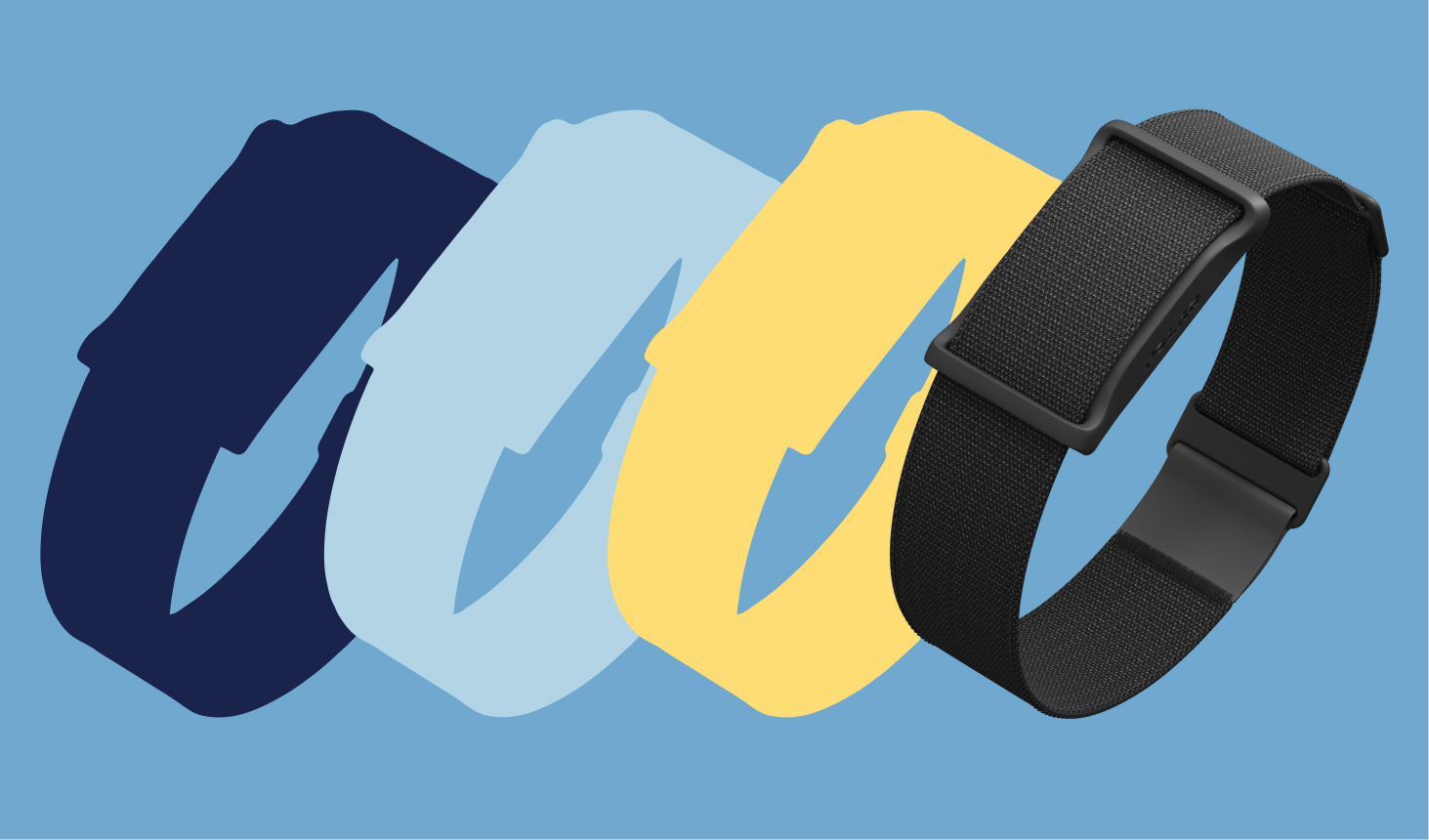
Visible
$20/month or $160/yearMorning HRV check-in, continuous with the Visible band
Pacing guidance and a Stability Score
Built for Long Covid, ME/CFS, POTS, fibromyalgia, and EDS
Optional research participation
People with energy-limiting chronic illnesses
aelívra makes sense of the wearable you already own
aelívra is a phone-first wellbeing platform. It is a separate kind of product from a ring or a wearable, so it does not replace Oura directly. It appears here for a different reason.
aelívra connects to 500+ wearables, including Oura, Apple Health, Garmin and WHOOP, so you add no new device. It compares their numbers with how you feel aelivra.co. It maps sleep, diet, stress, and symptoms against each other to surface patterns you can act on.
If you like your Oura data but struggle to understand it, a tool that explains your current tracker may help more than a new tracker.
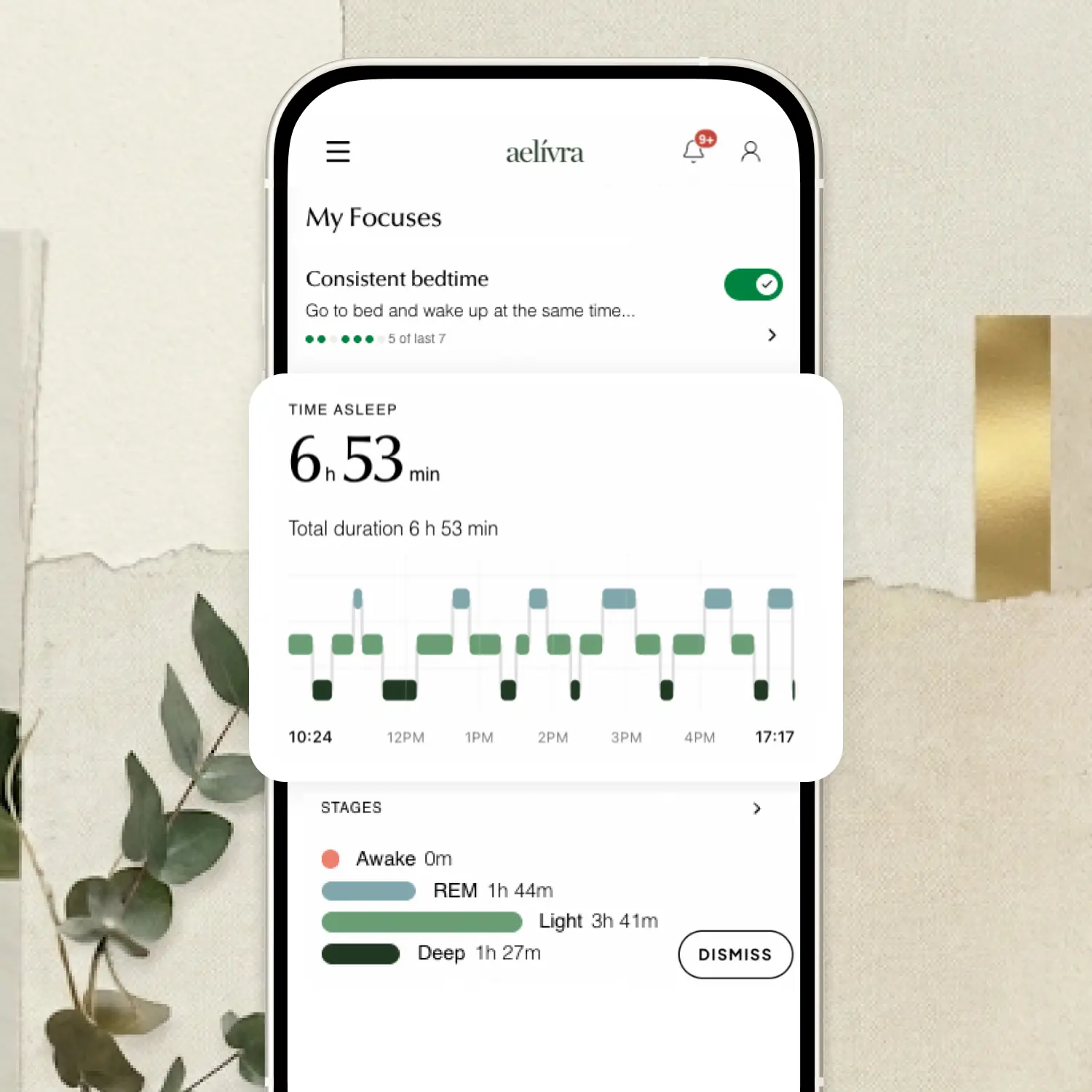
aelívra
Any platform; syncs your existing wearable, no new device requiredConnects 500+ wearables including Oura, Apple Health, Garmin, and WHOOP
Maps sleep, stress, diet, and symptoms against each other
Turns raw metrics into context against how you feel
Builds clean visual summaries for medical appointments
Making sense of the wearable data you already collect
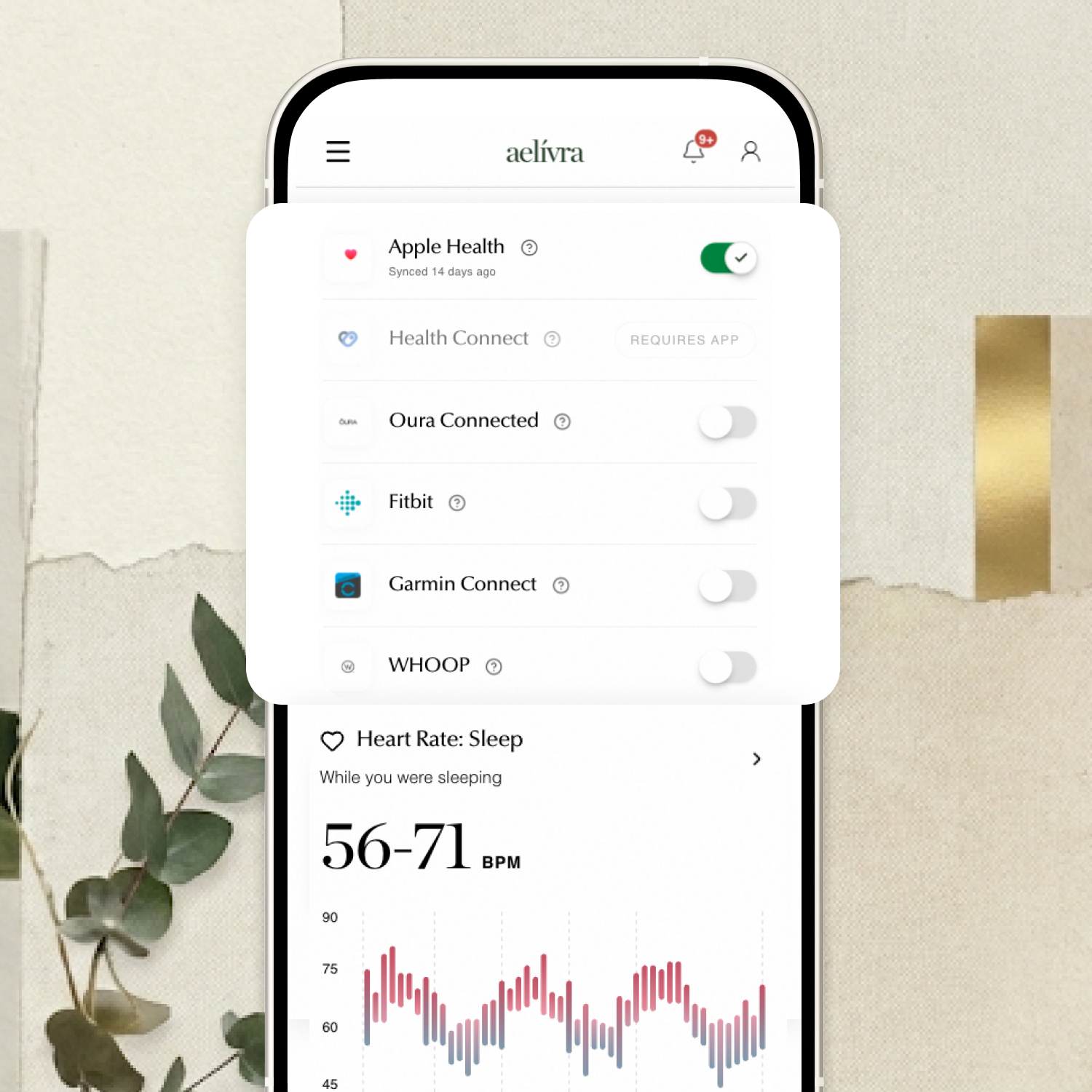
Make the most of your wearables. HRV, resting heart rate, and sleep stages can finally mean something. aelívra connects 500+ wearables and apps (Oura, Apple Health, Garmin, Fitbit, Whoop) and maps that data directly against how you actually feel — your syptoms and your wellbeing first, always.
How do the Oura Ring alternatives compare?
Here's the short version, side by side. Oura is included as the baseline you're comparing against, and the prices and specs come from each brand's own listings.
No single tracker is best for everyone. WHOOP matches Oura's recovery focus, Garmin removes the subscription, Apple Watch does the most overall, and Visible focuses on pacing.
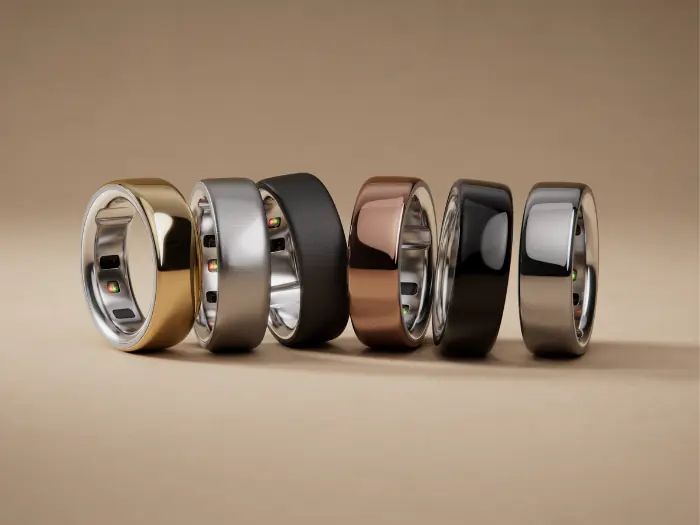 A row of Oura Rings in different finishes.
Oura Ring
$349 + $5.99/mo
WHOOP
$199/yr, band included
Garmin
From $249.99, no subscription
Apple Watch
From $249 (SE 3)
Visible
$20/mo or $160/yr
Oura Ring
Advanced Sleep Staging
WHOOP
Sleep stages + Sleep Planner
Garmin
Sleep Score + Body Battery
Apple Watch
Sleep score + stages
Visible
Early Access (invite)
Oura Ring
Continuous 24/7
WHOOP
Nightly, deep sleep
Garmin
HRV Status (overnight)
Apple Watch
Via Health app
Visible
Morning check-in + band
Oura Ring
Discreet sleep and readiness
WHOOP
Recovery and strain
Garmin
No-subscription data depth
Apple Watch
All-round health + ecosystem
Visible
Pacing chronic illness
Frequently asked questions
Quick answers to the questions people ask most when leaving Oura.
What is the cheapest Oura Ring alternative?
Over time, Garmin is usually cheapest because there's no subscription. An entry model is $249.99 once, versus Oura's $349 plus $5.99 every month garmin.com. WHOOP at $199 a year is the lowest annual subscription option, with the band included whoop.com.
Which Oura alternative has no subscription?
Garmin and Apple Watch are both one-off purchases with no monthly fee for core tracking garmin.com. Garmin starts at $249.99 and Apple Watch at $249 apple.com. WHOOP and Visible are subscription-based.
Which tracker is best for sleep and HRV?
For pure sleep and recovery, WHOOP and Garmin are the strongest Oura alternatives. WHOOP reads HRV nightly during deep sleep, and Garmin pairs a Sleep Score with overnight HRV Status whoop.com. Apple Watch tracks sleep well but has no native readiness score apple.com.
Is there an Oura alternative for chronic illness?
Yes. Visible is built for energy-limiting conditions like Long Covid and ME/CFS, using a morning HRV check-in and a Stability Score to guide pacing makevisible.com. Its readiness measure is about staying inside your limits.
Sources

Cameron founded aelívra after years of living an unknown no one could answer — navigating chronic health complexity through a medical system that wasn't built for it. That experience became a conviction: everyone deserves to feel truly alive, and no one should have to accept not knowing as a way of life. His work sits at the intersection of data science and functional health and wellbeing, turning the latest trusted medical research across news, health, wearables, biomarkers, and more into advice everyday people can use on their journeys toward feeling better. Every article is grounded in peer-reviewed evidence and linked to its primary source. This content is for informational purposes only and does not replace medical advice.