Summary at a glance
Oura Ring is a one-off hardware buy ($349 Silver or $399 Gold) plus a $5.99/mo membership; WHOOP is subscription-only, starting at $199/year with the band included.
Both read HRV and stage your sleep to a strong standard. In a mid-2025 same-body comparison, a wearer of both even reported near-identical sleep scores — it's the recovery verdicts and the framing that split them.
User sentiment splits cleanly by complaint type: Oura's loudest gripes are the membership wall and battery longevity (Trustpilot 4.1/5); WHOOP's are cancellation and billing friction (Trustpilot 3.2/5).
In direct comparisons, users split cleanly: Oura for comfort, sleep accuracy, and set-and-forget tracking; WHOOP for daily training direction and habit change.
If exertion-focused framing feels stressful, Oura's readiness angle is gentler; if you train hard and want load guidance, WHOOP is built for it.
This comparison is built from vendor-published specifications and pricing for Oura Ring and WHOOP (verified 2026-07-08 and 2026-07-16) plus aggregated public user sentiment — Reddit threads, Trustpilot, app-store reviews, and published tester reviews collected 2026-07-20. It is not first-hand device testing. Wearable metrics like HRV, sleep stages, and recovery scores are wellness signals, not medical diagnostics. Talk to a qualified clinician before acting on any reading, especially if you manage a heart, sleep, or chronic health condition.
Oura Ring vs WHOOP: what's the quick answer?
Oura Ring and WHOOP both track sleep, heart rate, and recovery to a high standard. But they suit different people.
Oura is a discreet ring built around sleep and daily readiness — a device you own plus a membership ouraring.com. WHOOP is a screen-free band built around training Strain and Recovery, sold as a yearly subscription whoop.com.
Pick Oura if you care most about sleep quality and how rested you feel. Across Reddit, Trustpilot, and the app stores, sleep tracking is the single most consistent compliment Oura gets reddit.com.
Pick WHOOP if you train hard and want your load and recovery scored each day, hardware folded into one annual price whoop.com. Its users' most consistent praise? Behaviour change — sleeping earlier, drinking less, taking rest seriously reddit.com.
Neither is "better" in a vacuum. And neither community is quiet about the downsides: Oura owners' loudest complaints are the membership wall and battery longevity reddit.com, while WHOOP's Trustpilot score sits at 3.2/5, weighed down by cancellation and billing complaints au.trustpilot.com.
Read this as a fit check, not a leaderboard. Specs verified 2026-07-08 and 2026-07-16; sentiment collected 2026-07-20.
Oura's total cost grows with each month of membership, while WHOOP's yearly fee is fixed and includes the hardware. Over two to three years the running totals land closer than the sticker prices suggest — and Reddit's cost-of-ownership maths factors in battery replacements too.
How do Oura Ring and WHOOP compare on features and price?
The two devices overlap on the core sensors and split on price model and shape.
Oura sells the Ring 4 as hardware you own — $349 for Silver, $399 for Gold — then charges $5.99 a month for the membership that unlocks its scores ouraring.com. WHOOP bundles the band into the subscription itself: One at $199/yr, Peak at $239/yr, and Life at $359/yr with the WHOOP MG hardware whoop.com.
Both stage your sleep well. Oura samples HRV continuously, day and night; WHOOP reads it nightly during your deepest sleep ouraring.com. So sensor quality isn't the deciding line. The real split is form and framing: a ring you barely notice versus a band designed around training load.
Think about the total you'll pay, not just the first invoice.
Users run this maths themselves, and it cuts both ways. In a January 2026 Oura-vs-WHOOP thread, one Redditor argued Oura's battery record erodes the cheaper-long-term case: "From all threads here I doubt the ring will last 3 years." Others in the same thread still land on Oura as the lower-cost option — if the hardware holds reddit.com.
 The Oura Ring 4 shown suspended mid-air
Oura Ring
$349 + $5.99/mo
WHOOP
$199/year
Oura Ring
Ring 4 Silver — $349 + $5.99/mo (Oura Ring 4, Membership); Ring 4 Gold — $399 + $5.99/mo (Oura Ring 4, Membership)
WHOOP
One — $199/yr (WHOOP 5.0, Basic Charger, CoreKnit Band); Peak — $239/yr (WHOOP 5.0, Wireless PowerPack, Onyx SuperKnit Band); Life — $359/yr (WHOOP MG, Wireless PowerPack, Titanium SuperKnit Luxe Band)
Oura Ring
Continuous 24/7 (green + infrared LEDs)
WHOOP
Nightly (deepest sleep)
Oura Ring
Advanced Sleep Staging
WHOOP
Sleep stages (4-stage) + Sleep Planner
Oura Ring
Basic tags
WHOOP
Journal logging (300+ behaviors, symptoms, AI insights)
What are the pros and cons of the Oura Ring?
Oura's core promise is quiet, comfortable tracking that leans into sleep and readiness. It stages your sleep in detail and reads HRV around the clock ouraring.com.
What users praise about the Oura Ring
Users back the sleep claim up emphatically. As one Redditor put it: "Their sleep tracking is superior to other wearables. Sleep is one of my weaker metrics so tracking it is important for me." reddit.com
The ring form factor is the headline. No screen, no wrist bulk. One owner who switched to Oura after years on a Garmin Fenix 7 Pro — and five-plus years on an Apple Watch before that — summed it up: "Oura is by far the most convenient. It disappears on your finger and you don’t think about it, while still getting pretty good data through out the day and night." reddit.com The Guardian's June 2026 Ring 5 review agreed, calling it "finally a smart ring you can genuinely forget you’re wearing." theguardian.com
Cycle tracking widens the appeal beyond sleep ouraring.com. In a June 2026 thread, one owner reported the ring "has been right on target with its prediction every single time" — better than dedicated period apps reddit.com.
The trade-offs
The loudest complaint by far is the membership wall. The top-scoring subscription thread on r/ouraring puts it bluntly: "They sell a $450 health device, yet without a monthly payment it shows almost nothing useful. The hardware is already paid for. Locking basic insights behind a subscription is predatory." reddit.com A visible minority defends the fee as paying for ongoing analysis.
Battery longevity comes second. Owners report rings collapsing from multi-day charge life to hours, often around the 6–13 month mark: "I’m on my 4th replacement - I’ve had a battery issue with each one and it usually happened within 6 months. Oura has replaced my ring for free each time." reddit.com Trustpilot's 4.1/5 leans on that same replacement machinery — fast, generous swaps, sometimes inside 24 hours au.trustpilot.com — though a fresh minority in July 2026 reports support quality slipping reddit.com.
And Oura is not a workout device. Users — including fans — agree: "Oura is just not a fitness tracker. The running data it provides is useless, heart rate is off" reddit.com. Oura itself conceded in-thread that its workout heart-rate algorithm is optimised only for running, walking, and cycling reddit.com. Lifters take the ring off for barbell work, too reddit.com.
 A row of Oura rings in different finishes, showing the discreet ring form factor
Oura Ring
Sleep tracking users across Reddit, Trustpilot, and app stores call the best among wearables
Discreet ring form factor owners say they forget they're wearing
Continuous 24/7 HRV reading via green and infrared LEDs
Cycle tracking users report outperforms dedicated period apps
Scores sit behind the $5.99/mo membership — the loudest complaint in the owner community
Recurring battery degradation around 6–13 months, with some owners on serial replacements
Workout heart rate reads low; broad user agreement it is not a fitness tracker
Needs to come off for barbell and dumbbell work, breaking 24/7 tracking
What are the pros and cons of WHOOP?
WHOOP is built around training load. Its daily Strain and Recovery scores tell you how hard you pushed and how ready you are to push again whoop.com. The vendor publishes 99.7% heart-rate accuracy whoop.com, and the top Life tier adds ECG and blood pressure insights on the WHOOP MG hardware whoop.com.
What users praise about WHOOP
What users praise most isn't a sensor. It's behaviour change.
The top comment in r/whoop's "worth it in 2026" thread: "I credit it with convincing me to stop drinking, going to bed at more reasonable times, scrolling my phone less, lifting more, and generally being more aware of how little habits can stack to improve your life." reddit.com The5krunner — an independent tester who has reviewed every WHOOP generation across ten years — rates it the best recovery and strain coaching platform in sports tech and scores the app 96% the5krunner.com. Note that review carries affiliate links for both WHOOP and Oura.
The screenless band draws the same forgettability praise as Oura's ring, with multi-day battery life reddit.com. The fabric strap divides people, though. One switcher's verdict: "There is nothing grosser than a cold, damp band hanging on your skin after a shower." reddit.com
The trade-offs
WHOOP's Trustpilot score is 3.2/5 across 5,025 reviews, against a 4.8 on both app stores, and the gap is almost entirely commercial. The most common complaint on Trustpilot is cancellation and billing friction: "I completed the cancellation process, yet WHOOP continued attempting to charge my Apple Card. Finding the cancellation option was unnecessarily difficult, and the process was confusing." au.trustpilot.com Reddit echoes it. One June 2026 poster had a renewal debited from their bank account after blocking two card charges reddit.com; annual renewals offer "zero flexibility, even if you act immediately" reddit.com.
Accuracy complaints centre on the wrist. One user who ran WHOOP against everything else on their body reported: "The heart rate sensor is consistently the "odd man out." I’ve tested it against my Oura, Apple Watch, and gym machines; the other three are always in sync, while Whoop is off." reddit.com The5krunner's instrumented testing agrees on placement — biceps is accurate, but "you should not use a wrist-worn device to get accurate HR data during sport." the5krunner.com The bicep band costs extra, which users resent reddit.com.
One more trust wound: at the May 2025 WHOOP 5.0 launch, longtime members who believed hardware upgrades were included were asked to pay or extend. The backlash filled a 249-upvote megathread before WHOOP part-reversed, granting free upgrades to members with 12+ months remaining reddit.com. The disappointment still surfaces in 2026 threads as a stated reason for cancelling reddit.com.
Even users who love it call it expensive: "I really like the Whoop, it’s just way to expensive for what it offers." reddit.com And there's no way around the model — the device does nothing without an active subscription.
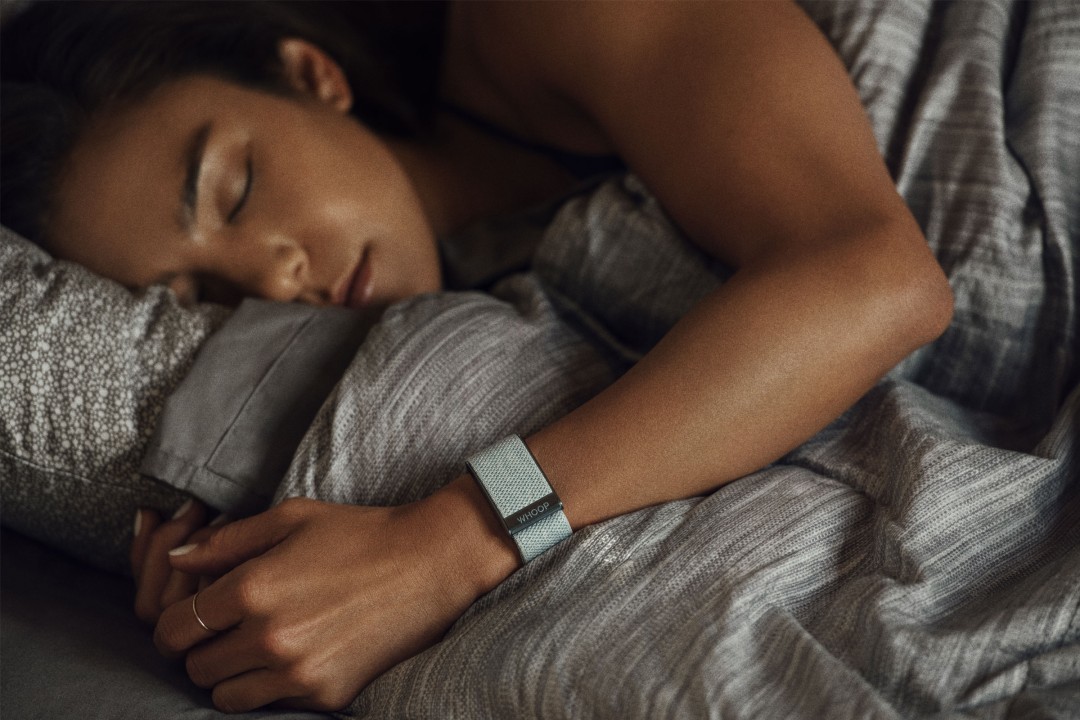 WHOOP band worn on the wrist, showing its screen-free fabric strap
WHOOP
Daily Strain and Recovery scoring built for training load
Users consistently credit it with real habit change — drinking less, sleeping earlier
Vendor-published 99.7% heart-rate accuracy; accurate on the biceps per independent testing
Screen-free band with multi-day battery and an app independent testing rates market-leading
Subscription-only — the device does nothing without an active plan
Trustpilot 3.2/5, dominated by cancellation and billing complaints
Wrist heart-rate accuracy widely questioned during exercise; the bicep-band fix costs extra
The May 2025 5.0 launch broke members' free-upgrade expectations, only partly reversed
Oura Ring vs WHOOP: which should you choose?
Neither device wins outright. They're built for different jobs — and people who compare them draw the line remarkably consistently.
In direct Reddit comparisons, WHOOP is the coach-like training tool: strain scoring, daily training direction, a journal that ties habits to recovery. Oura wins on comfort, wearability, sleep accuracy, and lower long-term cost when the hardware behaves reddit.com. Several owners who tried both returned to Oura for the set-it-and-forget-it experience reddit.com. Athletes wanting actionable load guidance lean WHOOP.
Don't expect the two to agree with each other, either.
In a mid-2025 thread, a wearer running both on the same body reported identical sleep scores — 81 and 81 — but Oura called them 84% ready while WHOOP scored recovery at 43. Commenters converged on a blunt take: "These scores are made up by the platforms, they use different algorithms and take samples at different times." reddit.com The5krunner's fresher assessment agrees every vendor's readiness indicator is an invented construct — while still rating WHOOP's underlying HRV measurement the most stable of the pack the5krunner.com.
One more angle: how the numbers make you feel. Oura's readiness framing is gentler. WHOOP's Strain framing rewards pushing. If you're optimising performance, that's motivating. If you're managing your energy carefully — or living with chronic illness — it can tip into pressure.
Choose the framing you'll actually want to open every morning.
Before you buy either, ask how you want the data to feel. Oura nudges you toward rest and readiness; WHOOP rewards pushing your training. Users of both agree the composite scores are constructs — the trends matter more than any single number.
Oura for discreet, sleep-and-readiness tracking you own outright plus a membership — the pick users who tried both keep for comfort. WHOOP for subscription-based Strain and Recovery scoring aimed at training load — the pick for coached, habit-changing structure.
It's a tie on sensors, so choose by goal, not by brandOura and WHOOP both read HRV and stage sleep to a strong standard (specs verified 2026-07-08 and 2026-07-16) — a mid-2025 same-body comparison even found near-identical sleep scores. They differ in shape, pricing model, framing, and failure modes — Oura's battery and membership wall versus WHOOP's billing friction — not raw sensor quality.
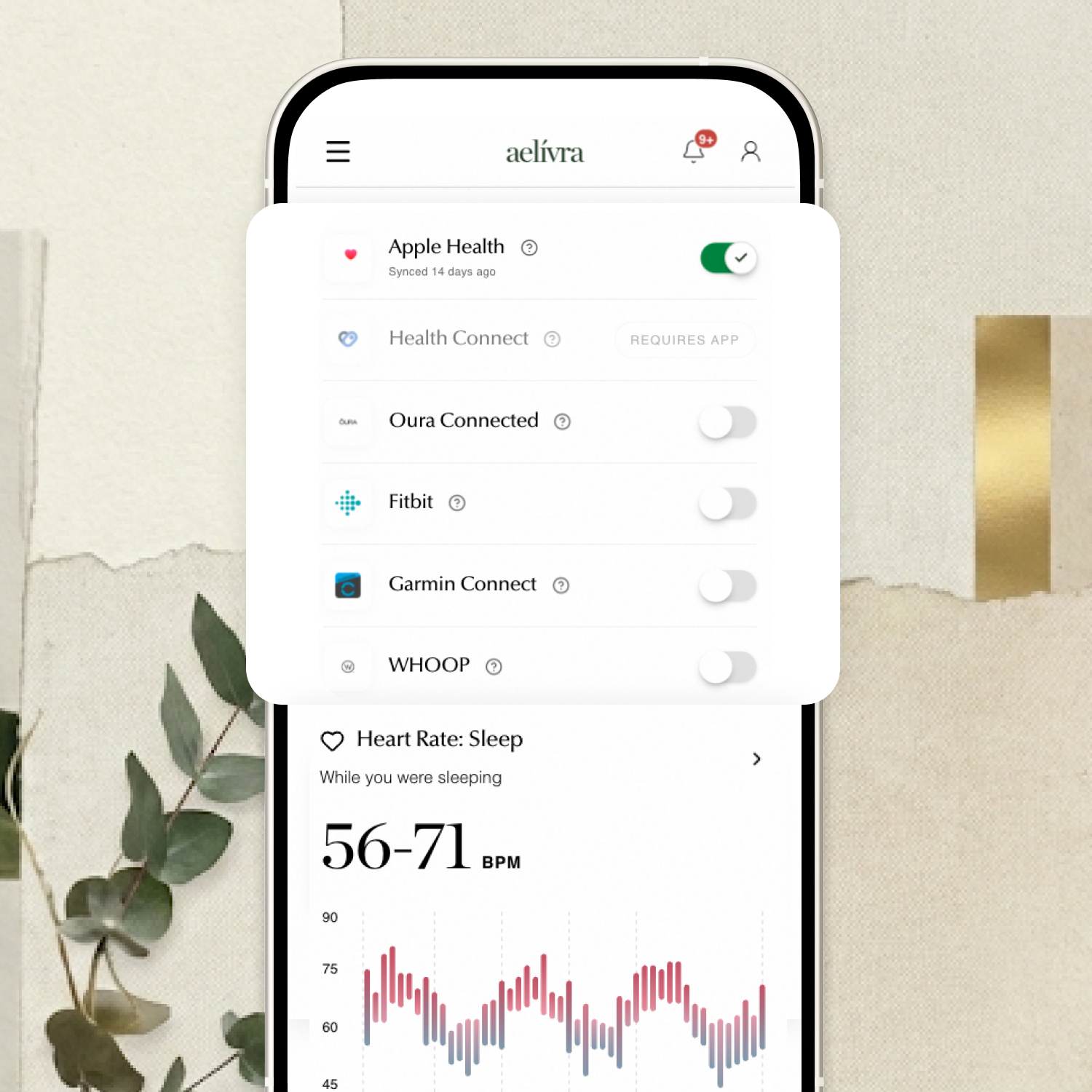
Make the most of your wearables. HRV, resting heart rate, and sleep stages can finally mean something. aelívra connects 500+ wearables and apps (Oura, Apple Health, Garmin, Fitbit, Whoop) and maps that data directly against how you actually feel — your syptoms and your wellbeing first, always.
How we researched this comparison
This article combines two evidence layers, kept deliberately separate.
Facts. Every price, tier, and spec comes from vendor-published pages for Oura (verified 2026-07-08) and WHOOP (verified 2026-07-16). We have not tested either device first-hand.
Sentiment. All experiential claims aggregate public user reviews collected 2026-07-20.
For Oura: Trustpilot AU, 4.1/5 across 4,662 reviews (2,066 in the last 12 months), with the ~19 most recent captured verbatim au.trustpilot.com. Apple App Store, 4.9/5 across 270K ratings — 10 featured reviews captured, undated, so we date-frame or avoid them apps.apple.com. Google Play, 4.7/5 across 35.9K reviews, 3 featured texts play.google.com. One published tester, The Guardian, 2026-06-30 theguardian.com. And 9 Reddit threads — posts plus roughly 350 comments captured verbatim, capped at 50–60 comments per thread, so the largest threads are held partially (60 of 216 on the top subscription thread); all posted within the last 12 months reddit.comreddit.comreddit.comreddit.comreddit.comreddit.comreddit.comreddit.comreddit.com. Roughly 80 distinct verbatim opinions in total.
For WHOOP: Trustpilot AU, 3.2/5 across 5,025 reviews (1,830 in the last 12 months), ~20 most recent captured verbatim au.trustpilot.com. Apple App Store, 4.8/5 across 42K ratings, 10 reviews captured, undated apps.apple.com. Google Play, 4.8/5 across 24.3K reviews, 3 surfaced texts play.google.com. One published tester, the5krunner, 2025-10-31, updated 2026-06, monetised via WHOOP and Oura affiliate links the5krunner.com. And 8 Reddit threads — posts plus 298 comments captured verbatim, capped at 50 per thread, so the 281-comment 5.0 megathread is held at 50 reddit.comreddit.comreddit.comreddit.comreddit.comreddit.comreddit.comreddit.com. Roughly 90 distinct verbatim opinions.
Known biases, disclosed. Most Oura threads come from r/ouraring and most WHOOP threads from r/whoop — owner communities that attract enthusiasts and motivated complainers alike. The highest-value three-way comparison post was accused in-thread of being AI-written; we quote it with that caveat and lean on its independently corroborated comments. Trustpilot skews toward billing and support interactions for both brands, so it measures the commercial relationship more than the product. App-store quotes carry no dates, so we date-frame anything drawn from them. Quotes older than 12 months — WHOOP's May 2025 upgrade megathread, the June 2025 same-body comparison — are explicitly date-framed above.
Oura Ring vs WHOOP: frequently asked questions
Is Oura Ring or WHOOP cheaper?
It depends on your timeframe — and your luck with hardware. Oura is $349 or $399 up front plus $5.99 a month ouraring.com; WHOOP starts at $199 a year, band included whoop.com. Over one year Oura costs more. Over several, the totals converge — though owners who hit Oura's recurring battery failures argue a replacement cycle can erase the saving reddit.com.
Which is more accurate for HRV and sleep?
Both are strong on paper. Oura reads HRV continuously; WHOOP reads it nightly during your deepest sleep ouraring.com. A wearer running both reported identical sleep scores in a mid-2025 comparison reddit.com.
The real accuracy gap users report is workout heart rate. Oura's ring reads low during training reddit.com, and WHOOP's wrist placement draws the same complaint, with independent testing recommending the biceps the5krunner.com.
Can I use Oura or WHOOP without a subscription?
Not for the useful parts. Oura's scores need the $5.99/mo membership — the single loudest complaint in its owner community reddit.com — and WHOOP is subscription-only by design. Budget for the ongoing cost either way.
What do users complain about most?
Different things entirely. Oura's top complaints are the membership wall and batteries that degrade around the 6–13 month mark reddit.com. WHOOP's cluster on the commercial side: hard-to-find cancellation flows, charges after cancelling, and inflexible annual renewals dominate its 3.2/5 Trustpilot page au.trustpilot.com. Product sentiment for WHOOP is far stronger — both app stores rate it 4.8 apps.apple.complay.google.com.
Which is better if I have a chronic illness?
Many people find Oura's readiness framing gentler, since WHOOP is built around performance and exertion. If push-harder language feels stressful, Oura's angle tends to sit easier.
Some owners — echoed in undated app-store reviews describing a "major signs" alert firing at the start of a COVID infection — also describe illness flagged before symptoms, though that praise traces partly to a Reddit post other commenters suspected was AI-written reddit.comapps.apple.com. Your own response matters most, and neither replaces medical advice.
WHOOP's band has no display at all, so you read every score in the phone app. Oura is screen-free too — users of both say the same thing: the best tracker is the one you forget you're wearing.
Sources

Cameron founded aelívra after years of living an unknown no one could answer — navigating chronic health complexity through a medical system that wasn't built for it. That experience became a conviction: everyone deserves to feel truly alive, and no one should have to accept not knowing as a way of life. His work sits at the intersection of data science and functional health and wellbeing, turning the latest trusted medical research across news, health, wearables, biomarkers, and more into advice everyday people can use on their journeys toward feeling better.. Every article is grounded in peer-reviewed evidence and linked to its primary source. This content is for informational purposes only and does not replace medical advice.