Summary at a glance
Bilirubin is a yellowish pigment created when your body naturally breaks down old red blood cells.
Elevated total bilirubin levels often indicate that your liver is struggling to process waste or that a bile duct is blocked.
Visible jaundice typically appears in the skin and eyes when bilirubin concentrations exceed 2.5 mg/dL in adults.
Fasting, intense exercise, and temporary illnesses can trigger harmless bilirubin spikes, especially if you have Gilbert syndrome.
What Does High Bilirubin Mean?
High bilirubin means your body is either breaking down red blood cells too quickly, or your liver cannot efficiently process and clear this waste pigment. When bilirubin builds up in your bloodstream, it can cause jaundice, signaling potential liver strain, blocked bile ducts, or a harmless genetic variation.
Roughly 80% of bilirubin comes directly from the normal breakdown of old red blood cells ncbi.nlm.nih.gov. StatPearls (2023) notes that your body produces about 4 mg/kg of this pigment every day ncbi.nlm.nih.gov. Your liver's job is to catch it, process it, and send it out through your digestive system.
When the liver sustains damage, this smooth pipeline backs up. The pigment spills into the surrounding tissues and bloodstream instead of safely exiting the body medlineplus.gov.
Bilirubin is the exact pigment that gives your stool its typical brown colour and contributes to the yellow tint of your urine.
What Is the Difference Between Direct and Indirect Bilirubin?
Your lab report likely splits bilirubin into different categories to help pinpoint where a problem originates. Indirect, or unconjugated, bilirubin is the raw form traveling through your blood on its way to the liver.
Direct, or conjugated, bilirubin is the processed version. Your liver has chemically altered it so it can easily mix with water and exit through your bile ducts. Looking at which specific fraction is elevated gives you a massive clue about what is going wrong.
UCSF Health (2023) outlines the standard normal reference ranges for these blood tests ucsfhealth.org. Keep in mind that specific cutoffs can vary slightly depending on the lab doing the analysis.
| Bilirubin Type | Adult Reference Range |
|---|---|
| Total Bilirubin | 0.1 to 1.2 mg/dL |
| Direct (Conjugated) | Less than 0.3 mg/dL |
| Indirect (Unconjugated) | Calculated remainder |

Why Would Bilirubin Be High If Other Liver Tests Are Normal?
Seeing a high bilirubin result alongside perfectly normal ALT and AST liver enzymes can feel incredibly confusing. This specific pattern usually points away from severe liver damage.
It frequently indicates a harmless genetic quirk called Gilbert syndrome. The Mayo Clinic (2024) explains that people with Gilbert syndrome process bilirubin much more slowly than average mayoclinic.org. The condition requires no treatment, but it does make your lab results uniquely sensitive to your lifestyle.
If you have this trait, everyday metabolic stressors can trigger noticeable spikes. Labcorp (2024) reports that a prolonged fast of 36 hours or more can cause a moderate rise in bilirubin labcorp.com. Intense exercise, poor sleep, or recovering from a mild cold can also push your numbers out of bounds.
To start tracking these patterns, you might look into how to check liver function at home to see how your daily habits influence your internal chemistry.
If you suspect you have Gilbert syndrome, keep a diary of your sleep, exercise, and meals before your next blood draw to see if fasting or exhaustion drives your numbers up.
When Should You Worry About High Bilirubin Levels?
Jaundice is the most obvious warning sign that your bilirubin levels require medical attention. You might first notice a yellow tint in the whites of your eyes before it becomes obvious on your skin.
URochester Medicine (2024) states that visible jaundice generally develops in adults when bilirubin concentrations surpass 2.5 mg/dL urmc.rochester.edu. This physical symptom suggests a more significant bottleneck. You might be dealing with gallstones blocking a bile duct, acute hepatitis, or another serious inflammatory issue nhs.uk.
If your liver is genuinely struggling, you will likely notice changes in the bathroom. Dark, tea-coloured urine means bilirubin is spilling into your kidneys medlineplus.gov. Pale, clay-coloured stools indicate that bile is completely failing to reach your digestive tract. Both scenarios require a prompt conversation with your doctor.
If you experience sudden yellowing of the skin accompanied by severe abdominal pain or fever, seek immediate medical care, as this could indicate a completely blocked bile duct.
When Should You Retest Your Levels?
Doctors rarely diagnose a chronic condition based on a single slightly elevated bilirubin reading. If your result is marginally high and you feel perfectly fine, your doctor will likely recommend retesting in a few weeks or months.
Watching the trend matters significantly more than any single snapshot. You can evaluate this alongside other critical markers, like understanding your egfr blood test meaning, to build a complete picture of your body's waste filtration systems.
Temporary spikes from fasting or stress resolve quickly once you return to your normal routine. If your numbers climb steadily across multiple tests, you know it is time to investigate deeper.
All Your Health Records, Evaluated Together
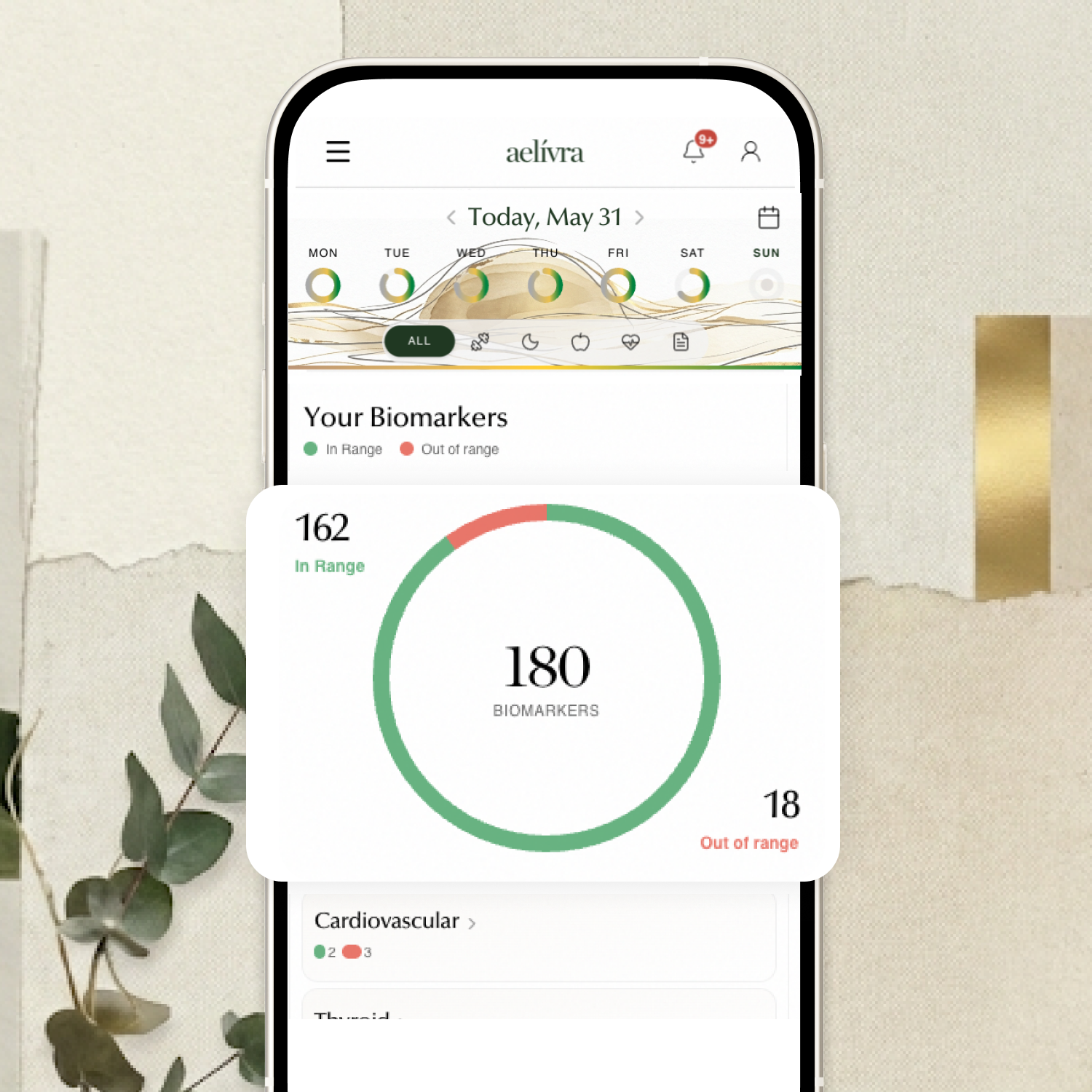
Blood work, scans, test results, medical reports — finally in one place and connected to how you actually feel. aelívra tracks biomarkers and health records over time, so you can see what's trending in the right direction and walk into your next appointment knowing exactly what to discuss.
Common Questions About Bilirubin
Can stress cause high bilirubin?
Yes. Physical stress, exhaustion, and severe illness can temporarily increase bilirubin production or slow down how fast your liver clears it, especially in people with Gilbert syndrome mayoclinic.org.
What causes high bilirubin without jaundice?
Mild elevations often stay entirely invisible. Conditions like mild hemolytic anemia, where red blood cells break down slightly faster than normal, can raise your levels without crossing the threshold for yellowing skin ucsfhealth.org.
Are high bilirubin levels dangerous for babies?
Newborns frequently experience jaundice because their immature livers need a few days to start processing efficiently. However, URochester Medicine (2024) warns that infant bilirubin levels over 15 mg/dL can become dangerous and require clinical intervention urmc.rochester.edu.