Summary at a glance
At-home liver kits use a simple finger-prick blood sample to measure key enzymes like ALT, AST, and GGT.
Liver blood tests can sometimes return normal results even if liver disease is present.
Elevated GGT and a high AST-to-ALT ratio may support an assessment of alcohol-related liver stress when looked at as part of the broader clinical picture.
Catching liver enzyme elevations early may provide an opportunity for lifestyle adjustments, medical assessment, and earlier intervention if the underlying cause of liver injury is reversible.
This article is for informational purposes only and does not constitute medical advice. At-home liver blood tests are screening tools and cannot diagnose liver disease or determine its cause. Always consult a healthcare professional to interpret abnormal results, particularly if you have symptoms or concerns about alcohol-related liver disease, medication-related liver injury, or another underlying condition.
How do you check key liver health markers at home using a kit?
You don't need a clinic appointment to get a first look at your liver. A mail-in finger-prick kit does the job from your kitchen table. These kits measure primary liver enzymes, including ALT, AST, and GGT, to identify cellular stress. Results typically arrive through a secure digital portal within a few days to a week.
Drawing your own blood takes a little prep. Most providers set out a few baseline conditions first, so the lab receives a clean, accurate sample.
Prerequisites for Testing:
Step-by-Step Process:
Expected Outcomes: You get back a digital report that sets your enzyme levels against standard reference ranges. Once the lab finishes processing, the portal turns raw enzyme counts into visual graphs. You don't need a medical background to read it — baseline numbers and sudden spikes are easy to spot at a glance.
 A person preparing a finger-prick blood test kit at home for liver enzyme screening.
Can a liver test be normal if you still have liver damage?
Leaning on one standard blood test can hand you a false sense of security. The liver is a resilient organ, and it works hard to cover for early-stage damage. A 2018 review in Clinical Liver Disease reports that liver disease can still occur in people whose liver blood test values sit inside the normal reference range pmc.ncbi.nlm.nih.gov.
Because the liver possesses this robust functional reserve, minor cellular stress does not always trigger immediate enzyme spikes. Structural changes like fat buildup or early fibrosis can develop quietly in the background. Your routine test comes back with acceptable numbers while the organ works under growing strain.
Fatty liver disease often develops alongside insulin resistance and chronic inflammation. That metabolic shift is gradual. Liver enzymes reflect injury to liver cells rather than how well the liver is clearing toxins, and the liver's functional reserve means early damage can leave those markers looking steady pmc.ncbi.nlm.nih.gov. Wait for enzymes to climb before acting, and you miss the best window for early intervention.
Panels vary between laboratories. Some measure only ALT and AST, while others also include ALP, bilirubin, albumin, total protein and GGT. A narrow panel does not capture the full picture of metabolic or toxic stress. A fuller read means checking several markers and watching how they move over time. Pair regular testing with attention to your symptoms, and you protect your liver far better over the long run.
Because normal lab results can mask early damage, tracking your enzyme levels over several months provides a much clearer picture of your actual liver health.
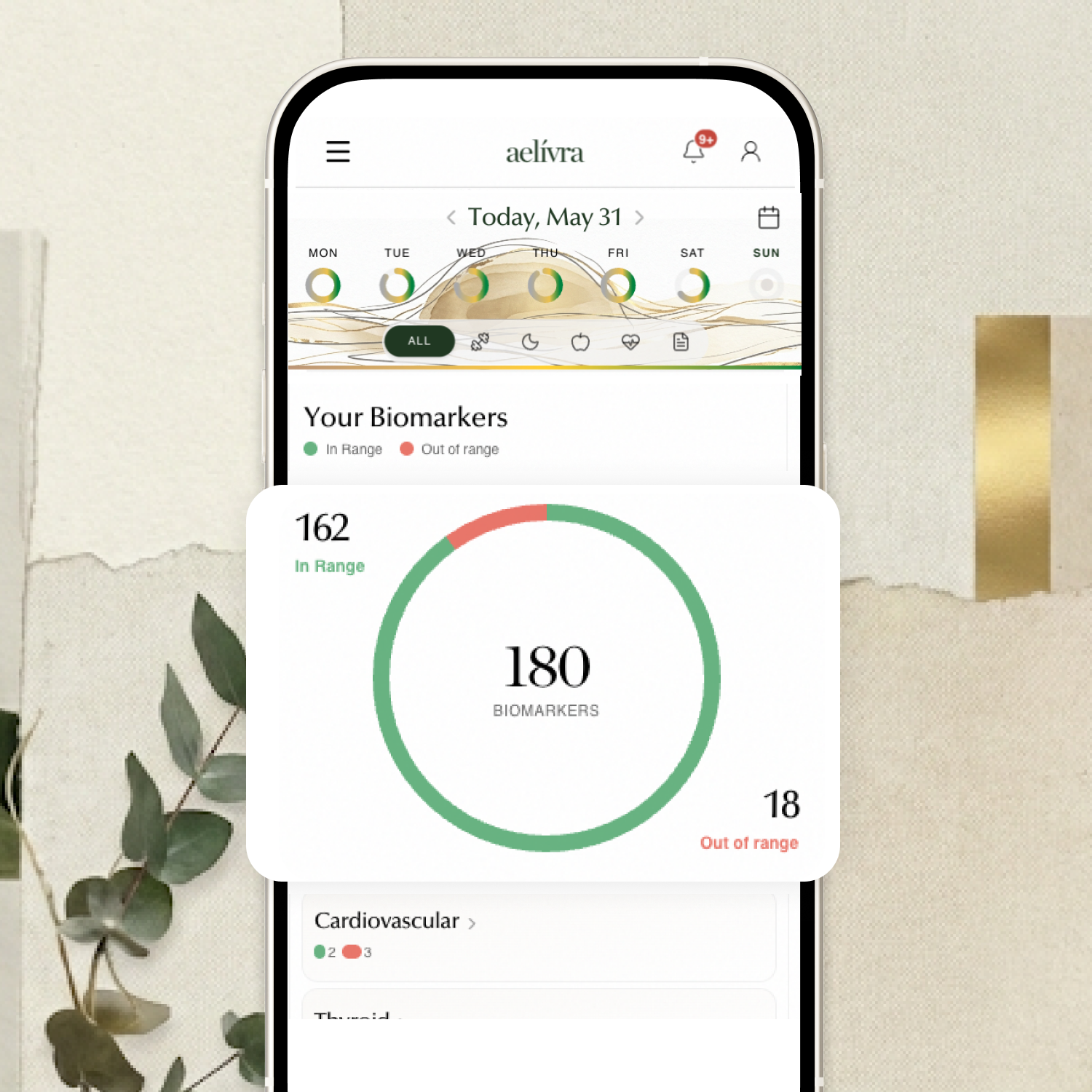
Blood work, scans, test results, medical reports — finally in one place and connected to how you actually feel. aelívra tracks biomarkers and health records over time, so you can see what's trending in the right direction and walk into your next appointment knowing exactly what to discuss.
What is the most accurate way to test for alcohol-related liver stress?
Spotting alcohol-driven strain means looking past the basic metabolic markers. A few enzymes respond sharply to alcohol, and they open a clearer window onto toxic stress. Heavy or regular drinking can raise liver enzyme levels, though how much varies from person to person thelancet.com.
Gamma-glutamyl transferase (GGT) is one of the more sensitive liver enzymes for detecting alcohol-related liver injury, and it may rise early. It is not specific, though, so it should be read alongside other liver tests and the clinical picture thelancet.com.
The ratio matters too. When doctors suspect alcohol-related stress, they also examine the ratio between AST and ALT. An elevated ratio often highlights an alcohol-driven problem rather than a metabolic one.
Medicine is catching up to this kind of damage quickly. A 2025 meta-analysis reports that steatotic liver disease (previously known as fatty liver disease) affects around 1 in 3 adults worldwide pubmed.ncbi.nlm.nih.gov. Even so, pinning down alcohol's exact role stays hard in everyday practice.
As the UC San Diego team explains, people often underreport drinking due to stigma or fear, so health care providers may miss the role alcohol plays in disease progression health.ucsd.edu. An at-home test can give you objective numbers to bring to that conversation, but it does not replace telling your clinician honestly how much you drink.
What do ALT, AST, and GGT levels actually tell you about your health?
To read your results, it helps to know what each enzyme is actually doing. The liver performs hundreds of essential functions in the body. Enzymes facilitate these intricate chemical processes, and they leak into the bloodstream when liver cells experience damage.
Each marker tells a slightly different story about where the stress originates.
| Biomarker | Primary Location | What Elevated Levels Suggest |
|---|---|---|
| ALT (Alanine Aminotransferase) | Mostly concentrated in the liver | Liver cell injury, which may occur with inflammation, metabolic dysfunction (e.g., fatty liver), or other causes. |
| AST (Aspartate Aminotransferase) | Liver, heart, and skeletal muscles | Widespread cellular stress, alcohol-related damage, or muscle breakdown. |
| GGT (Gamma-glutamyl Transferase) | Bile ducts and liver | Can rise with alcohol consumption, bile flow problems, certain medications and other liver conditions; interpreted alongside other markers like ALP. |
| Bilirubin | Breakdown product of red blood cells processed by the liver | Increased red blood cell breakdown, liver or bile flow problems, or other conditions affecting the processing or clearance of bilirubin. |
Read together, the numbers sketch a broader metabolic picture. Elevated ALT alongside high blood glucose often points toward metabolic issues. Conversely, a high AST and GGT combination may suggest alcohol-related liver injury or other causes depending on clinical context.
An AST to ALT ratio above 2 often suggests alcohol-related liver stress, although it can also be seen in advanced liver scarring from other causes ncbi.nlm.nih.gov.
How long does it take to see changes in liver markers after lifestyle changes?
How fast your markers move depends on what's stressing the liver in the first place. This is an organ that constantly rebuilds its own tissue. Catching liver enzyme elevations early may provide an opportunity for lifestyle adjustments, medical assessment, and earlier intervention if the underlying cause of liver injury is reversible.
A 2021 review by Hyun et al. reports that more than 90% of absorbed alcohol is transported to the liver, which is the primary site of alcohol metabolism pmc.ncbi.nlm.nih.gov. Ease off that load and the liver may begin recovering. GGT levels often begin to decline within a few weeks of significantly reducing alcohol intake and may return to normal after around four to five weeks pmc.ncbi.nlm.nih.gov.
Medication-driven stress follows a different rhythm. Some medications, including excessive doses of paracetamol, can raise liver enzymes. Where a medication is affecting liver enzyme levels, adjusting it under medical supervision may allow them to improve over the following weeks or months, depending on the underlying cause.
Diet shapes the pace of repair too. Cutting back on processed sugars may reduce the metabolic strain on the liver and support recovery, particularly in people with fatty liver disease pmc.ncbi.nlm.nih.gov. It's slow, steady work. Tracking your numbers over time gives the clearest read on whether your changes are working, and your doctor can advise how often to retest based on your individual circumstances.
 A person reviewing a health improvement timeline on their mobile device.
Uncover what you've been searching for. aelívra guides you through wellbeing explorations across sleep, diet, stress, symptoms and more so you can finally act on what's actually going on, one day at a time, every step at your own pace.
Frequently Asked Questions
Do at-home liver tests replace a doctor's diagnosis? No. At-home kits are screening tools that flag potential cellular stress. A healthcare provider still has to read those results alongside a physical exam and your medical history to make an official diagnosis.
How long does it take for liver enzymes to drop after quitting alcohol? Minor alcohol-related enzyme elevations may begin improving within a few weeks of abstaining from alcohol, although the timeframe varies depending on the individual and the degree of underlying liver injury. Established liver damage or scarring may take longer to improve and is not always reversible, particularly in advanced disease.
Are finger-prick blood tests as accurate as venous blood draws? Some validated capillary blood collection systems can provide liver chemistry results comparable with venous blood testing when samples are collected and analysed appropriately europepmc.org. Accuracy depends on the specific test, which analyte it is, and the quality of sample collection. AST in particular can be affected by sample quality, because haemolysis during collection releases the enzyme from red blood cells and can cause falsely elevated results pmc.ncbi.nlm.nih.gov.
Related Reading:
Sources

Cameron founded aelívra after years of living an unknown no one could answer — navigating chronic health complexity through a medical system that wasn't built for it. That experience became a conviction: everyone deserves to feel truly alive, and no one should have to accept not knowing as a way of life. His work sits at the intersection of data science and functional health and wellbeing, turning the latest trusted medical research across news, health, wearables, biomarkers, and more into advice everyday people can use on their journeys toward feeling better. Every article is grounded in peer-reviewed evidence and linked to its primary source. This content is for informational purposes only and does not replace medical advice.