Summary at a glance
Albumin is the most abundant protein in your blood. It is produced entirely by your liver, and helps maintain fluid balance while transporting hormones, medications, and other substances throughout the body.
Low albumin often signals liver disease, kidney dysfunction, or systemic inflammation related to acute or chronic illness.
Because albumin has a half-life of around 21 days, changes in albumin levels generally reflect longer-term changes rather than what has happened over the past few days. However, levels can also change more rapidly during acute illness, inflammation, dehydration, or protein loss.
The albumin vs globulin (A/G) ratio can provide additional clues about the cause of an abnormal protein profile and is interpreted alongside other blood tests.
High albumin levels are almost always a temporary result of simple dehydration.
What does an albumin blood test measure?
An albumin blood test measures the most abundant protein in your plasma. Your liver produces this protein entirely on its own. It acts like a sponge to keep fluid inside your blood vessels. It also works as a delivery system carrying essential hormones and vitamins throughout your body medlineplus.gov.
When your liver struggles or your kidneys leak protein, albumin levels may drop. That drop is meaningful, which is why doctors interpret albumin alongside other clinical findings because it can give useful information about liver function, kidney disease, nutrition, and systemic illness.
Picture it as the scaffolding holding your bloodstream together. Without enough albumin, fluid seeps into your surrounding tissues my.clevelandclinic.org. This can sometimes lead to swelling (edema) you might notice in your legs or abdomen.
StatPearls (2023) reports that albumin accounts for 80% of the oncotic pressure that keeps your blood fluid from leaking into other tissues ncbi.nlm.nih.gov.
What is a normal albumin reference range?
Albumin levels are normally maintained within a relatively narrow range in healthy adults.
Reference ranges vary between laboratories. For example, Quest Diagnostics (2024) reports a serum albumin reference range of 3.6-5.1 g/dL (36-51 g/L) for adults testdirectory.questdiagnostics.com.
| Age Group | Normal Range (g/dL) | Normal Range (g/L) |
|---|---|---|
| Adults | 3.6 – 5.1 | 36 – 51 |
| Children, 0 – 4 days | 2.8 – 4.4 | 28 – 44 |
| Children, 4 days – 14 years | 3.8 – 5.4 | 38 – 54 |
| Children, 14 – 18 years | 3.2 – 4.5 | 32 – 45 |
Adult range from Quest Diagnostics. Pediatric ranges from University of Iowa Health Care; pediatric ranges vary by laboratory and age, so confirm against your lab's report healthcare.uiowa.edu.
Land just outside these numbers and it isn't a verdict. Your care team will usually read other markers alongside it to see the full picture. If you want to monitor your liver health between visits, our guide to how to check liver function at home explains how this can complement routine laboratory testing.
Normal readings still drift day to day. Hydration, a recent illness, or the tail end of a severe infection can each nudge the number for a while.
 A structured table showing normal laboratory reference ranges for albumin blood tests.
What does low albumin mean for your liver and kidney health?
Low albumin is rarely a disease on its own. Think of it as a loud alarm that another system in your body is under strain.
StatPearls (2023) describes hypoalbuminemia as one of the most prevalent disorders in hospitalized and critically ill patients ncbi.nlm.nih.gov. Liver and kidney problems are common causes, but inflammation from illness is at least as frequent ncbi.nlm.nih.gov.
In liver disease, the liver's capacity to make albumin may become reduced medlineplus.gov. Conversely, if you have kidney disease, your body makes enough protein but accidentally filters it out into your urine medlineplus.gov. That leak quietly drains your reserves.
Other potential causes include malabsorption issues like celiac disease or Crohn's disease.
Why is your albumin vs globulin ratio low?
The albumin vs globulin (A/G) ratio compares the two main groups of protein in your blood. While albumin manages fluid balance and transport, globulins are a mixed group of proteins involved in immune function, transport, and other important processes.
A low A/G ratio occurs when you have too little albumin or an excess of globulins. A low ratio can occur with inflammation or infection, liver disease, kidney dysfunction, malnutrition, or immune conditions medlineplus.gov medlineplus.gov. It can also be a flag for disorders that produce excess immune protein, such as multiple myeloma, which is one reason an abnormal ratio usually prompts further testing medlineplus.gov.
A high ratio is much less common. It may be associated with certain genetic disorders or, less commonly, conditions such as leukemia medlineplus.gov. An abnormal ratio is a prompt for further testing, such as protein electrophoresis, rather than an answer in itself.
The A/G ratio is interpreted alongside your total protein levels. An abnormal result is a starting point for further investigation rather than a diagnosis.
Can chronic inflammation lower your albumin levels?
Yes. Chronic physical stress and inflammation can reduce how much albumin your body makes. Albumin also moves out of the bloodstream into the surrounding tissue during illness, so levels can fall for more than one reason ncbi.nlm.nih.gov.
When you experience prolonged inflammation, your immune system releases specific chemical messengers. These pro-inflammatory markers signal the liver to reduce albumin production and prioritize immune proteins instead ncbi.nlm.nih.gov.
StatPearls (2023) reports that albumin has a physiological half-life of 21 days ncbi.nlm.nih.gov.
In practice, changes in albumin levels generally reflect longer-term changes rather than what has happened over the past few days. However, levels can also change more rapidly during acute illness, inflammation, dehydration, or protein loss. Short-term dietary changes are unlikely to cause large changes in albumin levels. Where low albumin reflects an underlying condition, it usually improves only when that condition is treated.
Does a high albumin level mean you are dehydrated?
High albumin results are incredibly rare in a clinical setting. When they do appear, simple dehydration is almost always the cause medlineplus.gov. Eating a high-protein diet is not a typical cause of elevated albumin.
If you lack sufficient water in your bloodstream, your blood volume shrinks. This makes the concentration of proteins artificially appear higher than it actually is. Less a real rise, more an illusion from missing fluid.
If a result comes back high and dehydration is suspected, your healthcare professional may recommend rehydration and repeat testing.
When should you retest your albumin levels?
If low albumin is thought to be due to a temporary illness or nutritional issue, your healthcare professional may recommend periodic monitoring based on your individual circumstances.
If you have chronic liver disease or another long-term condition, your doctor may recommend periodic monitoring based on your individual circumstances. Looking at trends over time can help your healthcare professional assess whether the underlying condition is improving or whether further investigation is needed.
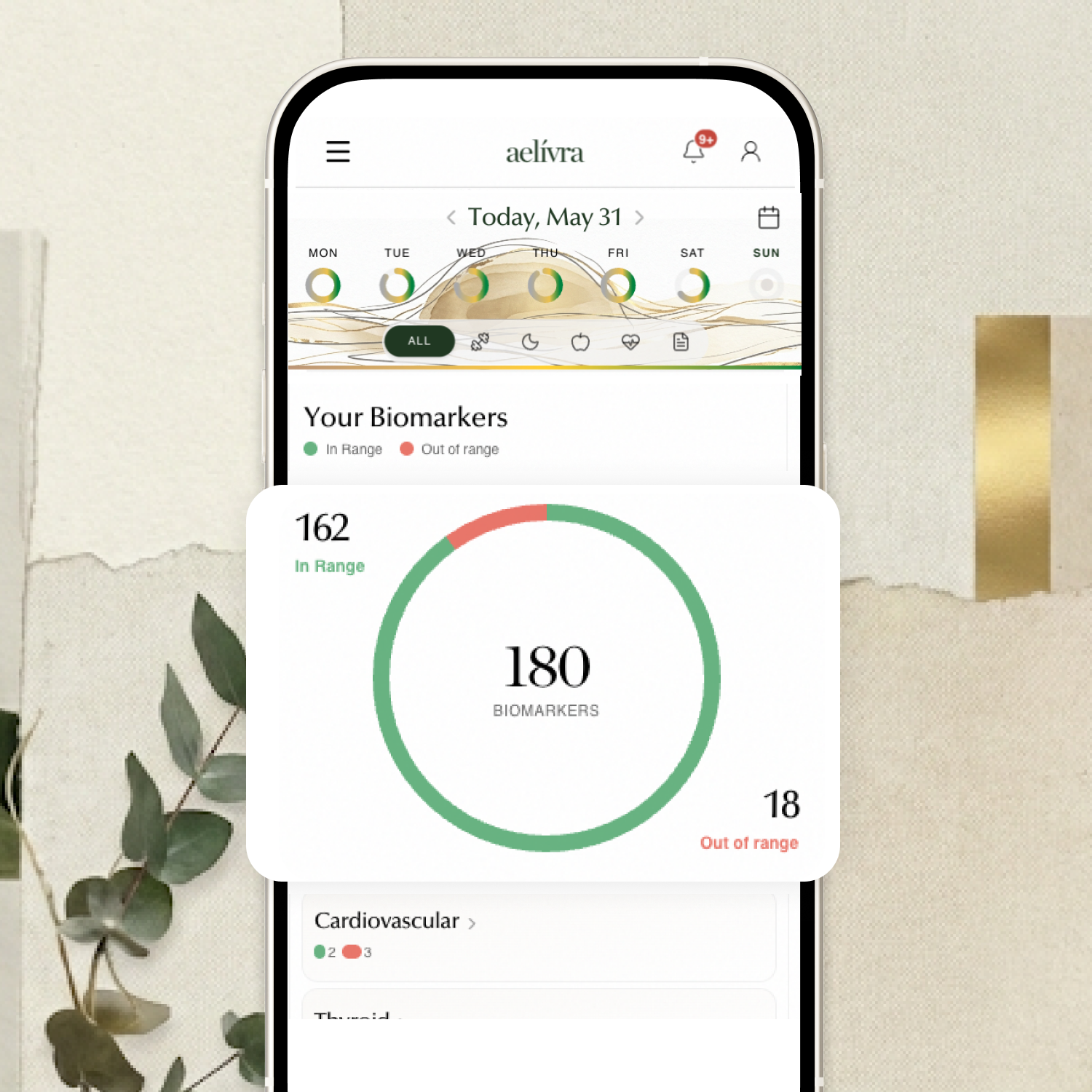
Blood work, scans, test results, medical reports — finally in one place and connected to how you actually feel. aelívra tracks biomarkers and health records over time, so you can see what's trending in the right direction and walk into your next appointment knowing exactly what to discuss.
Frequently Asked Questions
Can emotional stress cause low albumin?
Everyday emotional stress won't lower your albumin on its own. However, severe physical stress from major surgery, burns, or chronic illness can lower your albumin levels ncbi.nlm.nih.gov.
Does drinking water before a blood test affect albumin results?
Being severely dehydrated can make your levels look artificially high medlineplus.gov. Arrive normally hydrated and your test reflects a true baseline for the proteins in your blood.
Can you raise your albumin levels by eating more protein?
If your low albumin levels stem from inadequate nutrition, improving protein intake may help, though the change is slow. Protein intake should be discussed with your doctor if you have liver or kidney disease. If the root cause is kidney leakage or liver damage, eating extra protein will not fix the underlying mechanical issue.