Summary at a glance
Stelo is sold over the counter for adults 18 and older who are not taking insulin. Dexcom also says to avoid it on dialysis, with problematic low blood sugar, or with a history of an eating disorder.
A month of sensors costs $99 as a one-off, $89 on the monthly subscription, or $84 a month on the three-month plan. All sales are final.
Sensors ending before the advertised 15 days is the loudest complaint across every platform. Dexcom discloses that about one in five may not last the full term.
Users commonly report Stelo reading 15 to 50 mg/dL above a fingerstick, and most settle on using it for trends rather than exact numbers.
This review aggregates 18 sources and roughly 300 user opinions collected in July 2026. We did not test Stelo first-hand.
This review aggregates publicly available user reviews, app-store ratings and published tester accounts. We have not used Stelo first-hand. Stelo is an over-the-counter glucose biosensor cleared for adults 18 and older who do not use insulin, and it is not a treatment device. Dexcom advises against using it if you take insulin, are on dialysis, experience problematic low blood sugar, or have a history of an eating disorder. Glucose readings need clinical context, and a number outside a normal range is not a diagnosis. Talk with a licensed clinician before acting on glucose data or changing any medication. Pricing, specifications and availability were checked in July 2026 and may change.
Is Stelo Worth It?
Stelo is worth it if you cannot get a prescription CGM and you want to see how food moves your glucose. Aggregated reviews back that learning. The same reviews warn that sensors die early and readings run high. Support is a chatbot. We have not worn one ourselves.
That split runs through almost every source we read.
Every rating population in the corpus sits low. Apple's US App Store average is 2.6 out of 5 across 244 ratings apps.apple.com. Google Play shows 2.63 across 1,243 ratings, 552 of them one-star play.google.com. People who credit Stelo with changing how they eat still rate it badly.
Stelo is sold over the counter for adults 18 and older who are not on insulin. If you use insulin, this is not your device.
US adults not on insulin who want an honest read on how food and exercise move their glucose.
Stelo 3-month plan ($84/month)Aggregated reviews rate it the most accessible way to watch your own glucose without a prescription, while warning that sensor life is a lottery and support is a chatbot.
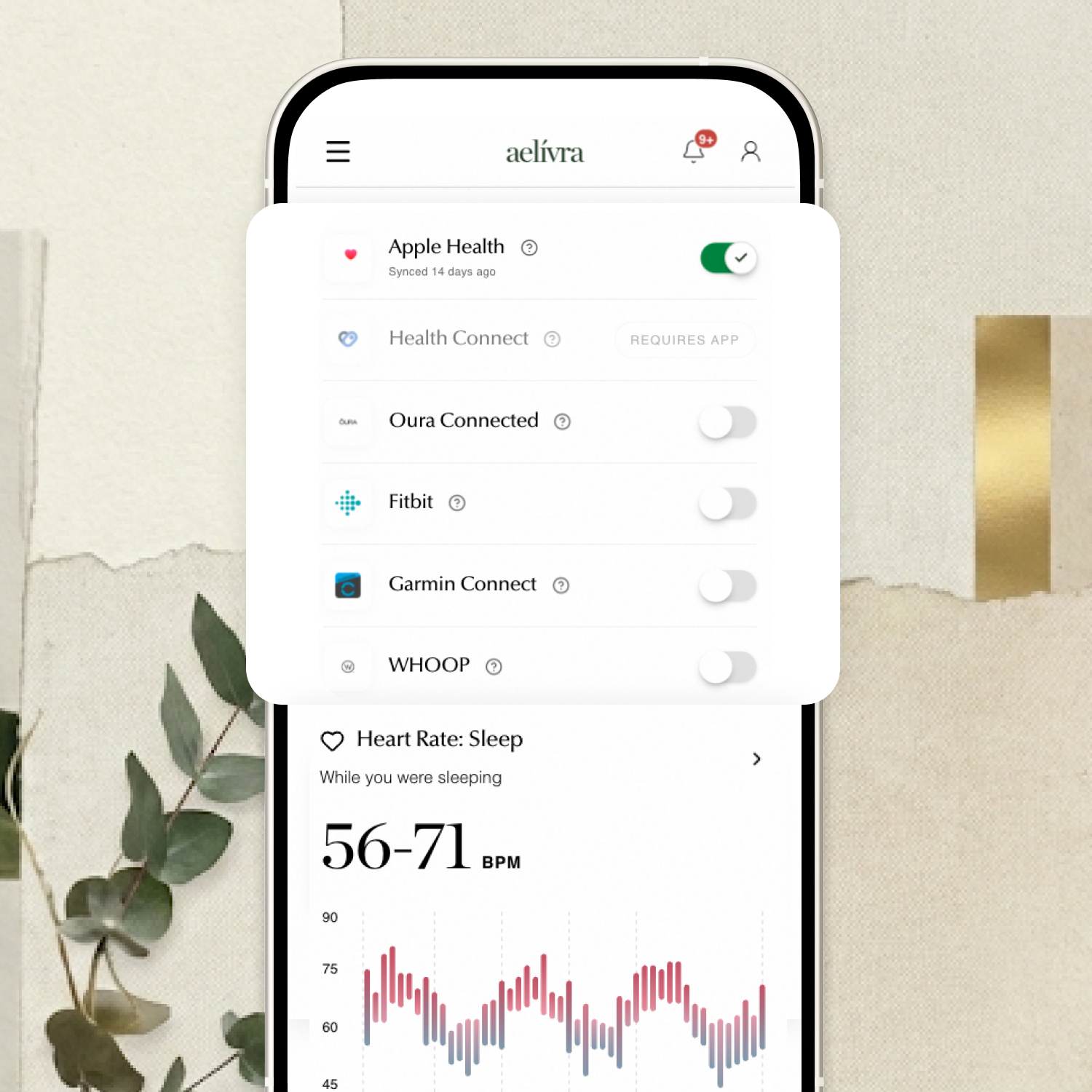
Make the most of your wearables. HRV, resting heart rate, and sleep stages can finally mean something. aelívra connects 500+ wearables and apps (Oura, Apple Health, Garmin, Fitbit, Whoop) and maps that data directly against how you actually feel — your syptoms and your wellbeing first, always.
What is Stelo?
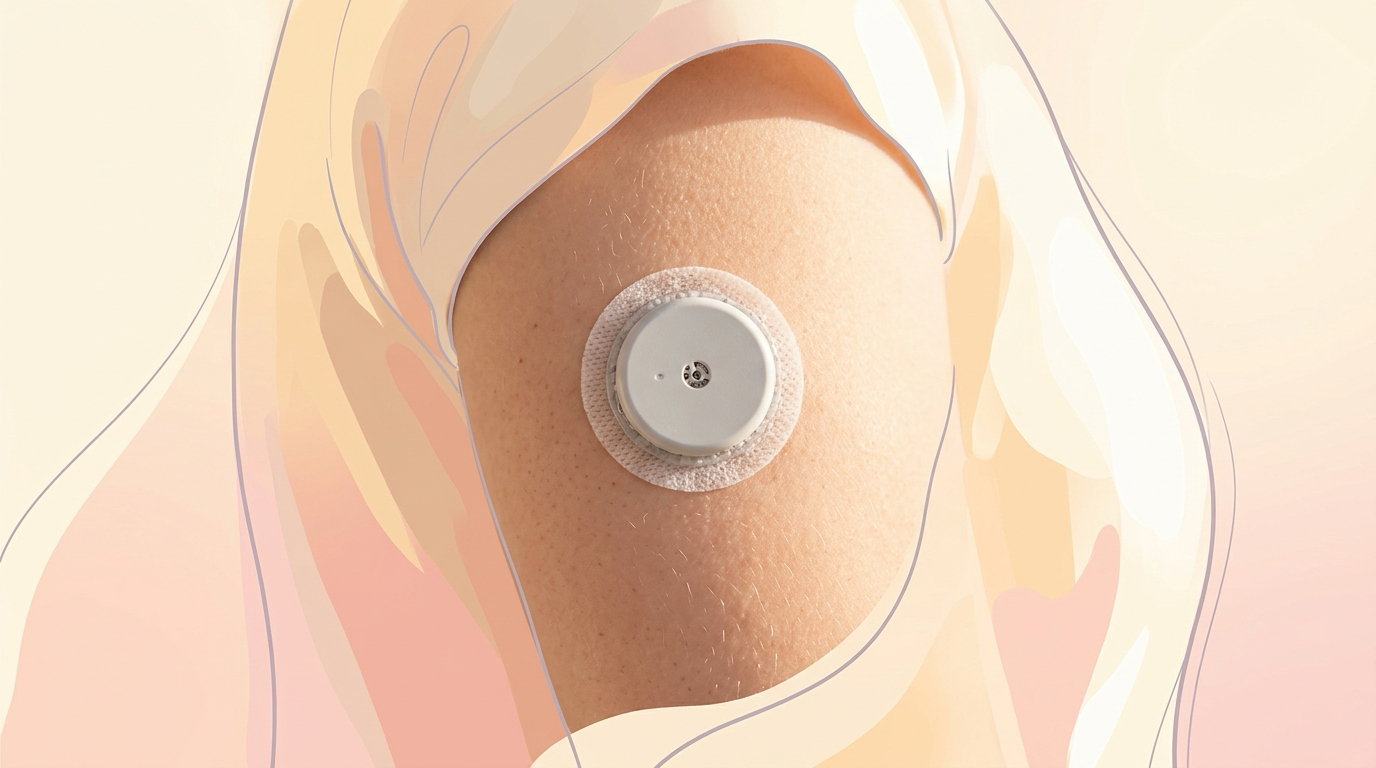
Stelo is a glucose biosensor made by Dexcom. It sticks to the back of your upper arm. It reads glucose in the fluid under your skin and sends the numbers to a phone app. No prescription and no clinic visit.
The FDA cleared it as an over-the-counter monitor for adults 18 and older who do not use insulin. Dexcom says to skip it on dialysis, with problematic low blood sugar, or with a history of an eating disorder. Stelo is not a treatment device. Dexcom says not to act on its readings without talking to a clinician.
Each sensor is meant to run 15 days.
The app adds an AI Coach and a photo food log. It sends data to Apple Health, Google Health Connect and Oura.
Stelo is US-only. You need iOS 18.6 or Android 13.
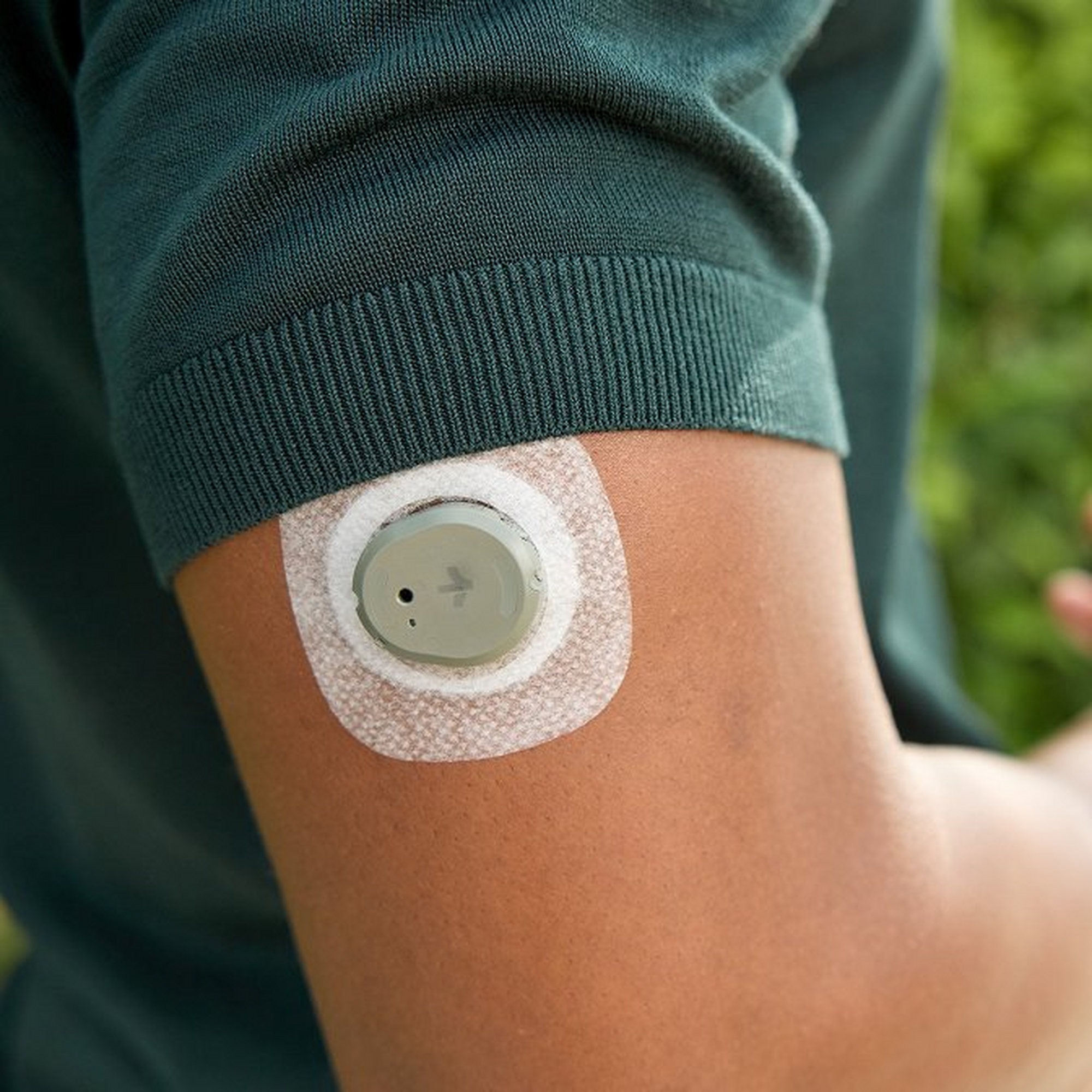 Stelo sensor and overpatch worn on the upper arm
How much does Stelo cost?
A month of Stelo costs $99 as a one-off. The subscription brings that to $89 a month, and the three-month plan to $84. Every plan ships applicators, sensors and overpatches, with the app included.
There is no separate membership fee on top.
Two policies catch people out. All sales are final, with no returns and no exchanges. Trustpilot reviewers describe asking to cancel an order seconds after placing it and being refused trustpilot.com. Others bought what read like a three-month supply and found a live subscription.
Budget for patches too. Reviewers treat third-party adhesive as part of the real cost.
Stelo is FSA and HSA eligible.
All sales are final on Stelo orders. There are no returns and no exchanges, even on unopened boxes, so check whether you are buying a one-off supply or starting a subscription before you pay.
1-month supply (one-time)
$99.00
1-month subscription
$89.00 per month (was $99.00)
3-month subscription
$252.00 per 3 months (was $297.00)
1-month supply (one-time)
$99
1-month subscription
$89
3-month subscription
$84
1-month supply (one-time)
Shipped once, no commitment, free shipping
1-month subscription
Ships monthly, pause or cancel anytime, free shipping
3-month subscription
Ships every 3 months, pause or cancel anytime, free shipping
What do users like about Stelo?
People buy Stelo because they wanted a CGM and could not get one. US insurance generally will not cover a sensor for someone who is not on insulin. That shuts out most people with prediabetes or diet-controlled type 2. One Reddit commenter in October 2025 called the price somewhat reasonable for what it unlocks reddit.com.
The other big positive is what the graph does to behaviour.
Users describe an abstract number turning into something they can act on. One man posted an A1c of 11 when he started and 5.2 when he renewed reddit.com. The same person had written three months earlier that over half his sensors were defective. Plenty of people reporting big results also name a GLP-1 or a new diet running alongside.
Amazon reviewers describe reporting a failure and getting free sensors inside three days amazon.com. Claim count seems to decide who gets denied.
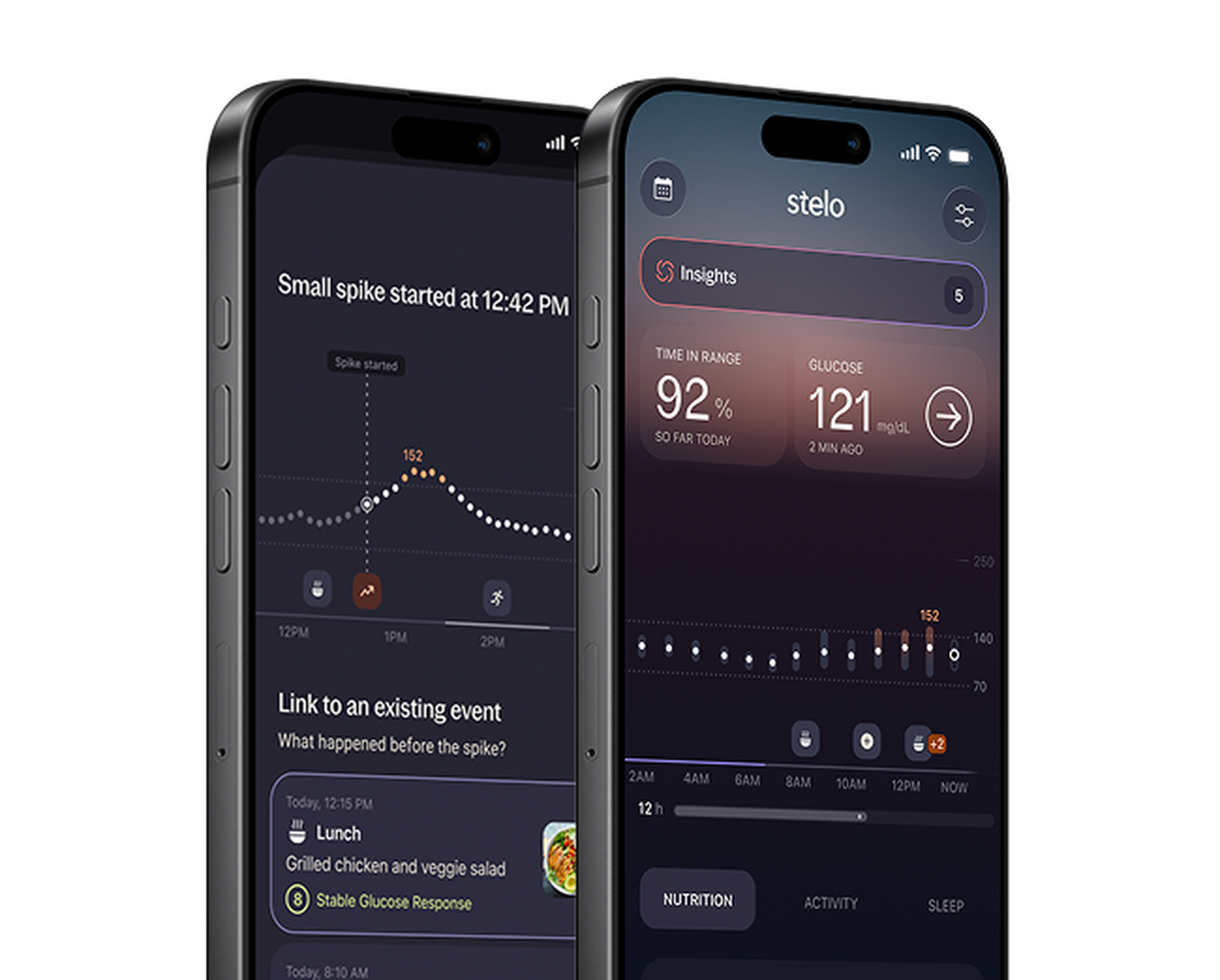 Stelo app showing time in range and a glucose spike
Stelo by Dexcom
No prescription and no insurance hurdle, which is why most satisfied buyers chose it
Users report A1c and weight changes they credit to seeing meals on a graph
Application is painless and the sensor is easy to live with, per 2026 reviewers
Free replacement sensors often arrive within days on early claims
Sensors ending before 15 days is the loudest complaint on every platform
Readings often run 15 to 50 mg/dL high, and the offset shifts between sensors
Support is a chatbot, and later replacement claims get denied without a reason
All sales are final, and supply orders can renew as subscriptions
What are the most common Stelo complaints?
Sensors quitting before 15 days is the loudest complaint, in every source type. Dexcom discloses part of it. ADCES records the company's own figure: about one in five sensors may not last the full 15 days adces.org.
What users dispute is the rate.
Forum posts volunteer figures far above one in five. One Reddit user put his own failure rate at roughly half across a dozen sensors reddit.com. Read those as self-reports from a forum, where something has usually gone wrong.
Accuracy is the second theme. Stelo tends to read high, usually by 15 to 50 mg/dL. The offset shifts between sensors. In an April 2026 gestational diabetes thread, users settled on one line: great for trends, never trusted for the actual number reddit.com.
Plenty of users keep a fingerstick meter beside the app to check it.
Then there is what happens when a sensor fails. There is no phone line, only a chatbot that gates the claim behind a serial number printed on packaging most people have thrown out. Early claims get honoured. Later ones get denied.
The app draws its own fire. Readings below 70 and above 250 are hidden, and there are no alarms. App Store reviewers panned a July 2026 redesign that forced a dark interface and added an AI coach they could not switch off. Plenty of them said the sensor itself was fine.
Stelo will not show you a value below 70 mg/dL or above 250 mg/dL, and it raises no alarms of any kind. If you need to catch a low, this is the wrong device.
Who should use Stelo?
Stelo suits US adults not on insulin who want to watch their own glucose and cannot get a prescription CGM. The learning is real; the hardware is a gamble.
Skip it if you take insulin. Skip it if you are on dialysis, or if you get lows that need catching. Stelo hides anything under 70 mg/dL and raises no alarms. ADCES says that makes it unsafe for anyone relying on alerts.
Dexcom lists a history of an eating disorder as a reason to stay away too.
In diaTribe's 2024 tester report, people without diabetes wrote about obsessing over readings and feeling guilty over a sip of lemonade diatribe.org. The app has changed since. The worry has not.
Buying direct from stelo.com may help. Three people in the freshest Reddit thread we captured said direct buyers get sensors replaced, though others who bought elsewhere report replacements without trouble reddit.com.
Outside the US, you cannot buy it.
 Stelo wordmark on a cream background
How we researched this review
We did not test Stelo first-hand. This review aggregates public user sentiment captured on 29 July 2026, across 18 sources and six source types.
What we read:
Roughly 300 distinct opinions, and two cautions on them. Trustpilot works as a complaint venue for this brand, so 52 of the 60 reviews we captured are one-star. That ratio describes who shows up, not who buys. We flagged four suspiciously uniform negative reviews and quoted none of them.
The Google Play and Apple figures are the firmest here, because both come straight from first-party endpoints. Anything older than 12 months is date-framed.
No consumer-publisher test of Stelo existed when we researched this in July 2026. No Wirecutter, no Consumer Reports, no CNET. The only editorial coverage we found was diaTribe's 2024 piece and ADCES's clinician comparison.
Common questions about Stelo
Is Stelo accurate?
Aggregated user reports say it usually reads high, commonly 15 to 50 mg/dL above a fingerstick. The gap changes from sensor to sensor. Most users treat Stelo as a trend tool.
Can you use Stelo if you take insulin?
No.
Stelo is cleared over the counter for adults 18 and older who are not on insulin. Dexcom also says to avoid it on dialysis, with problematic low blood sugar, or with a history of an eating disorder. Insulin users need alarms. Stelo has none.
Stelo or Lingo: which should you buy?
Reviewers split.
Abbott's Lingo updates every minute, and several users found it more accurate reddit.com. Stelo is smaller, runs on Android as well as iOS, and syncs with Oura and Apple Watch. People who switch tend to cite support quality.
Sources

Cameron founded aelívra after years of living an unknown no one could answer — navigating chronic health complexity through a medical system that wasn't built for it. That experience became a conviction: everyone deserves to feel truly alive, and no one should have to accept not knowing as a way of life. His work sits at the intersection of data science and functional health and wellbeing, turning the latest trusted medical research across news, health, wearables, biomarkers, and more into advice everyday people can use on their journeys toward feeling better. Every article is grounded in peer-reviewed evidence and linked to its primary source. This content is for informational purposes only and does not replace medical advice.