Summary at a glance
A red blood cell count measures the number of oxygen-carrying cells in your blood to screen for conditions like anemia or dehydration.
Normal RBC ranges typically fall between 4.7 to 6.1 million cells per microliter for men and 4.2 to 5.4 for women.
Low RBC counts are frequently caused by iron deficiencies, vitamin B12 shortages, or underlying chronic issues.
High RBC counts often result from smoking, high-altitude living, or simply mild dehydration.
Small fluctuations in your red blood cell levels are normal and heavily influenced by your hydration status and daily habits.
What is a red blood cell count?
A red blood cell count is a standard blood test that measures the total number of oxygen-carrying cells in your bloodstream. Your body relies on these cells to deliver oxygen from your lungs to your tissues. Monitoring this number helps uncover hidden causes of fatigue, anemia, or dehydration testing.com.
Testing.com (2024) reports that red blood cells make up approximately 44% of your total blood volume testing.com. They contain a vital protein called hemoglobin. When your count drops too low, your tissues simply do not get the oxygen they need to function.
Testing.com (2024) reports that white blood cells and platelets make up 1% or less of your total blood volume testing.com. Your bone marrow constantly manufactures new red blood cells to fill the remainder. If your diet lacks specific nutrients or you experience blood loss, this production cycle falls behind. Your count will drop, and your daily energy levels will quickly follow.
Red blood cells are the most common type of cell in your blood, living for around 120 days before your body replaces them.
What is a normal red blood cell count for men and women?
Normal red blood cell ranges generally land between 4.7 and 6.1 million cells per microliter for men labcorp.com. For women, the expected range sits between 4.2 and 5.4 million cells per microliter. These numbers serve as a baseline to evaluate your overall circulatory health.
Laboratories measure this count using millions of cells per microliter (mcL) of blood. Every diagnostic facility uses slightly different calibration for their equipment. Always check the specific reference interval printed on your lab report mountsinai.org.
| Population Group | Typical RBC Range (million cells/mcL) |
|---|---|
| Adult Men | 4.7 – 6.1 |
| Adult Women | 4.2 – 5.4 |
| Children | 4.0 – 5.5 |
| Infants | 4.8 – 7.1 |
Your results are not absolute rules. A reading slightly outside the standard range might be perfectly healthy for your body. Pregnancy naturally dilutes the concentration of red cells by expanding your total plasma volume. Age and genetics also shape your unique baseline.
Compare your current test results against your own historical baseline rather than just the generic lab average.
Can you have a normal RBC count and still feel exhausted?
You can absolutely experience profound fatigue even when your red blood cell count sits perfectly within the normal reference range. Your cell count only tells part of the story. If your cells lack enough hemoglobin, they cannot carry adequate oxygen, leaving you drained.
Fatigue often stems from how your nervous system handles daily stress and recovery. Tracking your heart health offers deeper insight than a single blood test. Understanding what is a good hrv can help you monitor your true recovery capacity.
Your daily habits heavily influence your circulatory efficiency. Poor sleep architecture or high systemic stress can suppress your energy levels regardless of your cell count. Learning about HRV Explained: What Your Number Actually Means for Recovery and Stress reveals the hidden physiological load your body carries.

What causes a low RBC count besides iron deficiency?
A low red blood cell count indicates anemia, a condition where your body struggles to deliver enough oxygen to your tissues. While a lack of dietary iron is the most frequent trigger, several other hidden factors can suppress your bone marrow production hematology.org.
Vitamin B12 and folate shortages directly halt cell creation. Your body needs both nutrients to build the complex structure of a red blood cell. Without them, your marrow produces fewer, abnormally large cells that cannot function correctly.
Chronic kidney disease frequently drives a steady decline in your cell count. Your kidneys produce erythropoietin, a hormone that signals your marrow to create more cells. When your kidneys struggle, this critical signal fades testing.com.
Internal bleeding also depletes your cell supply over time. Digestive tract issues, heavy menstrual cycles, or stomach ulcers can quietly drain your reserves faster than your body can rebuild them.
Ignoring a persistently low cell count forces your heart to pump harder and faster to compensate for the missing oxygen.
Why is your RBC count high when you feel healthy?
An elevated red blood cell count often results from simple dehydration rather than a serious medical condition. When you lose fluids, your blood plasma volume shrinks, making your red cells appear highly concentrated mountsinai.org.
Sometimes your body intentionally creates more cells to survive challenging environments. If your lungs cannot pull enough oxygen from the air, your system compensates. It ramps up cell production to capture every available molecule of oxygen.
In rare cases, a persistently high count signals a bone marrow disorder called polycythemia vera. This condition forces your marrow to overproduce cells. Your blood becomes thicker, which can increase your risk of dangerous clots.
How do lifestyle factors like smoking and altitude change your results?
Living at a high altitude forces your body to adapt to thinner air by manufacturing extra red blood cells. The air contains less oxygen, so your system naturally builds more cellular carriers to meet your metabolic demands.
Smoking heavily distorts your oxygen balance. Cigarette smoke introduces carbon monoxide into your bloodstream, which binds to your hemoglobin and blocks oxygen. Your body reacts to this artificial starvation by churning out more red cells testing.com.
Intense athletic training also reshapes your blood profile. If you push your body to the absolute limit during endurance sports, you trigger a natural increase in red cell production. Testing.com (2024) reports that a healthy adult weighing 150 to 180 pounds holds about 1.2 to 1.5 gallons of total blood volume testing.com. Physical conditioning optimises how effectively that volume circulates.
If you train at a high altitude, you can naturally boost your red blood cell count to enhance your physical stamina.
When should you retest your red blood cell levels?
You generally only need to check your red blood cell count once a year during a routine physical exam. A follow-up test in three to six months is standard if you are actively treating a known iron deficiency or managing a chronic kidney condition.
Monitor how you feel during your daily routine. If you notice a sudden drop in your exercise tolerance, frequent dizziness, or unexplainable fatigue, request a blood panel sooner. These physical signals often precede a measurable drop in your lab results.
Tracking your numbers over several years reveals your personal baseline. A single borderline result might just reflect poor hydration on the morning of your blood draw. A consistent downward trend over three tests requires immediate medical investigation.
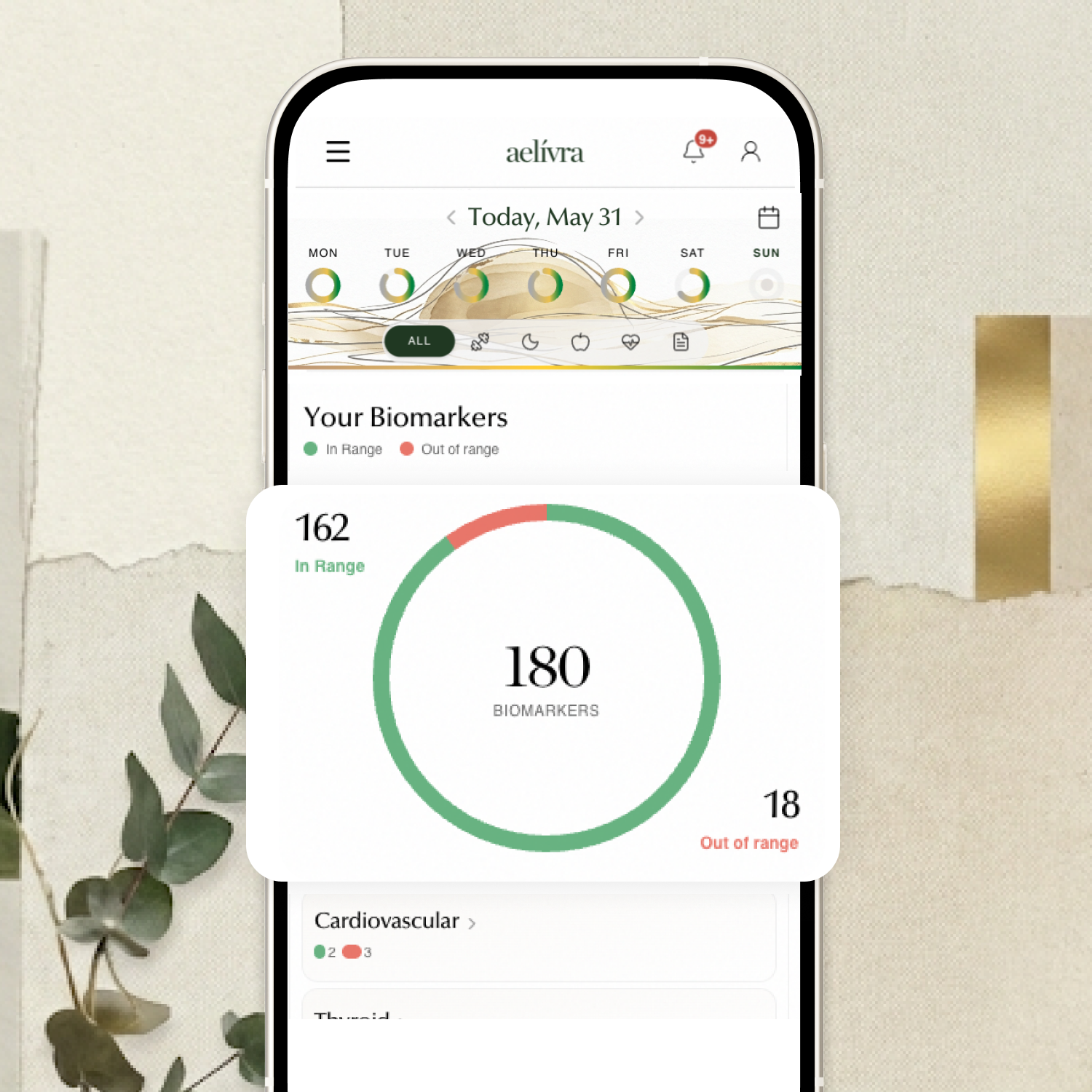
All Your Health Records, Evaluated Together
Blood work, scans, test results, medical reports — finally in one place and connected to how you actually feel. aelívra tracks biomarkers and health records over time, so you can see what's trending in the right direction and walk into your next appointment knowing exactly what to discuss.
Frequently Asked Questions
Can dehydration affect your RBC count?
Yes, dehydration shrinks your blood plasma volume. This makes your red blood cells appear highly concentrated and causes a falsely elevated lab result.
Does exercise change your red blood cell levels?
Intense endurance training increases your cell count over time. Your body adapts to the high oxygen demand by building more cellular carriers.
What is the difference between RBC and hemoglobin?
Your RBC count measures the total number of physical cells in your blood. Hemoglobin measures the specific protein inside those cells that actually holds the oxygen.
Can stress cause high red blood cells?
Stress does not directly command your bone marrow to produce more cells. It does, however, drive poor hydration and sleep habits that can artificially elevate your concentration.