Summary at a glance
Heart rate variability measures the tiny millisecond differences between your heartbeats, reflecting the balance of your nervous system.
Your ideal score is highly personal and naturally declines with age, making group averages less useful than your own 30-day baseline.
A sudden drop in your daily number often signals hidden physical or mental stress, including poor sleep, alcohol consumption, or an incoming illness.
Consistent aerobic exercise, strict sleep routines, and daily stress management are the most effective ways to raise your baseline over time.
This article discusses heart rate variability (HRV) as a general lifestyle metric for sleep, stress, and recovery. HRV data from commercial wearables is for educational purposes and should not be used to diagnose medical conditions or arrhythmias. Always consult a healthcare provider if you experience palpitations, chest pain, or severe fatigue.
What is heart rate variability?
Heart rate variability (HRV) is a physiological measure of the tiny time differences in milliseconds between consecutive heartbeats. Originating from the autonomic nervous system, it reveals how effectively your body balances the active fight-or-flight response with the restorative rest-and-digest response. A higher number shows your body is recovered and ready to perform.
While a standard pulse simply counts total beats per minute, HRV looks at the spaces in between. Harvard Health (2025) explains that this balance represents the effects of adrenaline versus the vagus nerve newsnetwork.mayoclinic.org. When your vagus nerve is active and you feel relaxed, the time between beats fluctuates naturally. When you face stress, your adrenaline spikes, and your heart beats like a rigid metronome.
This metric acts as a mirror for your internal stress load. Higher variability indicates a resilient system that adapts quickly to changing demands. Lower variability suggests that one side of your nervous system—almost always the stress side—is taking over and working overtime to keep you upright.
What is a healthy heart rate variability for my age?
A healthy heart rate variability is highly personal and naturally decreases as you get older, meaning there is no single perfect score. Your ideal range depends entirely on your own baseline rather than population averages. Comparing your daily number to a friend or spouse usually causes unnecessary anxiety.
Normative data shows exactly how much age and gender influence these numbers. WHOOP (2026) reports that the average HRV for male members is 65 milliseconds, while females average 62 milliseconds whoop.com. Age plays the largest role in these averages. For a 25-year-old, the average score sits around 78 milliseconds, but by age 55, that average drops significantly to just 44 milliseconds whoop.com.
| Age Group | Typical Average HRV | Expected Range (Middle 50%) |
|---|---|---|
| 20–25 | 78 ms | 55 – 105 ms |
| 35–40 | 60 ms | 40 – 80 ms |
| 45–50 | 48 ms | 35 – 65 ms |
| 55–60 | 44 ms | 30 – 55 ms |
| 60–65 | 40 ms | 25 – 45 ms |
Cleveland Clinic (2026) notes that these fluctuations are very small, often adding or subtracting just a fraction of a second between beats my.clevelandclinic.org. Because scores decline naturally over time, doctors and sports scientists focus entirely on your personal 30-day baseline. As long as your daily numbers stay relatively close to your own rolling average, your nervous system is likely adapting well to your current lifestyle.
When the variability between your heartbeats is greater than 0.12 seconds, it is actually called sinus arrhythmia, which is a completely normal sign of a healthy heart.
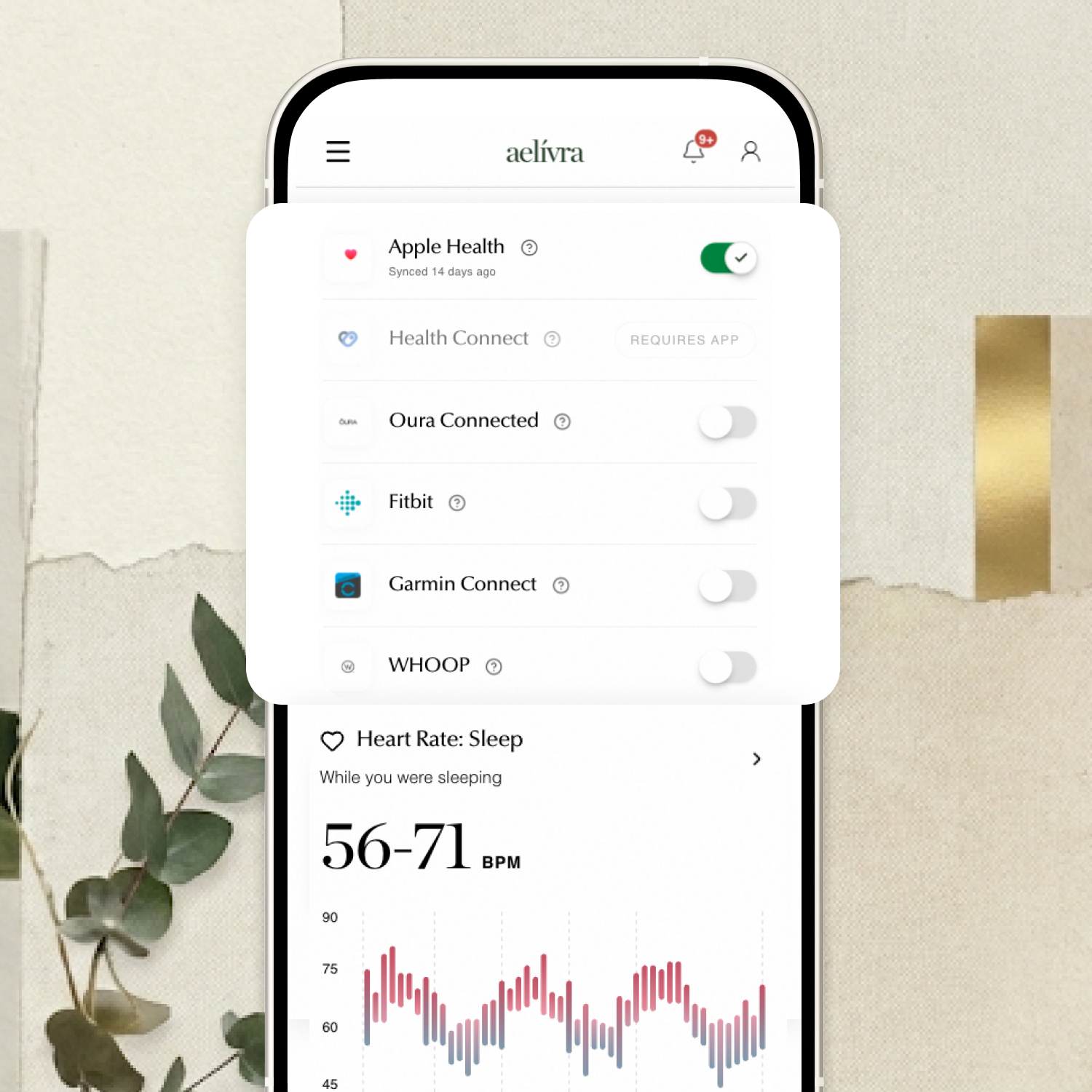
Make the most of your wearables. HRV, resting heart rate, and sleep stages can finally mean something. aelívra connects 500+ wearables and apps (Oura, Apple Health, Garmin, Fitbit, Whoop) and maps that data directly against how you actually feel — your syptoms and your wellbeing first, always.
Why does my HRV score drop when I am stressed or tired?
Your HRV drops during stress because your nervous system enters fight-or-flight mode, causing your heart to beat in a rigid, fixed rhythm. This lack of variation means your body is burning energy to deal with a perceived threat rather than recovering.
WHOOP (2026) outlines that a low score usually indicates the sympathetic branch of the nervous system is dominating whoop.com. This happens during intense psychological stress, poor sleep, or after heavy physical exertion. When you face an overwhelming work week or a tense personal conflict, your brain treats it the exact same way it treats a physical threat. It suppresses your parasympathetic recovery systems to keep you alert.
A 2024 report from CDC Stacks confirms that chronic workplace stress creates a measurable decrease in heart rate variability, signaling a state of constant sympathetic overdrive whoop.com. Your body diverts resources away from digestion, tissue repair, and immune function to handle the immediate crisis. If you notice your numbers steadily declining from Tuesday through Friday, you are watching your nervous system physically wear down in real time.
 A person looking tired and stressed while rubbing their temples.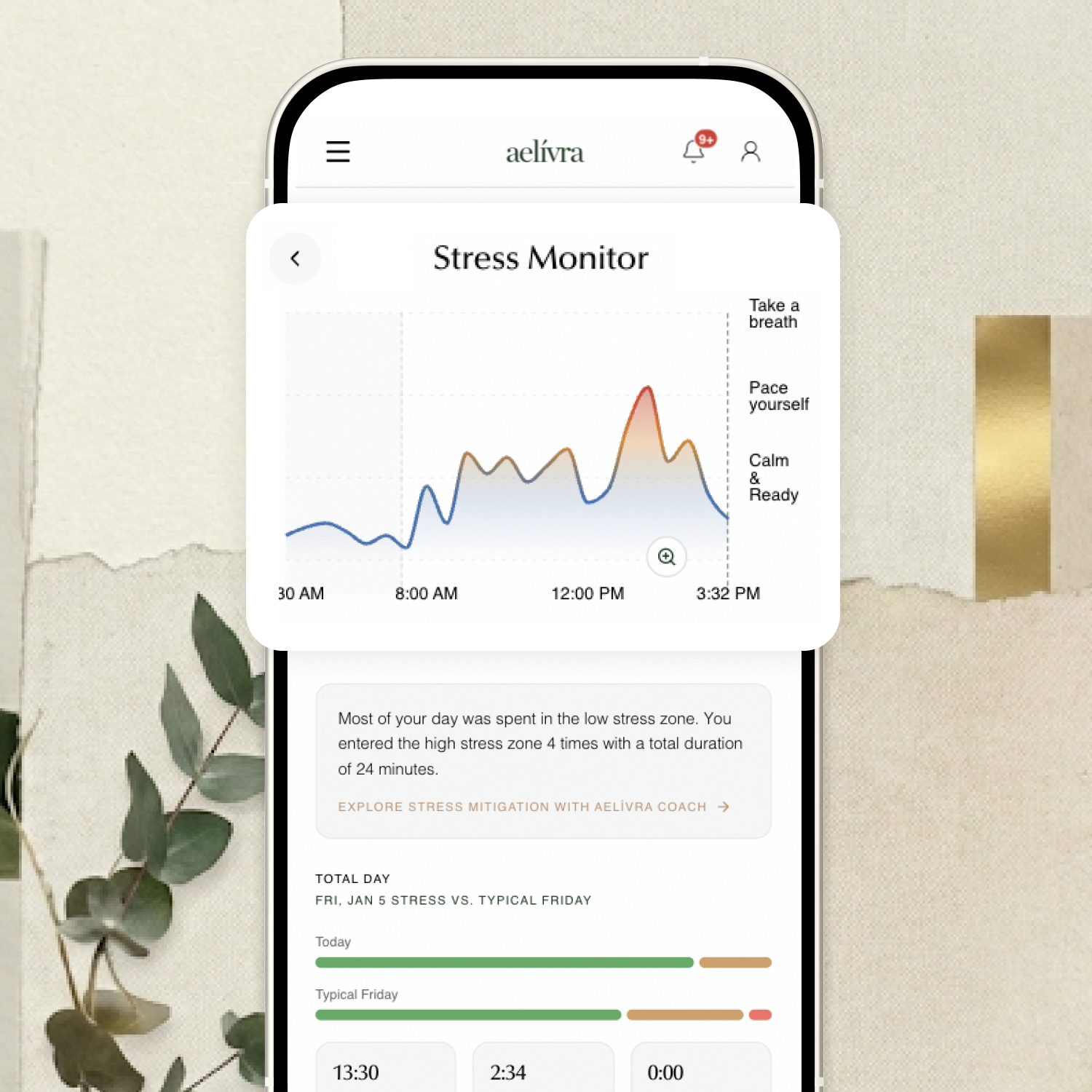
See whether anxiety, fatigue, or pain are connected to stress patterns you can actually change. aelívra tracks mood and emotional triggers alongside physical symptoms — revealing a clear plan of how to support your health and wellbeing and finally feel better.
How do sleep and alcohol affect your overnight HRV?
Poor sleep and alcohol both crash your overnight HRV by keeping your heart rate elevated and blocking the deep restorative sleep phases your nervous system needs to repair itself. Your body simply cannot recover when it is working hard to process toxins or stay awake.
Alcohol acts as a chemical stressor. When you drink, your body prioritizes clearing the alcohol over resting your muscles or brain. This keeps your sympathetic nervous system firing all night long. Even a single glass of wine close to bedtime can suppress your vagus nerve and flatten your heart rate variability until the early hours of the morning.
Sleep quality plays a similar role. Healthline (2026) reports that daily metrics for heart health are heavily influenced by sleep quality, mental stress, and alcohol intake healthline.com. During deep sleep, your body naturally shifts into heavy parasympathetic dominance. If you wake up frequently or cut your sleep short, you interrupt this biological repair cycle. A massive drop in your morning score after a late night out simply means your nervous system failed to recharge its battery.
Avoid heavy meals and alcohol within three hours of bedtime to prevent your digestive system from tanking your overnight recovery scores.
What are the best ways to naturally increase heart rate variability?
You increase your heart rate variability naturally by building cardiovascular fitness through moderate exercise, maintaining a strict sleep schedule, and practicing daily stress management techniques. Consistency matters far more than intense, occasional efforts.
Dr. Elijah Behr, a cardiologist at Mayo Clinic Healthcare, explains that higher heart rate variability is generally associated with better cardiovascular fitness newsnetwork.mayoclinic.org. Engaging in regular aerobic activity—like jogging, swimming, or cycling—strengthens your heart muscle. A stronger heart pumps more blood per beat, allowing it to transition between rest and effort much more smoothly.
Hydration and blood pressure management also play huge roles. The American Heart Association (2025) emphasizes that nearly half of US adults live with high blood pressure newsroom.heart.org. Managing these fundamental health metrics directly supports better nervous system balance. Dehydration reduces your total blood volume, which forces your heart to beat faster to circulate oxygen, driving your variability down.
Finally, active recovery practices yield strong results. Healthline (2026) highlights that simple breathing exercises help manage acute stress and effectively improve HRV over time healthline.com. Spending ten minutes daily on deep, slow breathing manually stimulates the vagus nerve, training your body to return to a calm state faster.
 A person stretching and doing deep breathing exercises outdoors.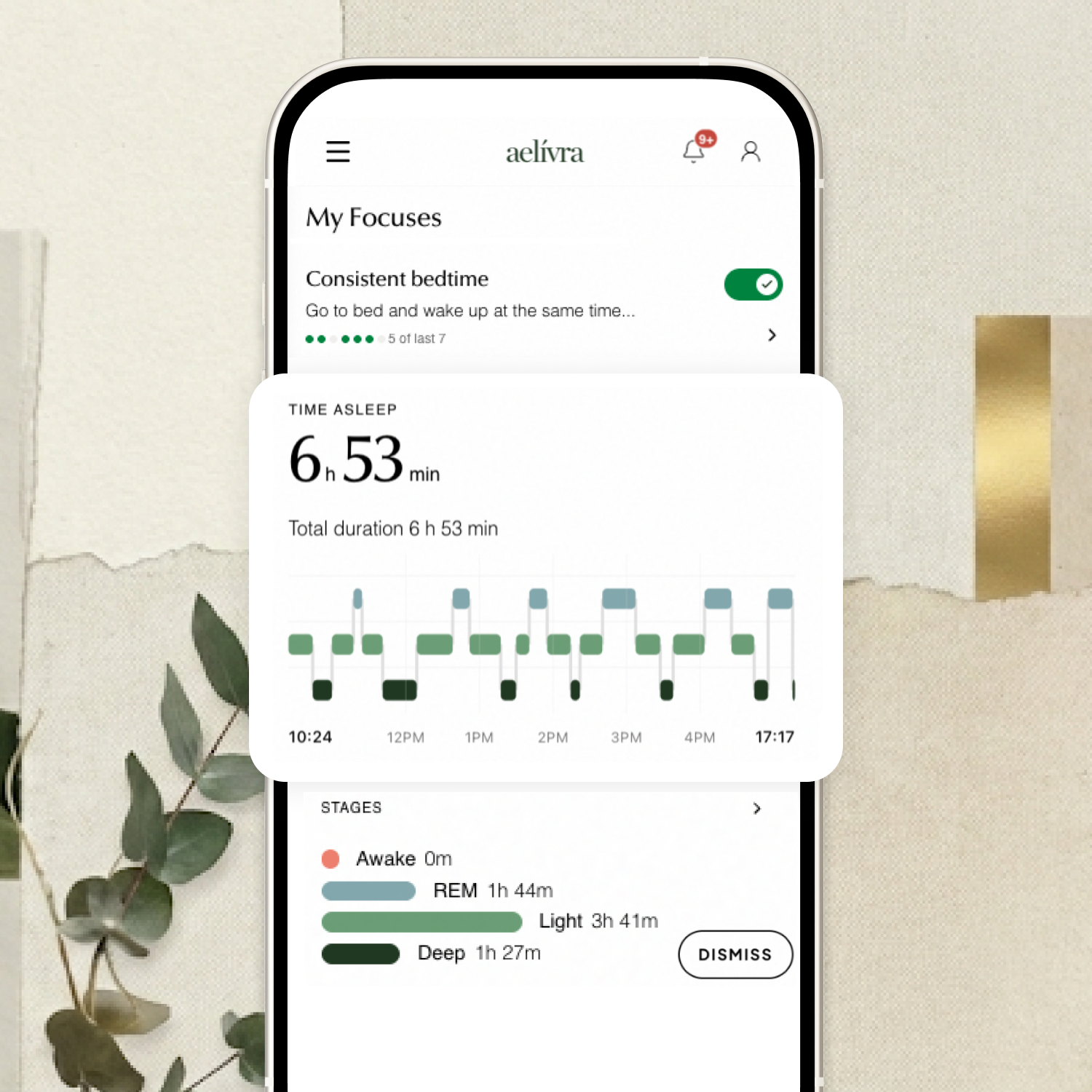
Get the rest you've always deserved. aelívra connects your sleep quality to your daytime energy, mood, and symptoms — then gives you practical steps based on your own patterns so you can finally get restorative rest, not just hours in bed.
Should you skip a workout if your HRV is low today?
Yes, you should consider scaling back your workout if your HRV is significantly lower than your personal baseline for multiple days in a row. A sustained low score means your body is already struggling to recover from existing stress.
Pushing through a heavy training session when your nervous system is depleted often does more harm than good. Exercise is a physical stressor. If your sympathetic nervous system is already maxed out from poor sleep or work anxiety, adding a high-intensity workout simply digs a deeper hole.
Instead of forcing a sprint or heavy lift, use low-score days for active recovery. Activities like walking, light yoga, or gentle stretching stimulate blood flow without taxing the central nervous system. If your score rebounds the next morning, your body has caught up on recovery, and you are ready to resume normal, intense training.
Treat a low HRV day as an invitation for active recovery rather than complete couch rest. A light 20-minute walk can stimulate your vagus nerve and speed up recovery.
Frequently Asked Questions
Can dehydration cause a low HRV?
Yes. Dehydration reduces your overall blood volume, which forces your heart to beat faster and harder to circulate enough oxygen. This extra strain drives your variability down significantly.
Is a higher HRV always better?
Generally, a higher number indicates better cardiovascular fitness and recovery. However, massive, unexplained spikes far above your baseline can sometimes point to an irregular heart rhythm rather than great health.
How long does it take to improve my baseline HRV?
While a perfect night of sleep or a deep breathing session offers a quick, temporary boost, permanently raising your baseline usually takes weeks or months of consistent aerobic exercise and lifestyle management.
Does eating late at night affect my morning score?
Yes. Eating a large meal right before bed forces your body to expend energy on digestion while you sleep. This prevents your heart rate from dropping and keeps your nervous system actively engaged.
Sources

Cameron founded aelívra after years of living an unknown no one could answer — navigating chronic health complexity through a medical system that wasn't built for it. That experience became a conviction: everyone deserves to feel truly alive, and no one should have to accept not knowing as a way of life. His work sits at the intersection of data science and functional health and wellbeing, turning the latest trusted medical research across news, health, wearables, biomarkers, and more into advice everyday people can use on their journeys toward feeling better. Every article is grounded in peer-reviewed evidence and linked to its primary source. This content is for informational purposes only and does not replace medical advice.