Summary at a glance
Heart rate variability is highly individual, making a stable personal baseline more important than a universal target number.
Age is the primary factor driving changes in these metrics, with average scores naturally decreasing over time.
Researchers increasingly view these beat-to-beat measurements as a predictive window into mental resilience and future depressive symptoms.
Brief periods of movement, such as walking immediately after meals, directly support the autonomic nervous system and help maintain metabolic stability.
This article provides educational information on heart rate variability (HRV) as a metric for wellness and stress resilience. HRV is not a diagnostic tool for heart disease, arrhythmias, or clinical mental health conditions. Always consult a healthcare provider for medical advice regarding cardiovascular symptoms.
What Is a Good HRV Score?
A good heart rate variability (HRV) is simply a score that remains stable or trends upward compared to a personal baseline. Because variations between heartbeats are highly unique to each person, comparing numbers to a universal standard is unhelpful. Higher baseline scores generally indicate excellent stress resilience.
Cleveland Clinic (2026) explains that heart rate variability is a normal physiological occurrence my.clevelandclinic.org. The human heart does not keep a perfectly metronomic rhythm. Instead, it adjusts constantly based on signals from the autonomic nervous system. A healthy heart responds quickly to inputs from both the sympathetic and parasympathetic branches.
The two branches of the autonomic nervous system constantly compete for control. The sympathetic branch initiates the stress response, speeding up the heart to meet demands. The parasympathetic branch handles recovery functions, applying the brakes to slow things down. A high score suggests the body transitions easily between these two states, showing an excellent capacity to recover efficiently.
For a deeper dive into the metric itself, read our guide on HRV Explained: What Your Number Actually Means for Recovery and Stress.
What Is a Normal HRV Range for My Age?
Normal HRV ranges drop steadily as people grow older. A healthy 20-year-old might consistently see numbers above 70 milliseconds. Meanwhile, a healthy 60-year-old often averages closer to 30 milliseconds.
Age is the single biggest factor driving these changes. As the autonomic nervous system ages, it naturally loses some flexibility. Cellular aging affects the vagus nerve, which serves as the primary signaling pathway for the parasympathetic nervous system. As vagal tone weakens over the decades, the heart loses some of its capacity to make rapid micro-adjustments. This physiological shift causes the beat-to-beat variations to narrow over time.
Cleveland Clinic (2026) notes that variations decrease normally as a person gets older my.clevelandclinic.org. The table below outlines typical ranges observed across age groups.
| Age Group | Typical HRV Range (ms) |
|---|---|
| 20–29 | 55 – 105 |
| 30–39 | 45 – 85 |
| 40–49 | 35 – 70 |
| 50–59 | 28 – 55 |
| 60+ | 22 – 45 |
Comparing personal scores against younger peers causes unnecessary worry. The only valuable comparison is tracking changes against a rolling thirty-day personal average.
Heart rate variability measures the time in milliseconds between consecutive heartbeats, capturing micro-fluctuations that are undetectable without specialized sensors.
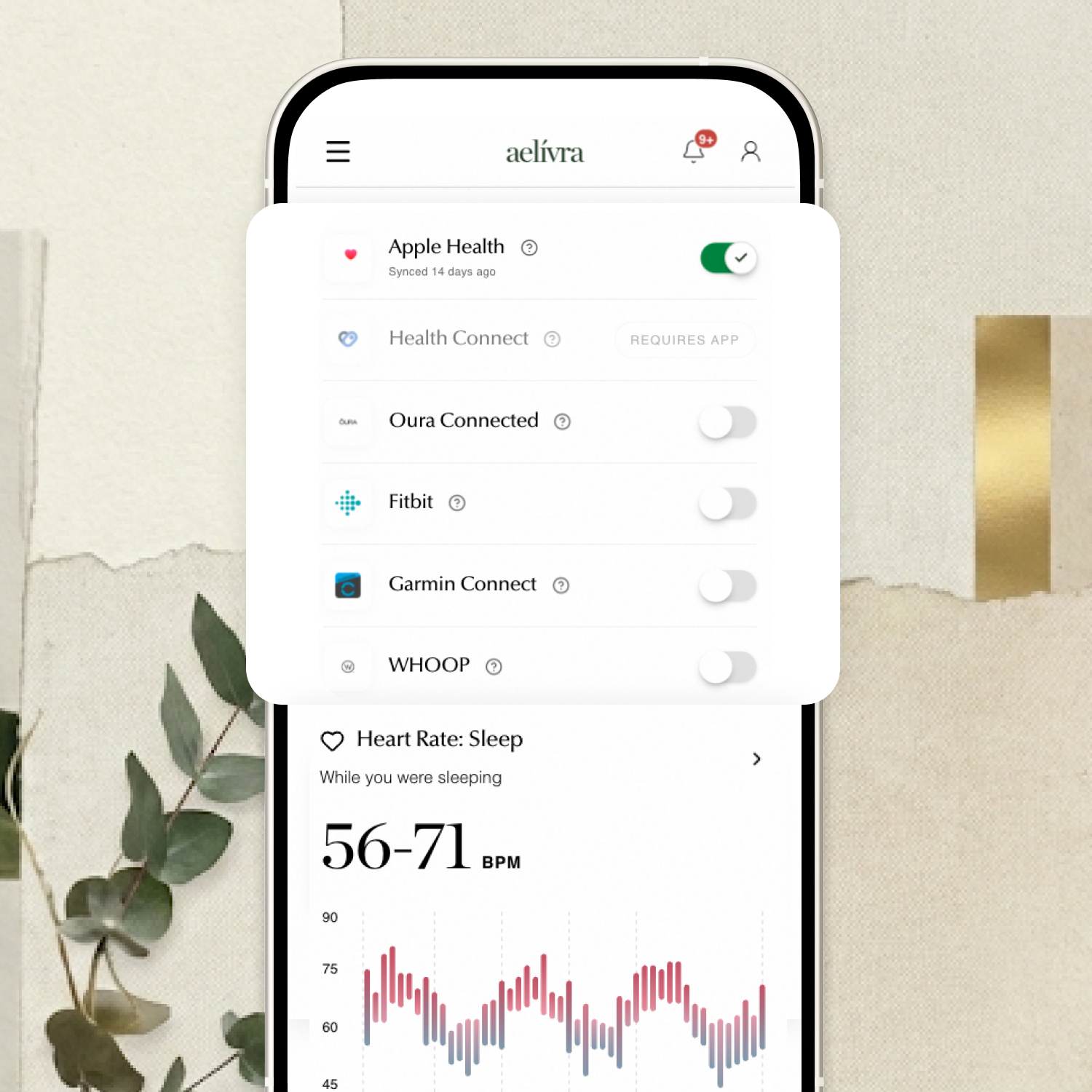
Make the most of your wearables. HRV, resting heart rate, and sleep stages can finally mean something. aelívra connects 500+ wearables and apps (Oura, Apple Health, Garmin, Fitbit, Whoop) and maps that data directly against how you actually feel — your syptoms and your wellbeing first, always.
Can Your HRV Score Predict Mental Health and Depression?
Yes, researchers now recognize that a consistently low HRV operates as a strong predictor of future mental health challenges. It acts as a direct, quantifiable window into the brain-heart axis.
Chronic psychological stress keeps the sympathetic nervous system locked in an active state. Over time, this constant activation blunts the heart's responsiveness. A 2026 study published in PubMed analyzed 56 separate studies to map this specific physiological connection pubmed.ncbi.nlm.nih.gov. The researchers found that lower heart rate variability indices correlate significantly with higher levels of future depressive symptoms.
In fact, 43% of the prediction models reviewed showed that these metrics had direct predictive effects on mental health outcomes pubmed.ncbi.nlm.nih.gov. Tracking these metrics offers doctors a non-invasive way to measure how heavily psychological burdens are weighing on physical systems.
PubMed (2026) also reports that changes in these beat-to-beat metrics correlate with pathological states like inflammation pubmed.ncbi.nlm.nih.gov. The numbers provide a leading indicator for mental resilience long before clinical symptoms surface.
 Clinical graph showing beat-to-beat heart rate variability fluctuations over time
How Do Lifestyle Habits Like Post-Meal Walking Impact Your HRV?
Brief, light movement after eating significantly improves metabolic stability, which directly supports a higher resting HRV. Even short walks help the autonomic nervous system recover faster from the immediate stress of digestion.
Modern daily routines often work against optimal heart health. The European Journal of Public Health Studies (2026) reports that office workers now spend up to 80% of their working hours seated oapub.org. Breaking up this prolonged sedentary time is crucial for cardiovascular recovery.
The same journal notes that a 10-minute walk immediately after a meal effectively reduces blood glucose spikes oapub.org. This rapid movement triggers insulin-independent glucose regulation. It prevents postprandial hyperglycemia, a condition that drives vascular inflammation and lowers variability by keeping the body in a prolonged state of physical stress.
Timing and frequency matter immensely. Researchers found that three 15-minute bouts of walking after meals actually outperform a single continuous 45-minute walk for controlling daily glycemia oapub.org. Keeping blood sugar stable prevents the nervous system from treating digestion as an emergency event.
A short 10-minute walk right after dinner is one of the most effective, accessible tools for improving overnight autonomic nervous system recovery.
What Should You Do When Your Wearable Shows a Sudden HRV Drop?
When a wearable device shows a sharp drop in variability, the best response is to prioritize rest and hydration. A sudden dip is usually a temporary sign of physical stress. Common triggers include intense exercise, poor sleep, or an impending viral infection.
Intense workouts temporarily suppress the parasympathetic nervous system. It is completely normal to see a lower score the morning after a heavy lifting session or an endurance run. The body is simply allocating resources toward tissue repair.
Recovery timelines vary based on the intensity of the stressor. A poor night of sleep might suppress metrics for 24 hours. Conversely, a grueling marathon could leave the nervous system depleted for an entire week. Recognizing these normal recovery windows prevents unnecessary health anxiety.
Dr. Elijah Behr from Mayo Clinic Healthcare (2025) emphasizes that while low heart rate variability may indicate poor cardiovascular fitness, in healthy individuals, it does not provide enough detail on its own to determine the likelihood of severe events like a heart attack newsnetwork.mayoclinic.org. Looking at trends over a week provides far more value than reacting to a single morning's data point.
 Person resting to allow the autonomic nervous system to recover after physical stress
Uncover what you've been searching for. aelívra guides you through wellbeing explorations across sleep, diet, stress, symptoms and more so you can finally act on what's actually going on, one day at a time, every step at your own pace.
Frequently Asked Questions About HRV
Why does my score change from day to day?
Daily fluctuations reflect immediate recovery status. Poor sleep, a heavy meal late at night, or emotional stress will cause the metric to dip temporarily as the sympathetic nervous system works overtime.
Is it normal to have a low baseline number?
Yes, a naturally low baseline does not necessarily indicate a health problem. Genetics and heart size play a major role, making it much more practical to watch for sudden downward trends rather than focusing on the absolute number.
How quickly can lifestyle changes improve these metrics?
Consistent improvements in sleep hygiene and daily movement can positively influence baseline averages in just a few weeks. However, profound physiological adaptations typically take several months of sustained habits.
Sources

Cameron founded aelívra after years of living an unknown no one could answer — navigating chronic health complexity through a medical system that wasn't built for it. That experience became a conviction: everyone deserves to feel truly alive, and no one should have to accept not knowing as a way of life. His work sits at the intersection of data science and functional health and wellbeing, turning the latest trusted medical research across news, health, wearables, biomarkers, and more into advice everyday people can use on their journeys toward feeling better. Every article is grounded in peer-reviewed evidence and linked to its primary source. This content is for informational purposes only and does not replace medical advice.