
Summary at a glance
Standard TSH blood tests often miss thyroid fatigue because laboratory reference ranges are too broad to capture true cellular energy deficits.
Over 89% of patients currently treated for hypothyroidism still experience severe abnormal fatigue, frequently due to poor hormone conversion.
A comprehensive thyroid panel measuring Free T3 and TPO antibodies is essential for finding the real root cause of metabolic exhaustion.
Physical symptoms like persistent cold intolerance and brain fog are major indicators of subclinical thyroid dysfunction.
Tracking daily body temperature and energy dips provides objective clinical evidence that helps doctors see beyond standard lab thresholds.
This article is for educational purposes and does not constitute medical advice. Information regarding thyroid function, metabolic testing, and symptom tracking is not intended to diagnose or treat hypothyroidism, Hashimoto's disease, or any endocrine condition. Always consult a healthcare provider to interpret comprehensive thyroid panels and determine appropriate medical interventions.
What Is Thyroid Fatigue?
Thyroid fatigue is a profound, cellular-level exhaustion that occurs when the body lacks sufficient active thyroid hormone to power metabolic functions. Unlike ordinary tiredness, this systemic energy deficit often persists despite adequate sleep and frequently coincides with cold intolerance, mental fog, and unexplained weight changes.
The thyroid gland acts as the master pacemaker for the human body. It dictates how quickly and efficiently cells use fuel to create energy. When this system underperforms, the metabolic engine slows down. People often describe the sensation as moving through thick water or carrying invisible weights. A morning coffee provides little to no relief. The issue is not a lack of central nervous system stimulation. It is a fundamental failure in chemical energy production at a cellular level.
This type of fatigue affects every major system. Digestion slows, causing heaviness after meals. Heart rates can drop, leading to sluggish circulation. The brain struggles to fire efficiently, resulting in a clouded mental state. For many, the hardest part of thyroid fatigue is its invisibility. On the outside, the person looks fine. On the inside, their body is rationing energy just to keep basic biological functions running.
 A person experiencing deep cellular fatigue despite getting adequate sleep.
Can You Have Thyroid Fatigue If Your Blood Work Is Normal?
Yes, you can experience severe thyroid fatigue even if standard lab tests report that your levels fall within normal parameters. Standard medical testing typically relies entirely on measuring Thyroid Stimulating Hormone (TSH). Healthline (2026) explains that the standard reference range for TSH is notoriously broad, typically falling between 0.4 and 4.0 mIU/L healthline.com.
Many progressive health experts argue this range is far too wide to accurately assess wellness. A person whose TSH sits at 3.8 mIU/L is technically normal according to standard laboratory thresholds. Yet, that same person might feel vibrant at 1.0 mIU/L and entirely depleted at the higher end of the scale. Some clinical professionals advocate for a narrower optimal range of 0.45 to 2.5 mIU/L for true metabolic health healthline.com.
This discrepancy leaves thousands trapped in a diagnostic gap. They feel the heavy physical reality of a sluggish metabolism. They gain weight, lose hair, and sleep poorly. But their medical records show no actionable dysfunction. Doctors often dismiss these complaints as stress, aging, or lifestyle factors. In reality, the patient is experiencing a functional deficit that broad reference ranges simply fail to flag.
Track your waking basal body temperature. Consistently low readings (below 97.8°F) often point to a metabolic slowdown even when TSH labs look entirely normal.
What Should a Full Thyroid Panel Include for Fatigue?
A full thyroid panel for fatigue must include more than just a basic TSH screen; it needs to measure Free T4, Free T3, and thyroid antibodies. TSH only measures the signal from the pituitary gland down to the thyroid. It reveals absolutely nothing about how much active hormone actually reaches your tissues.
To understand the complete metabolic picture, a comprehensive blood panel is required.
| Marker | What It Measures | Why It Matters for Energy |
|---|---|---|
| TSH | Pituitary gland signal | High levels indicate the brain is demanding more hormone production. |
| Free T4 | Inactive storage hormone | Shows what the thyroid gland actually secretes into the bloodstream. |
| Free T3 | Active metabolic hormone | The primary driver of cellular energy, body heat, and metabolic rate. |
| TPO Antibodies | Autoimmune activity | High levels indicate immune cells are actively attacking the thyroid gland. |
A common physiological barrier to feeling well is the conversion process. The thyroid primarily produces T4, which the body must convert into active T3 in the liver and gut. If this conversion fails, Free T3 drops. This creates widespread exhaustion even when TSH and T4 look perfectly acceptable. For more on tracking these metrics, read our guide to understanding your metabolic biomarkers.
 A detailed lab report highlighting comprehensive thyroid hormone levels.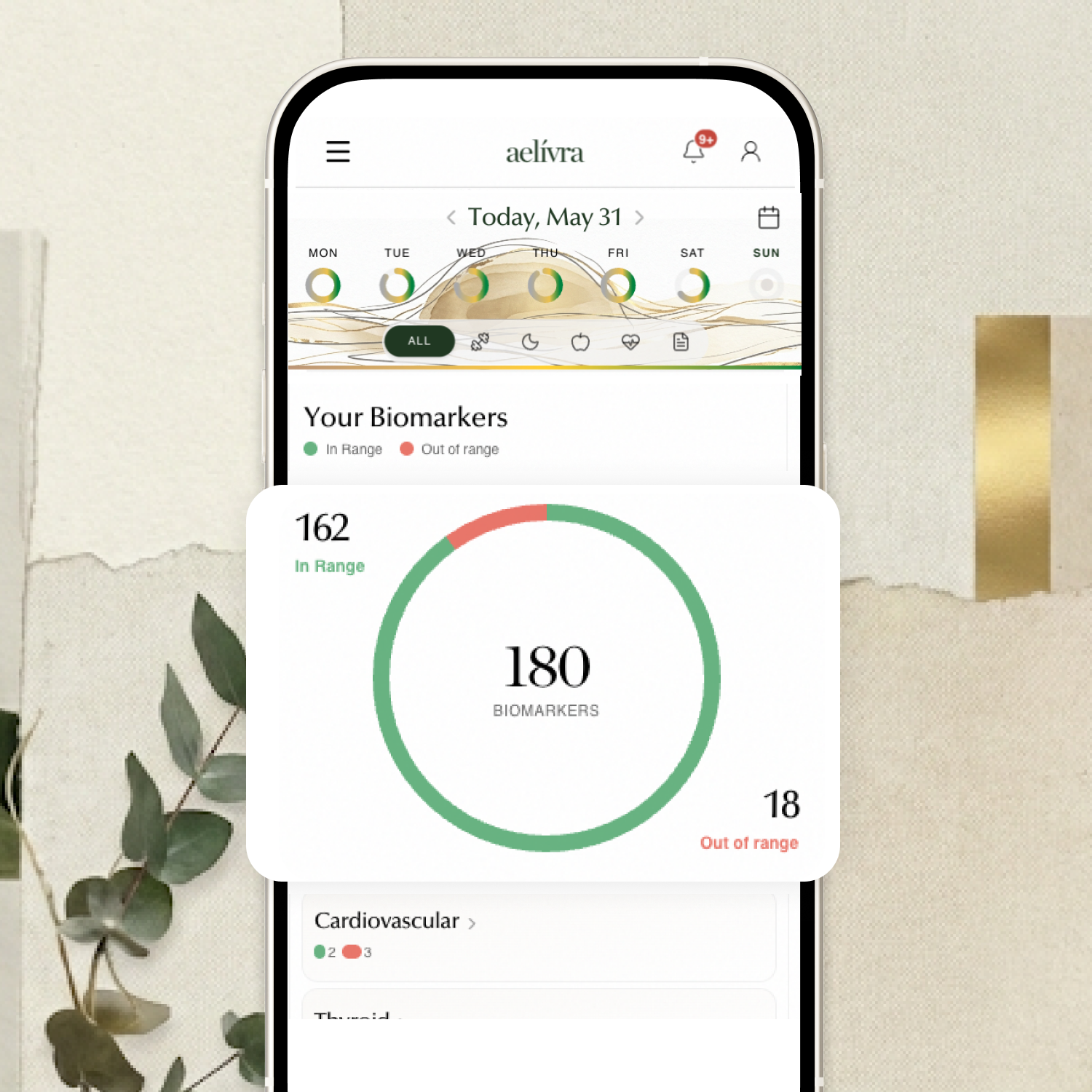
Blood work, scans, test results, medical reports — finally in one place and connected to how you actually feel. aelívra tracks biomarkers and health records over time, so you can see what's trending in the right direction and walk into your next appointment knowing exactly what to discuss.
What Are the Symptoms of Subclinical Hypothyroidism Doctors Miss?
Subclinical hypothyroidism symptoms include persistent exhaustion, feeling unusually cold, and unexplainable weight retention, even when primary hormone levels appear normal. The American Thyroid Association (2026) provides clinical direction for managing these subtle thyroid states pubmed.ncbi.nlm.nih.gov. However, everyday physical signs often fly completely under the radar during quick standard checkups.
Because the thyroid regulates core body temperature, physical cold intolerance is a primary symptom. People with suboptimal thyroid function often need extra layers in a perfectly warm room or experience freezing hands and feet. Digestion also slows down. This leads to persistent constipation, acid reflux, or a heavy feeling of bloating after eating a normal meal.
Cognitive function suffers equally under these conditions. Brain fog, word-finding difficulties, and a general lack of mental sharpness are hallmark signs that the brain is not receiving enough metabolic support. Over time, these missed symptoms compound. People gradually adapt to feeling worse, assuming their declining energy is just a natural part of getting older.
Memory lapses and cognitive slowing are not always signs of aging; the brain requires massive amounts of active T3 hormone to fire neurons efficiently.
Why Am I Still Exhausted While Taking Thyroid Medication?
Many people remain exhausted on thyroid medication because standard treatments do not always resolve the underlying cellular energy deficit. Yale School of Medicine (2026) reports that 21 million Americans currently take levothyroxine, yet millions find the prescription does not entirely alleviate their symptoms medicine.yale.edu.
A 2025 study in PubMed clearly illustrates this reality. The research gathered 1,334 responses from patients actively treated for hypothyroidism. It found that a staggering 89% fulfilled the strict criteria for abnormal fatigue pubmed.ncbi.nlm.nih.gov. Furthermore, respondents reported a mean fatigue score of 20.5 on the FACIT-F scale. Researchers noted this level of exhaustion is comparable to or worse than scores recorded for many severe chronic illnesses pubmed.ncbi.nlm.nih.gov.
Taking synthetic T4 medication assumes the human body will seamlessly convert it to active T3. For a substantial portion of the population, this simply does not happen. Chronic stress, nutrient deficiencies, gut inflammation, or genetic factors interrupt the vital conversion process. The daily medication successfully normalises the blood work, but the patient remains trapped in chronic fatigue.
Normalising TSH levels with synthetic T4 medication does not guarantee that your liver and gut are successfully converting that medication into usable energy.
How Do You Track Thyroid Symptoms to Get a Better Diagnosis?
Tracking thyroid symptoms requires logging daily energy dips, waking body temperature, and cognitive clarity alongside your historical lab results. A single blood draw is a static snapshot. Capturing personal health data over several weeks reveals the true, ongoing reality of your metabolic health.
Bringing a detailed, objective symptom timeline to an appointment entirely shifts the medical conversation. Instead of vaguely describing fatigue, patients can show a direct correlation between their sleep quality, waking temperature, and afternoon energy crashes. Connecting these distinct data points transforms an invisible, subjective struggle into a clear clinical pattern.
This structured approach helps healthcare providers see beyond the broad standard reference ranges. It forces the focus onto how the body is actually performing in daily life. For insights on navigating these conversations, explore our article on preparing for a doctor's visit with data.
A patient actively sharing structured health data with a physician.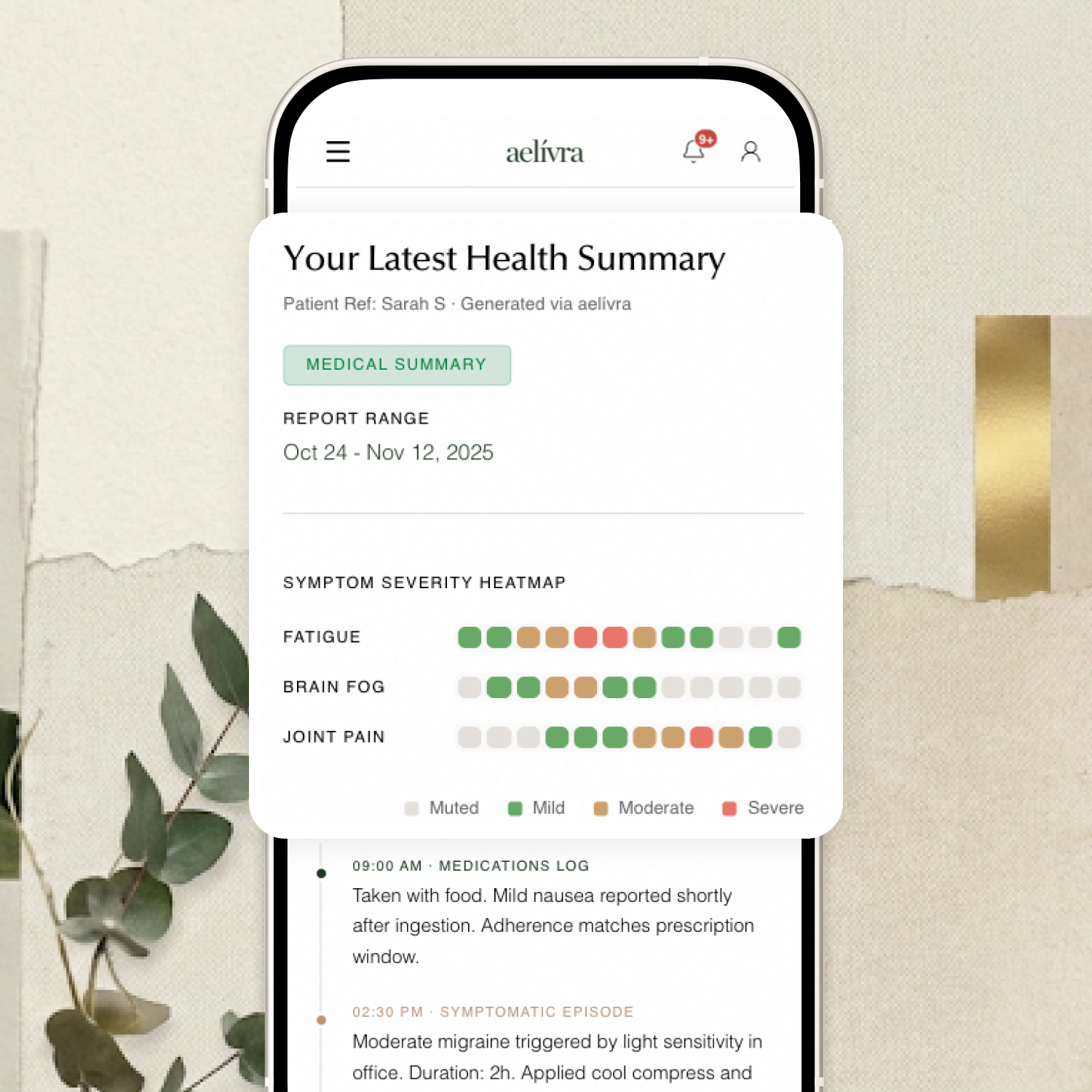
Shift the conversation from "I just don't feel right" to clear data your doctor can act on. aelívra turns weeks of health data into clean, visual summaries — so time-limited consultations focus on patterns, not guesswork.
Frequently Asked Questions About Thyroid Fatigue
What is the most accurate test for thyroid fatigue?
A comprehensive panel testing TSH, Free T4, Free T3, and TPO antibodies provides the most accurate picture. TSH alone often misses cellular-level energy deficits entirely.
Can high stress cause thyroid fatigue?
Yes, chronic stress elevates cortisol levels. High cortisol can block the conversion of inactive T4 into the active T3 hormone that directly powers cellular metabolism.
Why do I feel cold all the time with thyroid issues?
The thyroid acts as the primary thermostat for the human body. When active thyroid hormone levels drop, metabolic processes slow down, reducing the natural heat generated by your cells.
Is subclinical hypothyroidism worth treating?
Treatment usually depends on the severity of your daily symptoms rather than strictly adhering to lab values. Many people find significant relief from physical fatigue and mental fog when their borderline levels are finally addressed.

Cameron founded aelívra after years of living an unknown no one could answer — navigating chronic health complexity through a medical system that wasn't built for it. That experience became a conviction: everyone deserves to feel truly alive, and no one should have to accept not knowing as a way of life. His work sits at the intersection of data science and functional health and wellbeing, turning the latest trusted medical research across news, health, wearables, biomarkers, and more into advice everyday people can use on their journeys toward feeling better. Every article is grounded in peer-reviewed evidence and linked to its primary source. This content is for informational purposes only and does not replace medical advice.