Summary at a glance
Stress is a temporary response to a trigger, while anxiety disorders persist for months and cause systemic physical symptoms.
The autonomic nervous system can trigger severe physical reactions, including shortness of breath and nausea, which mimic cardiovascular emergencies.
Nightly heart rate variability (HRV) serves as a measurable biomarker that can reveal nervous system strain before conscious symptoms appear.
Chronic worry significantly impairs memory and executive function by keeping the brain locked in a state of survival.
Modern lifestyle medicine targets physical activity, sleep, and social connection as primary clinical treatments for mental health.
This article is for informational purposes and does not replace professional medical advice. Always consult a healthcare provider for persistent physical symptoms, anxiety disorders, cognitive changes, or cardiovascular concerns.
When does situational stress cross the line into a clinical anxiety disorder?
Stress is a temporary response to a known external trigger that fades once the threat passes. A clinical anxiety disorder occurs when excessive worry persists for months without an immediate threat, causing systemic physical symptoms and severely interfering with daily life.
The World Health Organization (2025) reports that 359 million people globally lived with an anxiety disorder in 2021, yet only 27.6% of those in need receive any treatment who.int. Many people dismiss their struggle as normal stress. They push through the exhaustion, assuming everyone feels the same way.
This gap leaves millions navigating intense psychological and physical burdens alone.
The core distinction lies in how the body recovers. A healthy nervous system ramps up to handle a tight deadline and then settles back into a relaxed baseline. An anxious nervous system stays locked in a defensive posture. It generates constant physiological wear and tear. Over time, this chronic activation increases the risk for subsequent depression and severe fatigue.
Anxiety disorders are the world's most common mental health condition, yet the vast majority of people dismiss their symptoms as normal stress and never receive formal treatment.
How can you tell if your physical symptoms are anxiety or a medical emergency?
Anxiety operates as a full-body physiological response that often mimics severe cardiovascular or gastrointestinal emergencies. The autonomic nervous system produces a fight-or-flight cascade designed to defend against immediate danger. It floods your bloodstream with adrenaline and cortisol. The brain cannot distinguish between a physical predator and a looming financial crisis. It reacts to both with the exact same biological alarm.
This cascade produces terrifying physical sensations like shortness of breath, sudden nausea, shakiness, or sharp stomach pain.
Harvard Health Publishing (2024) reports that reacting to these physical symptoms often creates a vicious cycle, making the sensations even more intense health.harvard.edu. A rapid heartbeat triggers fear of an imminent heart attack. That fear dumps more adrenaline into the system, which pushes the heart rate higher.
| Symptom Category | Normal Stress Response | Clinical Anxiety Disorder |
|---|---|---|
| Cardiovascular | Heart rate rises during a specific, active event | Palpitations occur randomly while resting or sleeping |
| Gastrointestinal | Mild butterflies before a major presentation | Persistent nausea, cramping, or severe bloating |
| Cognitive | Short-term distraction when busy | Consistent memory gaps and heavy brain fog |
| Duration | Fades completely within hours of the trigger | Lingers for weeks or months with no clear cause |
Ruling out true medical emergencies remains the necessary first step. If your heart races and you feel faint, getting evaluated by a doctor provides essential peace of mind. Once a physician confirms your heart is healthy, you can start addressing the overtaxed nervous system driving the alarm. Recognizing these symptoms as a stress response prevents endless, frustrating hospital visits.
 A medical chart comparing normal stress responses to clinical anxiety symptoms.
Can your nightly HRV predict an anxiety flare-up before you feel it?
Heart rate variability (HRV) acts as a highly sensitive biomarker for your nervous system. It often detects strain before conscious emotional symptoms arise. High HRV reflects an adaptive body that handles challenges well, whereas consistently low HRV indicates a rigid state stuck in threat detection vivalink.com.
Nightly biometric tracking offers a precise window into this hidden physiological load.
IEEE Body Sensor Networks (2024) reports that nightly heart rate variability successfully serves as a biomarker of mental health changes in college students ui.adsabs.harvard.edu. The data reveals stress accumulation days before a full emotional flare-up. If your wearable shows a suppressed parasympathetic branch despite adequate sleep, your body is sounding an alarm.
People with post-traumatic stress or chronic worry often see their nervous system remain locked in a threat-detection posture. This rigidity reflects continuously in their HRV data. Monitoring this metric helps you validate your internal experience. You are not simply imagining the deep exhaustion. The numbers confirm that your body is working overtime to manage invisible stress.
Do not check your HRV the moment you wake up if it causes you immediate stress. Look at the weekly trend instead to gauge your true recovery baseline.
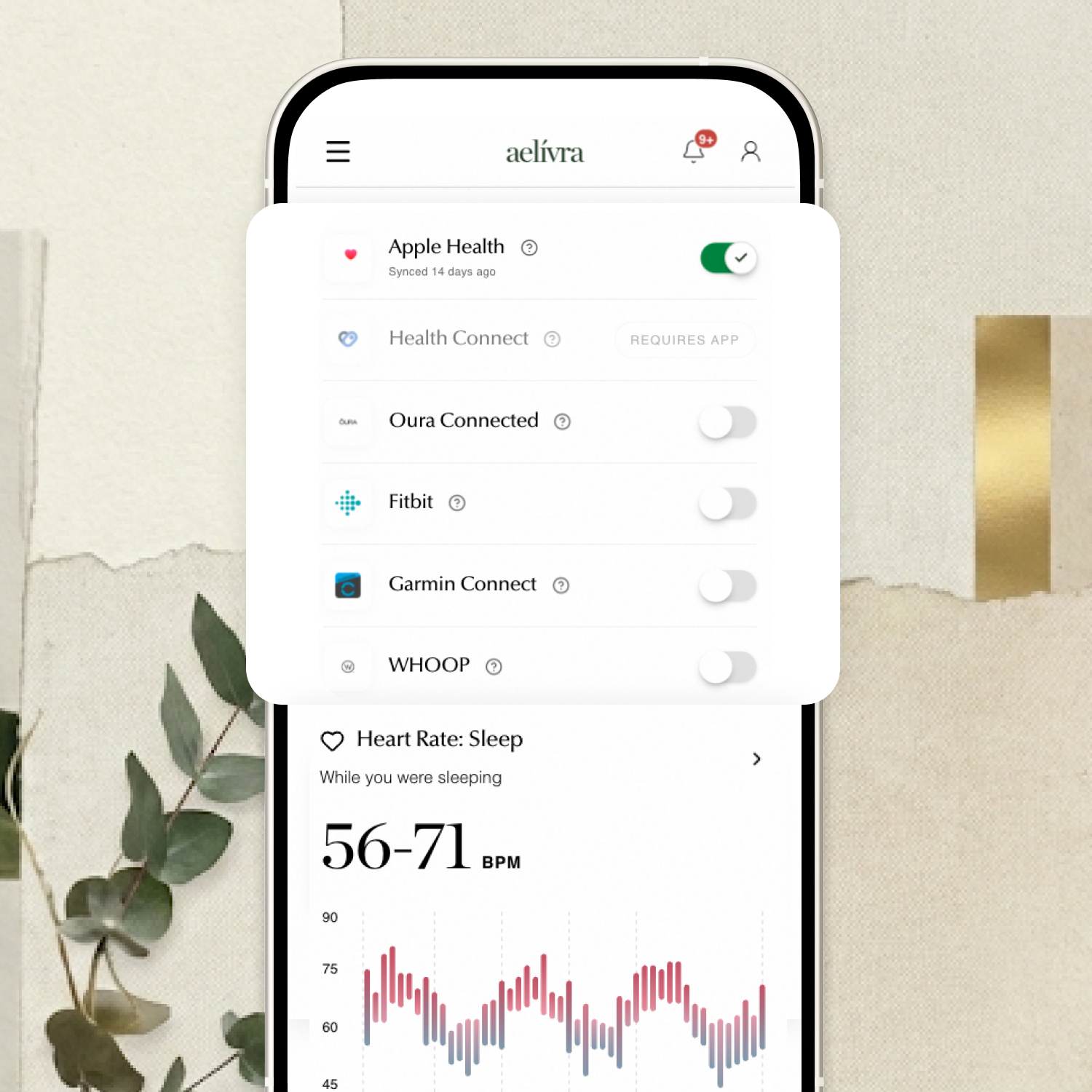
Make the most of your wearables. HRV, resting heart rate, and sleep stages can finally mean something. aelívra connects 500+ wearables and apps (Oura, Apple Health, Garmin, Fitbit, Whoop) and maps that data directly against how you actually feel — your syptoms and your wellbeing first, always.
Why does chronic anxiety impact your memory and focus in midlife?
Chronic worry accelerates cognitive drain by keeping the brain in a state of high alert, which actively disrupts memory formation. When your nervous system prioritizes immediate survival, it diverts energy away from complex thought processes and attention retention. You cannot focus on a spreadsheet when your primitive brain believes you are in danger.
This effect becomes especially measurable and highly disruptive as we age.
Monash University (2026) reports that out of 2,463 middle-aged adults, those with clinically meaningful anxiety and stress symptoms demonstrated significantly poorer memory pubmed.ncbi.nlm.nih.gov. The researchers found that panic-related symptoms directly correlate with a heightened risk of developing cognitive impairment later in life. These physiological shifts make everyday tasks feel insurmountable.
These cognitive gaps often compound the underlying worry. Forgetting a simple work task triggers a fear of early-onset dementia, which spikes your stress further.
Breaking this cycle requires calming the biological alarm. Restoring focus is rarely about trying harder to concentrate or forcing yourself to study. It is about signaling to your brain that the environment is safe enough to shift resources back to executive function. Exploring how sleep stages impact recovery offers a practical starting point.
Chronic stress actively redirects blood flow away from the prefrontal cortex, making temporary forgetfulness a biological consequence rather than a personal failure.
How do 2026 lifestyle medicine guidelines change how we treat persistent worry?
Modern health care now treats targeted lifestyle changes as primary medical interventions rather than optional self-care routines. Modifying your physical activity, nutrition, and sleep directly alters the body's baseline stress response. These foundational shifts serve as a highly effective adjunctive therapy.
The physical stakes are remarkably high for those experiencing chronic worry. The Lancet Psychiatry (2025) reports that individuals with mental illness experience a 13 to 15 year reduction in life expectancy, driven largely by cardiometabolic diseases psiconecta.org. Treating the mind explicitly requires treating the body.
Dr. Neha Pathak, MD, an American College of Lifestyle Medicine board member, notes that modern lifestyle medicine features six distinct pillars, placing positive social connection firmly alongside nutrition and sleep lifestylemedicine.org. Deep social ties extend beyond simple networking. They include genuine engagement with a community and immersion in nature.
Stanford Medicine psychiatrist Dr. David Spiegel explains that while acute stress is adaptive, chronic stress wreaks havoc on physical health topdoctormagazine.com. Loneliness and disconnection have become defining drivers of this chronic load. Building structured rest and meaningful relationships into your week is no longer a luxury. It is a clinical necessity for long-term nervous system regulation.
 Two people walking together outdoors in nature, demonstrating social connection.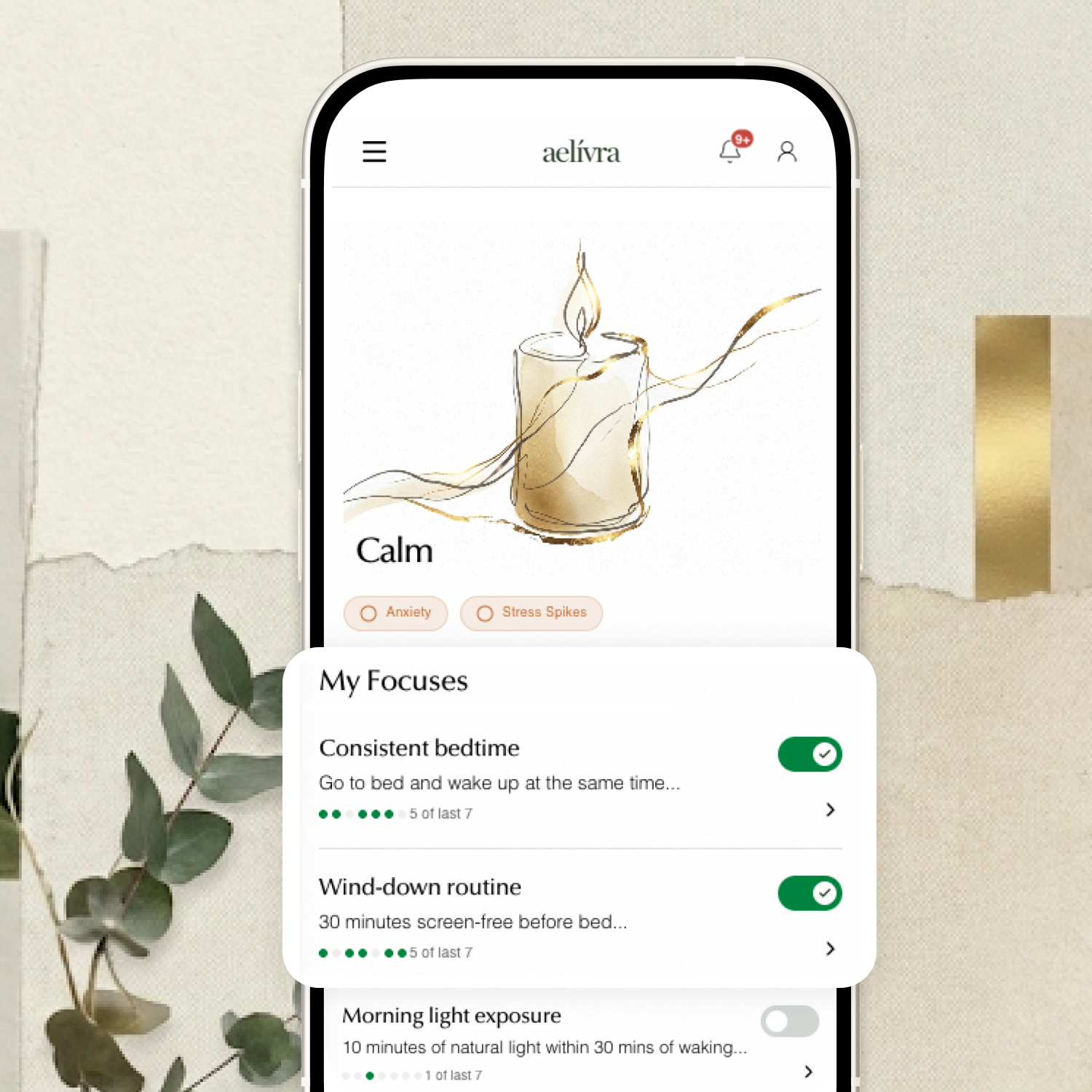
Uncover what you've been searching for. aelívra guides you through wellbeing explorations across sleep, diet, stress, symptoms and more so you can finally act on what's actually going on, one day at a time, every step at your own pace.
Frequently Asked Questions
What is the fastest way to break an anxiety cycle? Shifting your physical state helps interrupt the biological alarm. Deep breathing exercises, brief exposure to cold water, and intense physical movement can force your nervous system to stand down and break the immediate panic loop.
Can my wearable tell me if I am anxious? Yes. Wearables track heart rate variability, which drops significantly when your body is stuck in a fight-or-flight state ui.adsabs.harvard.edu. Monitoring this metric often predicts an emotional flare-up days before you actually feel the mental strain.
Is brain fog from stress permanent? No. While chronic worry impairs memory and focus in the short term, the brain remains highly adaptable pubmed.ncbi.nlm.nih.gov. Addressing the underlying stress allows your nervous system to relax and reallocate resources back to executive function and mental clarity.
Why do I feel physically sick when I am worried? Your gut and brain are deeply connected through the vagus nerve. The autonomic nervous system responds to fear by flooding the body with cortisol and adrenaline, which shuts down digestion and causes intense nausea or cramping.
How long does a normal stress response last? A healthy stress response peaks during a challenging event and subsides within a few hours. If your physical symptoms linger for days or weeks without an active threat, you are likely dealing with an overtaxed nervous system.
Sources

Cameron founded aelívra after years of living an unknown no one could answer — navigating chronic health complexity through a medical system that wasn't built for it. That experience became a conviction: everyone deserves to feel truly alive, and no one should have to accept not knowing as a way of life. His work sits at the intersection of data science and functional health and wellbeing, turning the latest trusted medical research across news, health, wearables, biomarkers, and more into advice everyday people can use on their journeys toward feeling better. Every article is grounded in peer-reviewed evidence and linked to its primary source. This content is for informational purposes only and does not replace medical advice.