Summary at a glance
Patients often report significantly more unique symptoms via mobile apps than doctors record during standard clinical appointments.
Logging symptoms in real-time eliminates recall bias and captures the precise context of health flare-ups as they happen.
Contextualising wearable data like HRV and sleep scores against subjective daily logs reveals the hidden triggers driving chronic conditions.
Tracking protocols must prioritize consistency over exhaustive detail to prevent user burnout and ensure long-term data collection.
This article is for informational purposes only and does not constitute medical advice. Symptom tracking and wearable data analysis are intended to support, not replace, professional clinical evaluation. Always consult a healthcare provider for diagnosis and treatment of chronic conditions, fatigue, or digestive distress.
How Can You Close the Gap Between Your Symptoms and a Doctor’s Interpretation?
Closing the gap between personal symptoms and clinical interpretation requires bringing structured, real-time data to medical appointments. Digital health applications allow patients to record symptom frequency and intensity precisely when they occur. This provides an objective record that prevents crucial details from being missed during brief consultations.
A significant disconnect often exists between what people experience daily and what appears in their medical records. During appointments, time constraints and recall bias can cause important context to vanish. PMC (2025) reports that patients recorded 75 unique symptoms via mobile application, compared to only 49 captured by doctors in electronic health records pmc.ncbi.nlm.nih.gov.
This discrepancy actively delays necessary treatment adjustments. Insomnia and dry mouth are frequently underreported by clinicians. Furthermore, patients often rate the intensity of their symptoms much higher than their doctors do during clinical assessments pmc.ncbi.nlm.nih.gov. When a physician only captures a fraction of the clinical picture, the resulting treatment plan is inherently limited.
A unified tracking approach changes this dynamic entirely. aelívra helps you walk into appointments with answers by turning weeks of health data into clean, visual summaries. This specific capability shifts consultations from vague descriptions to clear patterns. It ensures doctors see the full scope of your daily experience without relying on flawed memory.
Relying purely on medical records often means missing the nuances of daily symptom intensity, which can delay proper treatment adjustments.
Why Should You Log Symptoms in Real-Time Instead of Using Your Memory?
Real-time symptom logging captures the exact context and severity of a health event as it happens. It also records your biological state. This clinical research approach eliminates recall bias and builds an accurate timeline of triggers. Retrospective memory simply cannot match this level of precision.
Human memory naturally smooths over the sharp edges of daily discomfort. When you wait until an appointment to summarize a month of pain or fatigue, you are providing a generalized average. You are not providing an exact timeline. Digital ecological momentary assessment collects data on experiences as they occur in daily life to capture dynamic, context-sensitive experiences missed by retrospective reporting pubmed.ncbi.nlm.nih.gov.
Researcher Eva Delooz at Hasselt University notes that "Ecological Momentary Assessment (EMA) is a real-time method for capturing behaviors, emotions, and context in natural settings" journals.plos.org.
Relying on memory also obscures the connection between different health domains. People rarely remember exactly what they ate three hours before an anxiety spike. They struggle to recall how their sleep quality aligned with a flare-up of digestive distress. Capturing data immediately allows these hidden correlations to surface.
 Person logging symptoms on their phone during a daily routine.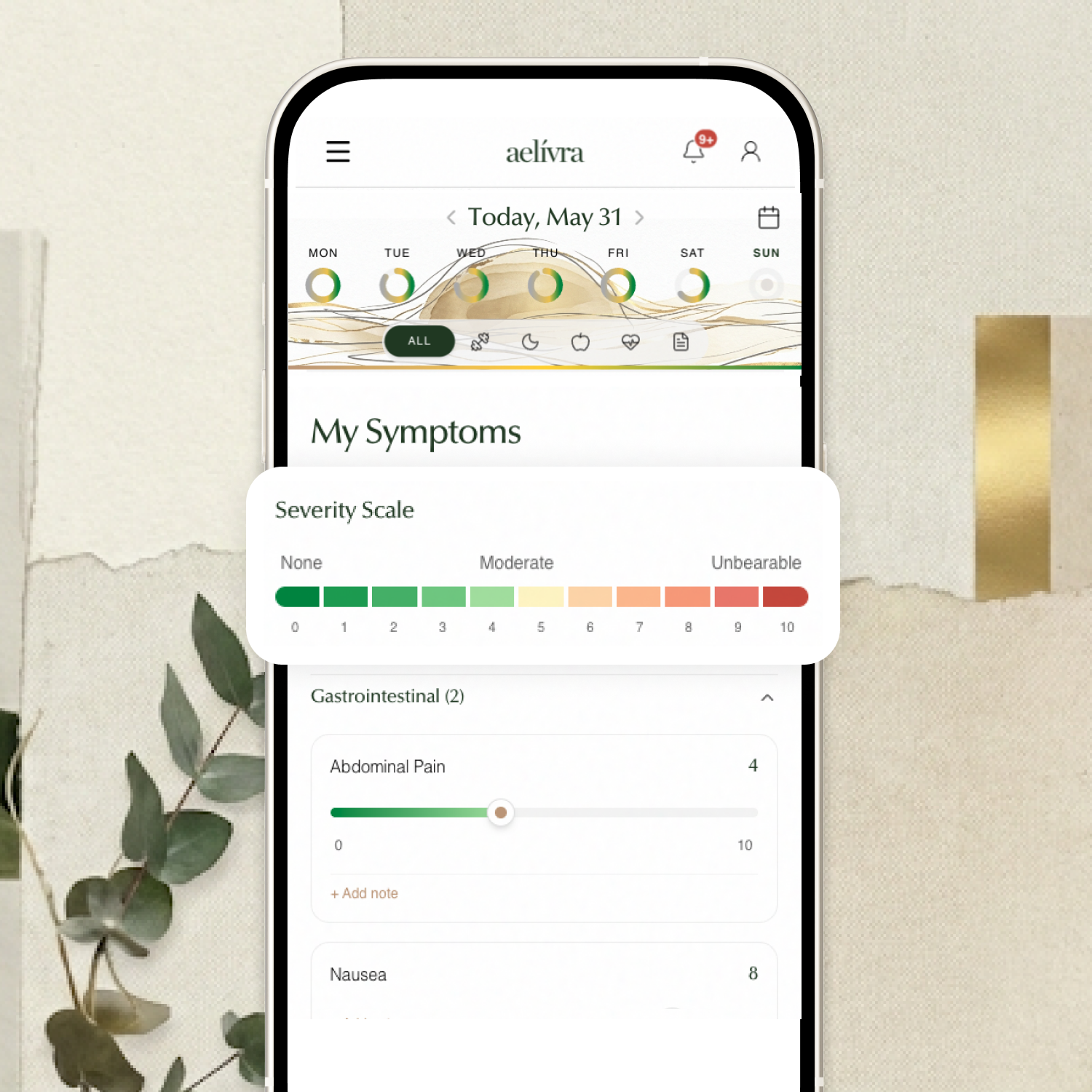
Every check-in brings you closer to answers. Effortlessly build a clear picture of energy, mood, pain, and sleep over time — so you can see exactly what's improving, what's not, and feel confident you're doing the right things to feel better.
How Do You Connect Wearable Data Like HRV to How You Actually Feel?
Connecting objective wearable data to subjective feelings requires mapping physiological metrics against a daily symptom diary. Combining heart rate variability and sleep scores with real-time logs of fatigue or pain allows you to identify precise correlations. You can see exactly how your biological state interacts with your lived experience.
Wearables generate vast amounts of data, but numbers alone lack clinical context. A low sleep score means very little unless it is mapped against next-day cognitive function or physical pain. Wearable devices monitoring heart rate and blood pressure aid in identifying health patterns and managing cardiovascular stress pmc.ncbi.nlm.nih.gov. However, these metrics must always be contextualized against physical sensations.
Consider the relationship between resting metrics and daytime energy. Heart rate variability (HRV) serves as a proxy for nervous system recovery. When HRV trends downward while fatigue and anxiety track upward, a clear pattern of physiological strain emerges. Recognizing this pattern is the first step toward effective management.
This is where unified platforms provide significant value. aelívra delivers wearable data that's informative, not authoritative. It connects devices like Oura and Apple Health to turn raw numbers into context against how you actually feel. This integration helps identify the exact triggers driving symptom flare-ups.
For a deeper look at specific devices, review Oura Ring vs WHOOP: Which Wearable Fits Your Goals?.
 A close-up of a wearable device capturing daily health metrics.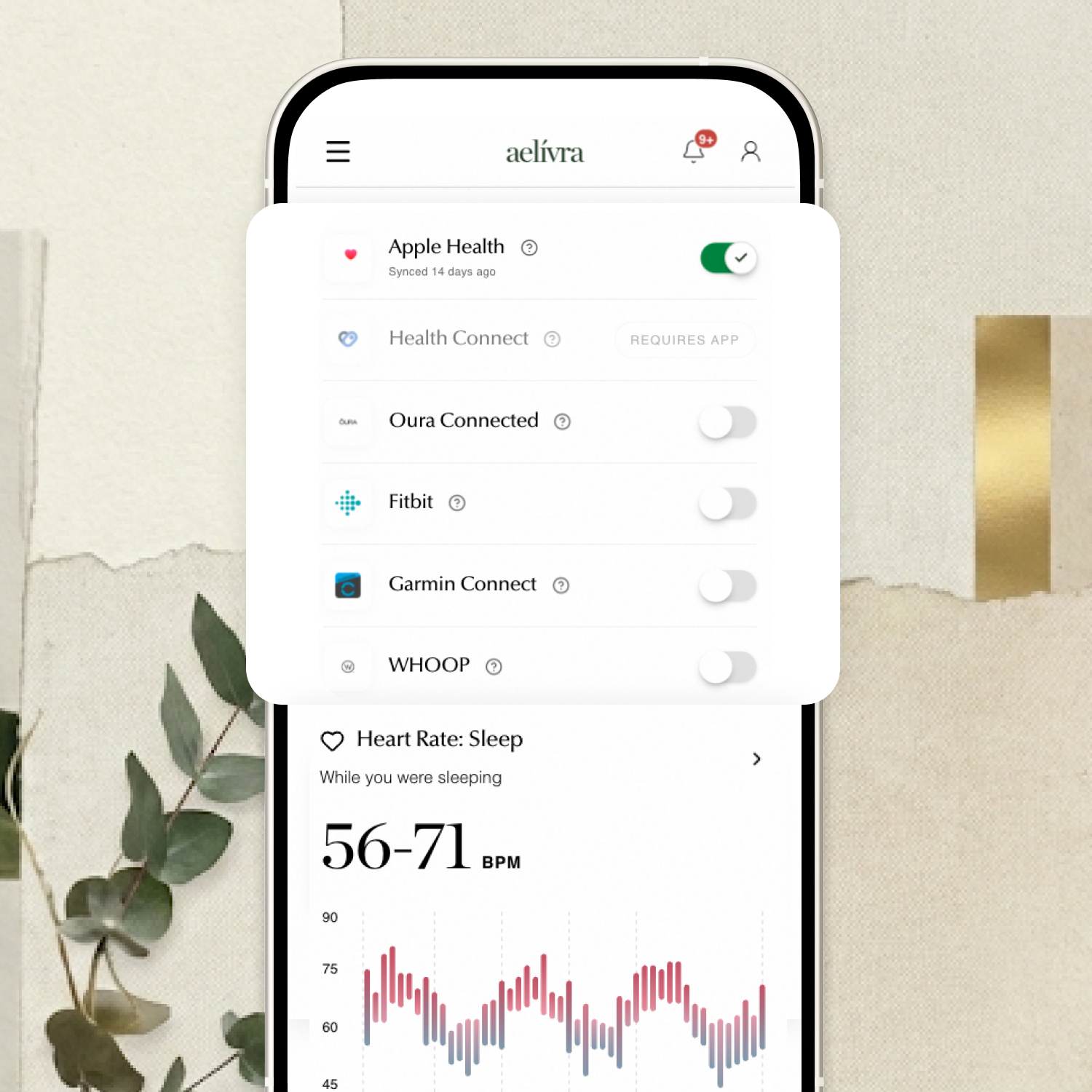
Make the most of your wearables. HRV, resting heart rate, and sleep stages can finally mean something. aelívra connects 500+ wearables and apps (Oura, Apple Health, Garmin, Fitbit, Whoop) and maps that data directly against how you actually feel — your syptoms and your wellbeing first, always.
What Is the Best Way to Track Symptoms Without Getting Burned Out?
Prevent tracking fatigue by using simple digital interventions and minimizing notification burden. Focusing on two or three core symptoms ensures long-term data collection without overwhelming the user. The best way to maintain symptom tracking is to prioritize consistency over exhaustive detail.
Data collection should not become a secondary chronic condition. High-frequency logging protocols often lead to burnout and data dropouts if the tools are too demanding. PMC (2026) reports that 77% of patients reported that digital health interventions improved their quality of life and ability to self-manage chronic diseases pmc.ncbi.nlm.nih.gov.
However, the same research notes that long-term user engagement remains a major barrier. High dropout rates often stem from a lack of motivation or recurring technical issues pmc.ncbi.nlm.nih.gov. Successful tracking requires a highly sustainable protocol.
A 2025 review published in JMIR reports that high-response symptom tracking protocols achieve completion rates of 80% or higher when utilizing engaging technology and clear reminders pmc.ncbi.nlm.nih.gov. Researcher Sydney Charitos at the University of Bristol highlights that facilitators of successful ecological momentary assessment include engaging technology and clear reminders. Caregiver involvement also improves consistency pmc.ncbi.nlm.nih.gov. Keeping the process lightweight is the key to maintaining a useful health picture.
Start by tracking just two or three primary symptoms to build a sustainable habit before adding more complex data points.
Which Symptoms Are Most Important to Track for Chronic Condition Management?
The most critical symptoms to track are those that directly impact daily functioning and decision-making. Monitoring core indicators like fatigue levels and pain intensity provides the highest yield of actionable data. Tracking digestive distress and sleep quality is equally crucial for both personal adjustments and clinical review.
Not all data points hold equal weight in chronic condition management. Capturing the interplay between physical discomfort and emotional state reveals the true burden of a condition. Focusing on key domains prevents data overload while maintaining high clinical value.
| Symptom Category | Tracking Method | Clinical Value |
|---|---|---|
| Sleep Quality | Passive wearable sync + morning subjective log | Reveals recovery deficits and nervous system strain. |
| Fatigue Levels | Mid-day and evening momentary assessment | Maps energy crashes to earlier activities or meals. |
| Digestive Distress | Immediate logging post-meal or post-flare | Identifies specific dietary or stress-related triggers. |
| Pain Intensity | 1-10 scale rating during peak severity | Tracks medication efficacy and disease progression. |
| Mood & Anxiety | Evening emotional review | Highlights the psychological toll of physical symptoms. |
A clear view of these specific symptoms allows individuals to adjust their routines proactively. Rather than treating each symptom in isolation, connecting them builds a comprehensive understanding of the body's responses. For more on monitoring broader health markers, read about understanding functional lab ranges.
Combining subjective fatigue scores with objective sleep data creates a much stronger clinical picture than tracking either metric in isolation.
Frequently Asked Questions
How long should you track symptoms before seeing a doctor?
Tracking daily symptoms for at least two to four weeks provides a robust data set. This duration captures cyclical patterns and weekend variations. It also provides enough data to identify distinct triggers without causing tracking burnout.
Can tracking symptoms increase health anxiety?
Excessive and unstructured logging can heighten hypervigilance and anxiety. Limiting check-ins to twice daily and focusing on actionable patterns rather than dwelling on discomfort helps mitigate this risk effectively.
Do doctors actually look at symptom tracker apps?
Many clinicians appreciate summarized data that highlights specific trends and actionable correlations. Presenting a clean, one-page visual timeline is far more effective than asking a doctor to scroll through raw daily logs.
Is a wearable device necessary for symptom tracking?
While passive devices provide excellent objective context like heart rate and sleep stages, they are never mandatory. Subjective daily logging of how you feel remains the most crucial component of a complete health picture.
Sources

Cameron founded aelívra after years of living an unknown no one could answer — navigating chronic health complexity through a medical system that wasn't built for it. That experience became a conviction: everyone deserves to feel truly alive, and no one should have to accept not knowing as a way of life. His work sits at the intersection of data science and functional health and wellbeing, turning the latest trusted medical research across news, health, wearables, biomarkers, and more into advice everyday people can use on their journeys toward feeling better. Every article is grounded in peer-reviewed evidence and linked to its primary source. This content is for informational purposes only and does not replace medical advice.