Summary at a glance
Apple Watch Series 11 uses a cuffless algorithm to identify 30-day trends of elevated blood pressure.
A new native Sleep Score evaluates overnight recovery by measuring heart rate, restlessness, and deep sleep stages.
A 2026 University of Utah study found the watch correctly filters false alarms 92% of the time, but misses 59% of undiagnosed hypertension cases.
These features serve as early warning systems for lifestyle adjustments rather than replacements for clinical diagnostic tools.
This article discusses consumer wearable health features such as hypertension notifications and sleep scoring. These tools are intended for wellness tracking and trend monitoring only. They do not provide medical diagnoses or replace clinical blood pressure measurements. Always consult a healthcare professional for cardiovascular concerns.
What are the new health features in the Apple Watch Series 11?
Apple introduced the Apple Watch Series 11 in late 2025, deploying groundbreaking hypertension notifications and a native Sleep Score that expanded globally in 2026 [S1, S7]. These new tools use background optical sensors to spot long-term blood pressure trends and evaluate overnight physical recovery [S5, S12].
Rather than offering instant diagnostic numbers, the device acts as a continuous screening tool. The FDA cleared the Apple Hypertension Notification Feature in late 2025, classifying it as cardiovascular machine learning software accessdata.fda.gov.
This transition shifts the smartwatch from a simple fitness tracker into a proactive health monitor. It spots subtle physiological changes over time that people often miss during routine daily activities.
The Apple Watch requires 30 days of consistent background data before generating its first hypertension trend report.
How does the Apple Watch detect high blood pressure without a cuff?
The Apple Watch Series 11 does not measure a single systolic or diastolic number. Instead, the smartwatch analyzes how your blood vessels respond to heartbeats using an optical sensor apple.com.
If the watch detects patterns suggesting elevated pressure over multiple 30-day evaluation periods, it delivers a notification support.apple.com. While highly useful for catching hidden trends, it is not flawless. According to a 2026 study published by the University of Utah, approximately 59% of individuals with undiagnosed hypertension would not receive an alert healthcare.utah.edu. However, the same study noted that 92% of people without hypertension correctly avoided false alarms [S4, S18].
Adam Bress, Pharm.D., M.S., a researcher at the Spencer Fox Eccles School of Medicine at the University of Utah, notes that smartwatch hypertension alerts act as a crucial step toward wearable-based population screening healthcare.utah.edu.
| Feature | Apple Watch Series 11 | Traditional Blood Pressure Cuff |
|---|---|---|
| Measurement Type | Continuous trend analysis | Point-in-time exact numbers |
| Data Output | Notification of elevated patterns | Systolic and diastolic values |
| Primary Use | Early warning screening | Clinical diagnosis and treatment |
 A person checking their smartwatch for daily health trends.
What does the Apple Watch Sleep Score tell you about your daily recovery?
The native Apple Watch Sleep Score provides a daily rating from 1 to 100 to help you quickly understand your overnight recovery support.apple.com. The device calculates this score by measuring your heart rate, respiratory rate, and time spent in REM, Core, and Deep sleep stages lifetrails.ai.
Apple’s Core Sleep metric represents light sleep, typically making up about 50% of the night, while Deep sleep focuses on physical restoration lifetrails.ai. Tying your sleep score to your daily energy levels is a core part of How to Track Symptoms Effectively: Building a Health Picture That Actually Helps. If you notice your score dropping alongside a rise in fatigue, you can begin adjusting your evening routines to secure better rest.
Understanding these precise overnight metrics provides a vital baseline for pacing. This is similar to the data comparisons seen when evaluating the Oura Ring vs WHOOP: Which Wearable Fits Your Goals?.
Keep your watch battery above 30% before bed and ensure Sleep Focus mode is turned on for the most accurate tracking.
Why do wearable health trends matter for doctor visits?
Wearable data transforms subjective complaints into objective trends that doctors can quickly review. Bringing a 30-day log of elevated blood pressure notifications or consistently poor sleep scores gives your healthcare provider a factual starting point for clinical testing.
This approach prevents the common frustration of feeling unwell but having normal point-in-time measurements in the exam room. Whether you are monitoring glucose with the best continuous glucose monitor or tracking heart rate variability, viewing the total picture of your health reveals the triggers driving your symptoms.
aelívra helps you connect these 500+ wearable integrations into a single visual summary. This shifts consultations from guesswork to clear, actionable patterns that get you closer to answers.
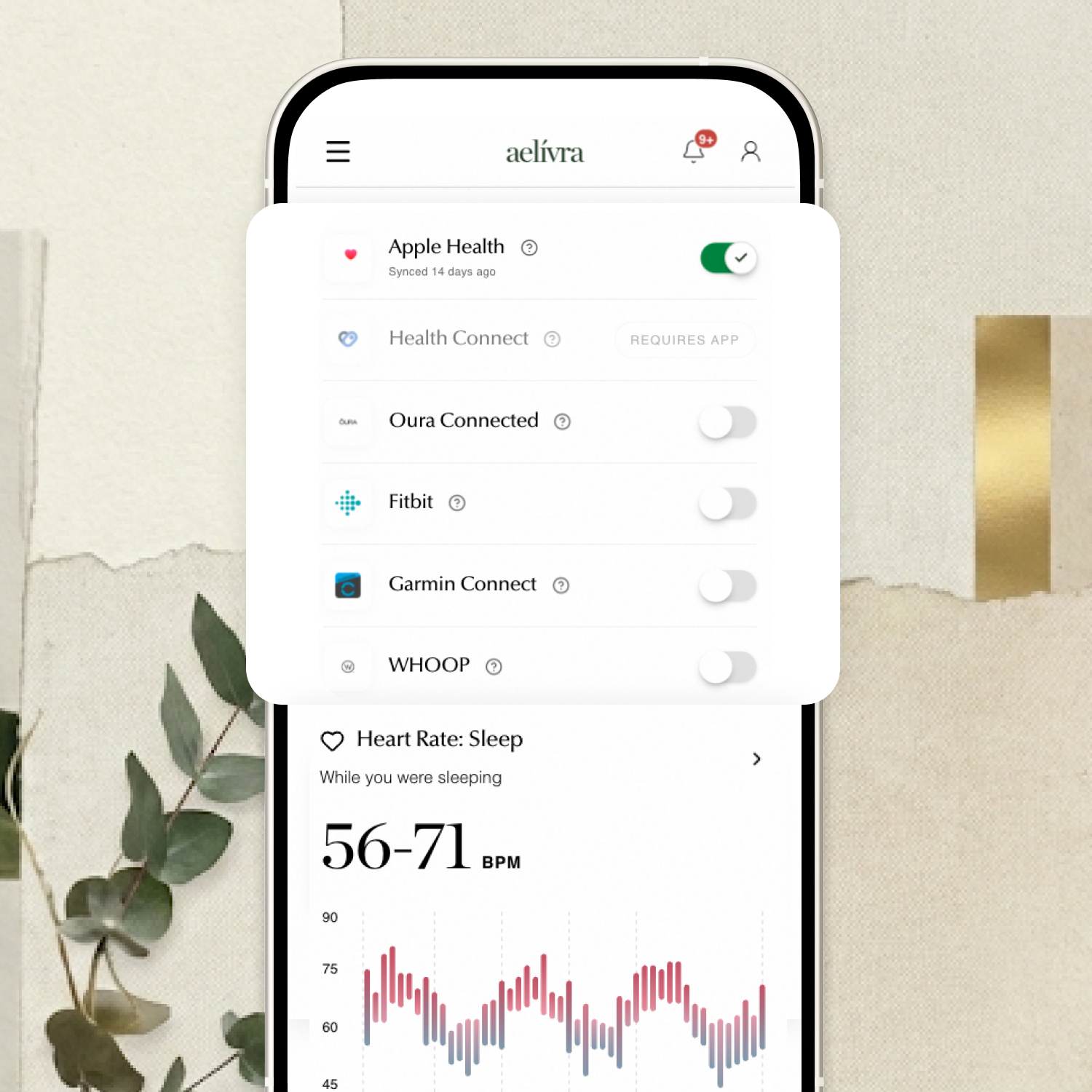
Make the most of your wearables. HRV, resting heart rate, and sleep stages can finally mean something. aelívra connects 500+ wearables and apps (Oura, Apple Health, Garmin, Fitbit, Whoop) and maps that data directly against how you actually feel — your syptoms and your wellbeing first, always.
Frequently Asked Questions about Apple Watch Health Features
Does the Apple Watch Series 11 replace a medical blood pressure cuff? No. The watch identifies long-term trends and alerts you to potential risks, but you still need a medical-grade arm cuff for an exact diagnosis [S17, S21].
Why did I receive a high blood pressure notification on my watch? The notification means your watch detected sustained optical changes in your blood vessels that correlate with elevated pressure over the last 30 days [S5, S21]. You should share this alert with your doctor.
Which Apple Watches support the new Sleep Score? The native Sleep Score is available on most models supporting watchOS 26 or 27, though the Series 11 and Ultra models offer the most advanced sensor accuracy [S11, S12].
Sources

Cameron founded aelívra after years of living an unknown no one could answer — navigating chronic health complexity through a medical system that wasn't built for it. That experience became a conviction: everyone deserves to feel truly alive, and no one should have to accept not knowing as a way of life. His work sits at the intersection of data science and functional health and wellbeing, turning the latest trusted medical research across news, health, wearables, biomarkers, and more into advice everyday people can use on their journeys toward feeling better. Every article is grounded in peer-reviewed evidence and linked to its primary source. This content is for informational purposes only and does not replace medical advice.