Summary at a glance
An eGFR score is a percentage estimate of how efficiently your kidneys filter waste from your bloodstream.
A healthy eGFR result is typically 60 or higher, though normal ranges naturally decline as you get older.
A score between 60 and 89 is often perfectly normal for senior adults who show no other signs of kidney stress.
Intense exercise, heavy meat consumption, and dehydration can all artificially lower your eGFR results temporarily.
A consistent score below 60 that lasts for more than three months is the primary indicator of chronic kidney disease.
What is the eGFR blood test meaning?
The estimated glomerular filtration rate (eGFR) blood test measures how effectively your kidneys filter waste from your blood. A healthy result is typically 60 or higher. This number functions much like a percentage, so an eGFR of 90 suggests your kidneys operate at about 90 percent capacity.
Your kidneys are relentless biological filters. Harvard Health Publishing (2026) reports that your kidneys filter approximately 200 quarts of blood each day to remove waste and balance fluid levels health.harvard.edu.
When your kidneys sustain damage, they leave a waste product called creatinine circulating in your bloodstream.
By measuring this creatinine, your doctor calculates your eGFR. Higher creatinine levels directly result in lower eGFR scores kidney.org.au.
An eGFR score is an estimate based on your blood creatinine levels; finding your exact, direct filtration rate requires a far more complex 24-hour clinical urine collection.
What is a normal eGFR range by age?
Your kidney function naturally slows down as you get older. Kidney Health Australia (2025) reports that a score over 90 millilitres per minute is standard for young adults, though a mildly lower number can be entirely normal for an older adult kidney.org.au.
Healthcare providers rely on standard reference ranges to evaluate your filtration capacity. These tiers help categorize your kidney health into specific clinical stages kdigo.org.
| eGFR Level (mL/min/1.73m²) | Kidney Function Description | Clinical Stage |
|---|---|---|
| 90 or higher | Normal function | Stage 1 (if damage is present) |
| 60 to 89 | Mild decrease | Stage 2 |
| 45 to 59 | Mild to moderate decrease | Stage 3a |
| 30 to 44 | Moderate to severe decrease | Stage 3b |
| 15 to 29 | Severe decrease | Stage 4 |
| Less than 15 | Kidney failure | Stage 5 |
Your lab report might flag any number below 90 as low. However, clinical guidelines suggest that an isolated reading slightly below this threshold rarely warrants immediate alarm.
Your doctor will interpret your range alongside your age, blood pressure, and medical history.
 Medical lab report showing eGFR kidney function reference ranges
What does it mean if your eGFR is between 60 and 89?
Seeing a score between 60 and 89 often sparks unnecessary worry. This range indicates a mild decrease in filtration, but it does not automatically mean you have a progressive disease.
If your kidneys show no other signs of stress—like protein leaking into your urine—a score of 70 is often considered a healthy baseline for a senior adult.
You can think of it like the natural wear and tear on a reliable engine. Your kidneys also share the heavy lifting with other organs. If you explore how to check liver function at home, you will see that these core systems collaborate closely to clear toxins. A slight dip in kidney efficiency simply means your body needs supportive daily habits.
Focus on staying well hydrated and avoiding excessive reliance on non-steroidal anti-inflammatory drugs (NSAIDs). The NHS (2024) reports that long-term use of these common pain relievers forces your kidneys to work much harder nhs.uk.
A single elevated blood pressure reading can temporarily restrict blood flow to your kidneys, slightly suppressing your eGFR score during your lab visit.
Can exercise or diet affect your eGFR results?
Your daily habits dramatically shape the accuracy of your blood work. Because the test estimates filtration based on creatinine—a byproduct of muscle use—your unique body composition matters.
A high-protein meal or intense muscle building can artificially lower your eGFR score.
Your kidneys suddenly have to clear a massive spike in dietary or muscular waste, causing your estimated filtration rate to plummet temporarily.
Cystatin C offers an alternative testing pathway. This protein provides a more accurate estimate of your filtration rate because muscle size and diet do not disrupt it medlineplus.gov.
Dehydration also sabotages your results. When you lack adequate fluids, blood flow to your kidneys drops, mimicking the signs of organ dysfunction. Always hydrate thoroughly before your blood draw to give an accurate picture of your health.
If you take creatine supplements for fitness, inform your doctor before an eGFR test, as this will likely cause a falsely low reading.
When should you worry about a low eGFR score?
A persistent score below 60 that lasts for more than three months signals chronic kidney disease kidney.org. You should view this trend as a clear prompt to protect your vascular health.
"The cardiovascular-kidney-metabolic syndrome describes the interconnection between heart disease, kidney disease, obesity, and diabetes," explains Dr. John Ostrominski, a fellow at Harvard-affiliated Brigham and Women's Hospital health.harvard.edu.
Harvard Health Publishing (2026) reports that chronic kidney disease affects approximately one in seven adults in the United States but often remains unnoticed health.harvard.edu. Kidney Health Australia (2025) reports that you can lose nearly 9 percent of your kidney function without feeling a single symptom kidney.org.au.
Prolonged exposure to high blood sugar causes kidney capillaries to thicken health.harvard.edu. This damage impairs their filtering ability over time. Managing your blood pressure and monitoring your glucose levels remain the most powerful steps you can take to preserve your remaining kidney function.
How can you track kidney function trends over time?
Isolated blood tests provide a narrow snapshot of your health.
To truly understand your kidney function, you need to monitor how your numbers change over months and years. A sudden drop in your eGFR warrants immediate attention. By tracking these shifts, you catch hidden stressors before they escalate into severe damage.
This tracking process gives you the certainty you have been searching for. aelívra helps you support the biomarkers that matter most by tracking lab results over time and connecting them to how you feel day-to-day. You can walk into appointments with answers. It turns weeks of health data into visual summaries that shift consultations from vague concerns to clear patterns.
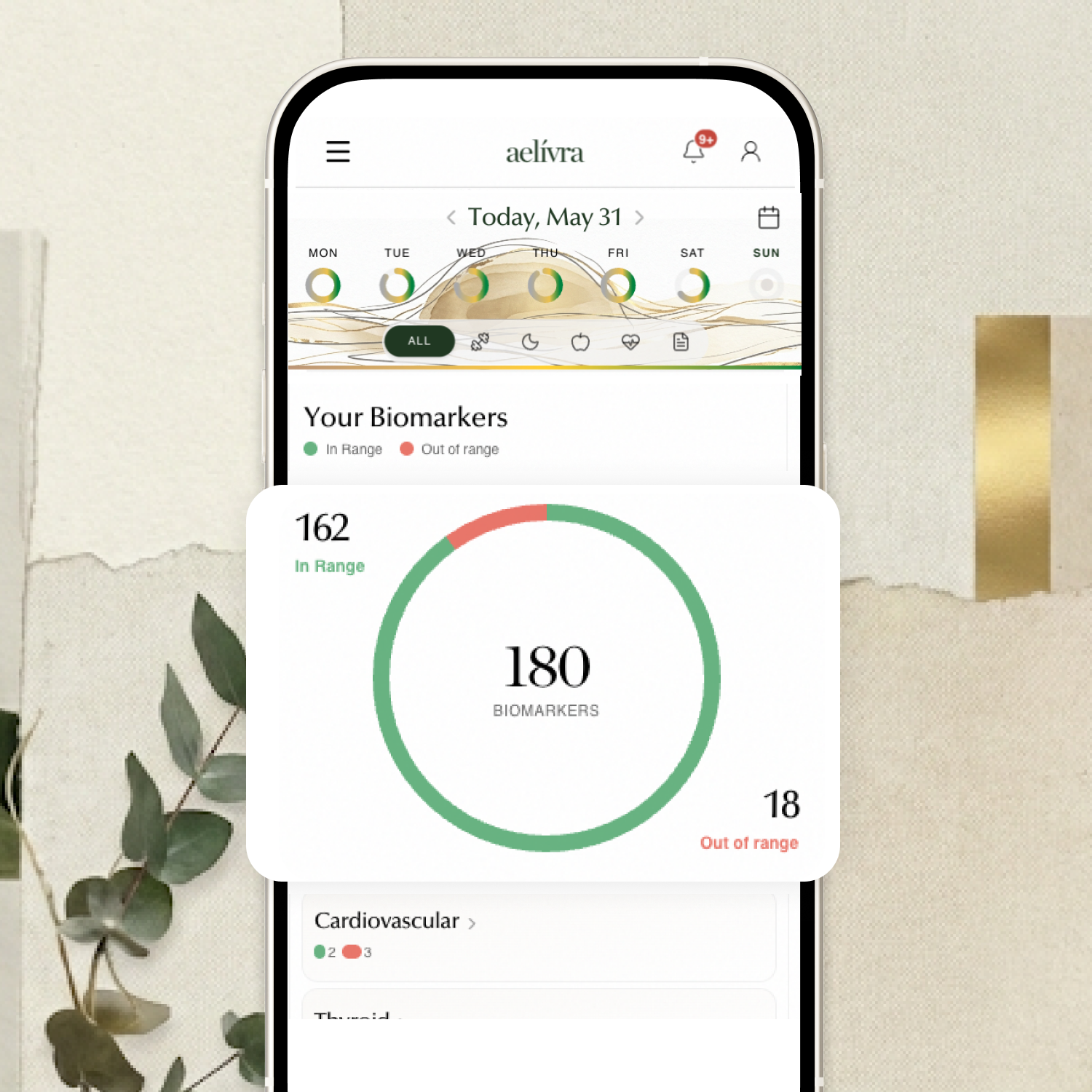
Blood work, scans, test results, medical reports — finally in one place and connected to how you actually feel. aelívra tracks biomarkers and health records over time, so you can see what's trending in the right direction and walk into your next appointment knowing exactly what to discuss.
Frequently asked questions
Does drinking water increase eGFR? Staying hydrated supports optimal blood flow to your kidneys, which helps them filter waste efficiently. While drinking water resolves dehydration-induced low scores, it will not artificially boost a truly declining filtration rate.
Why did my eGFR fluctuate between tests? Your score fluctuates due to recent exercise, dehydration, changes in muscle mass, or a heavy meat dinner the night before. Doctors look for long-term trends rather than stressing over minor week-to-week variations.
Can you improve your eGFR score? You cannot reverse structural kidney damage, but you can stabilize your score and prevent further decline. Managing your blood pressure, regulating your blood sugar, and avoiding kidney-stressing medications protect your remaining healthy filters.