
Summary at a glance
Burnout is a response to chronic workplace or lifestyle stress that steadily improves with dedicated rest.
Chronic fatigue syndrome (ME/CFS) is a complex neuroimmune disease driven by measurable cellular and hormonal dysfunction.
Post-exertional malaise (PEM) is the defining symptom of ME/CFS, causing a severe physiological crash after minor effort.
Pushing through fatigue helps build stamina in burnout but actively damages cellular recovery in people with ME/CFS.
Recent 2026 research confirms physical markers for ME/CFS, including faulty ion channels and specific cortisol deficits.
This article is for informational purposes only and does not provide medical advice. Symptoms of chronic fatigue syndrome and severe burnout overlap with other serious conditions like autoimmune disease and thyroid dysfunction. Always consult a qualified healthcare professional before altering your activity levels or interpreting biomarker data.
What is the main difference between chronic fatigue and burnout?
The main difference is that burnout is a physical and psychological response to chronic stress that improves with rest, while chronic fatigue syndrome (ME/CFS) is a multisystem neuroimmune disease. Rest restores energy in burnout, but people with ME/CFS experience severe symptom crashes after minor exertion.
Understanding this distinction prevents harmful treatment approaches. Burnout stems from external pressures outlasting a person's capacity to cope. It often goes beyond feeling tired at the end of the week, spilling over into personal relationships and hobbies. The World Health Organization officially classifies burnout as a syndrome resulting specifically from unmanaged workplace stress.
ME/CFS alters how the body generates and uses energy at a cellular level. It is not driven by an overwhelming schedule or a lack of mental resilience.
Annals of Family Medicine (2026) reports that US prevalence of ME/CFS averaged 1 million to 2.5 million before recent global events, with incidence rates now spiking significantly morningstar.com. In contrast, the Cleveland Clinic (2024) reports that 79% of workers experience job-related stress leading to potential burnout health.clevelandclinic.org.
| Feature | Burnout | ME/CFS |
|---|---|---|
| Primary Cause | Unmanaged chronic stress | Complex biological dysfunction |
| Impact of Rest | Restorative and healing | Unrefreshing; does not resolve fatigue |
| Exercise Response | Boosts mood and energy | Triggers severe post-exertional crashes |
| Core Symptoms | Cynicism, emotional depletion | Cognitive fog, orthostatic intolerance |
While lifestyle changes and extended breaks can entirely reverse burnout, ME/CFS requires complex medical management and careful energy conservation.
Burnout primarily depletes motivation and mental energy, whereas ME/CFS physically prevents the body from generating cellular energy.
What is post-exertional malaise and why is it the 'hallmark' symptom?
Post-exertional malaise (PEM) is a severe worsening of symptoms following minimal physical or cognitive effort. This crash can delay by hours or days and is the specific distinguishing feature that separates ME/CFS from ordinary fatigue, depression, or burnout.
Diagnostic criteria have evolved to centre entirely on this specific symptom. Clinical guidelines that do not require PEM to diagnose ME/CFS are now officially retired mecfs.org.au. When a short walk or a stressful phone call triggers bone-deep exhaustion lasting for several days, it points to ME/CFS rather than workplace burnout.
Harvard Health Publishing (2024) reports that 3.3 million Americans may currently have ME/CFS, with symptoms consistently spiking after minor daily tasks health.harvard.edu. The resulting crash involves much more than just standard tiredness. People frequently experience increased joint pain, severe cognitive fog, sore throats, and flu-like symptoms during these periods.
Tracking these crashes helps doctors identify the underlying condition. Because the onset of PEM is often delayed, connecting a sudden crash on Thursday to a minor physical effort on Tuesday requires careful daily observation. Recognising this delayed pattern is the first step toward managing the disease.
 A digital timeline interface showing the tracking of daily energy levels and symptom flares.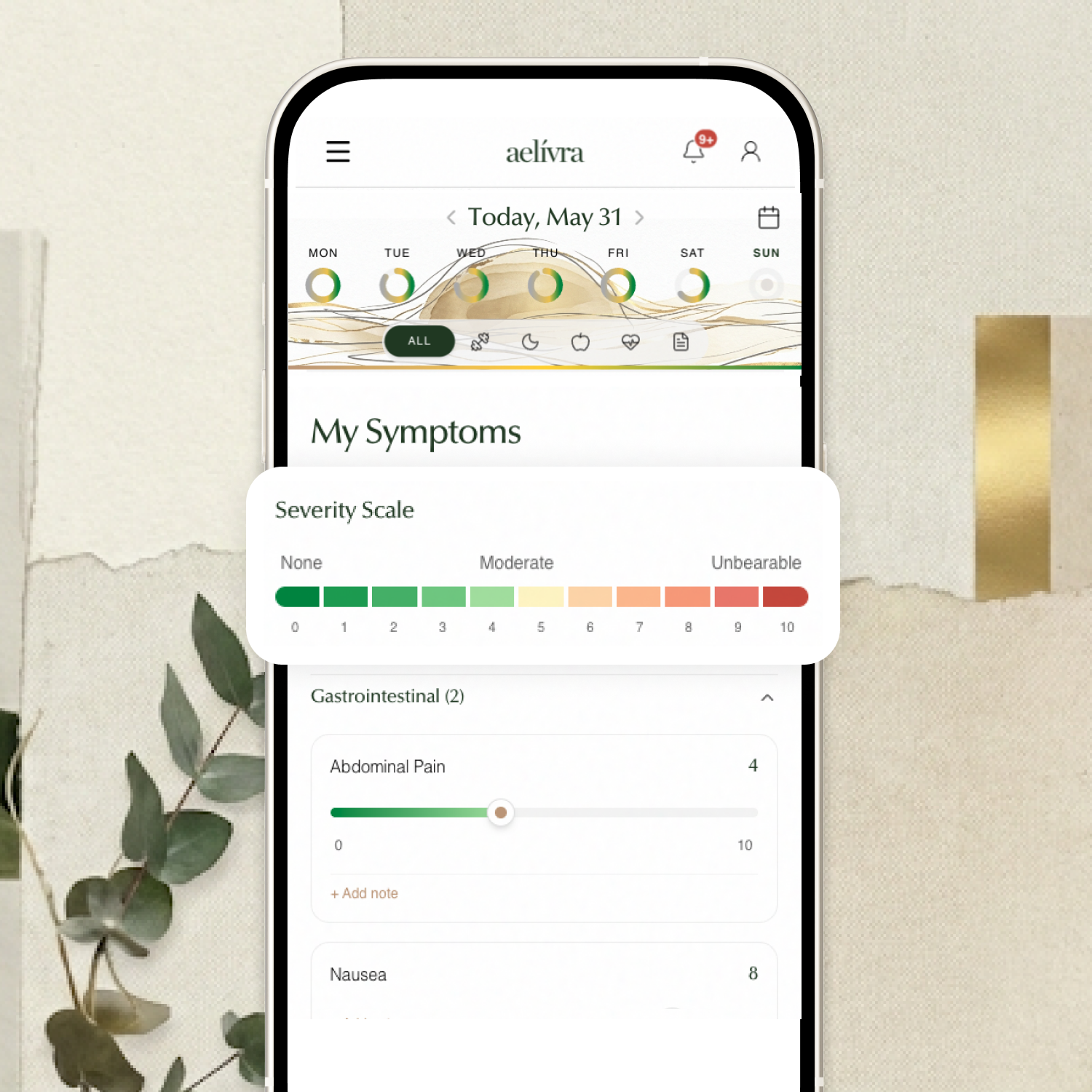
Every check-in brings you closer to answers. Effortlessly build a clear picture of energy, mood, pain, and sleep over time — so you can see exactly what's improving, what's not, and feel confident you're doing the right things to feel better.
Why does rest help burnout but make chronic fatigue feel worse?
Rest cures burnout because it removes the chronic stress triggers depleting the nervous system. In chronic fatigue syndrome, rest fails to restore energy because the body's cells cannot process calcium correctly, leaving the immune and nervous systems permanently depleted regardless of sleep duration.
New biological evidence explains exactly why fatigue persists in ME/CFS despite adequate sleep. Professor Sonya Marshall-Gradisnik, Director at Griffith University's National Centre for Neuroimmunology and Emerging Diseases, states that faulty ion channel function is a consistent biological feature of ME/CFS news.griffith.edu.au. These TRPM3 ion channels act like "stuck doors," preventing cells from receiving the calcium needed for healthy immune activity news.griffith.edu.au.
This measurable cellular dysfunction provides definitive scientific evidence that ME/CFS is a legitimate medical condition rather than psychological exhaustion. Attempting to "push through" burnout builds resilience and stamina. Applying that same logic to ME/CFS actively damages the cells further by forcing them to operate without proper calcium signalling.
Managing ME/CFS requires strict energy conservation techniques. Those navigating this condition often rely on Effective Pacing Protocols for Long COVID Recovery to stay within their functional energy envelope and avoid triggering these faulty cellular pathways.
Never attempt graded exercise therapy if you suspect post-exertional malaise. Pushing through an ME/CFS crash can lower your baseline energy permanently.
Is there a specific cortisol pattern that identifies ME/CFS?
Yes, people with ME/CFS display a specific neuroendocrine signature featuring a bioactive cortisol deficit and exaggerated feedback sensitivity. This means the body produces less available cortisol to handle daily stressors and shuts down cortisol production far too quickly compared to typical burnout.
Cortisol regulates metabolism, reduces systemic inflammation, and manages the sleep-wake cycle. When someone experiences standard occupational burnout, cortisol levels typically spike in response to stress before eventually flattening out over months or years. ME/CFS presents a distinctly different physiological profile from the onset.
A 2026 meta-analysis by Woo et al. confirms that this unique cortisol deficit provides a clear, measurable neuroendocrine signature for ME/CFS s4me.info. The American ME and CFS Society (2026) reinforces that this specific hormonal pattern helps cleanly separate the condition from purely psychological fatigue or depression ammes.org.
This exaggerated feedback sensitivity leaves the body entirely unable to mount a normal physiological response to physical or mental stress. The hormonal system essentially misreads the environment. It shuts down stress responses prematurely, leaving the person completely devoid of energy right when their body needs it most.
Standard morning cortisol blood tests often miss this deficit. Specialized continuous tracking is required to spot the exact feedback sensitivity errors.
Can you test for chronic fatigue syndrome with a blood test?
No single standard blood test currently diagnoses chronic fatigue syndrome. Doctors use comprehensive blood panels to rule out other conditions like thyroid disease or iron deficiency, relying on clinical symptom criteria to confirm ME/CFS once other physiological causes are eliminated.
Standard laboratory tests often return entirely normal results for people with ME/CFS. This frequently leads to frustration, delayed diagnosis, and medical gaslighting. The National Health Service (2026) states that clinical diagnosis requires the firm presence of four main symptoms: extreme fatigue, sleep problems, cognitive difficulties, and post-exertional malaise nhs.uk.
While specific cellular markers like TRPM3 dysfunction exist in university research settings, they are not yet available at standard local pathology laboratories. Doctors must instead eliminate autoimmune conditions, severe sleep apnea, and complex nutritional deficiencies before making a formal diagnosis.
A 2026 Mayo Clinic study analyzing 571 patients revealed that almost three-quarters of patients use over-the-counter dietary supplements to manage symptoms, yet clinical medications addressing core ME/CFS symptoms like brain fog and orthostatic intolerance are rarely prescribed early on morningstar.com. Gathering a highly detailed symptom history remains the most powerful diagnostic tool available to physicians today.
 A doctor reviewing comprehensive laboratory results with a patient in a bright consultation room.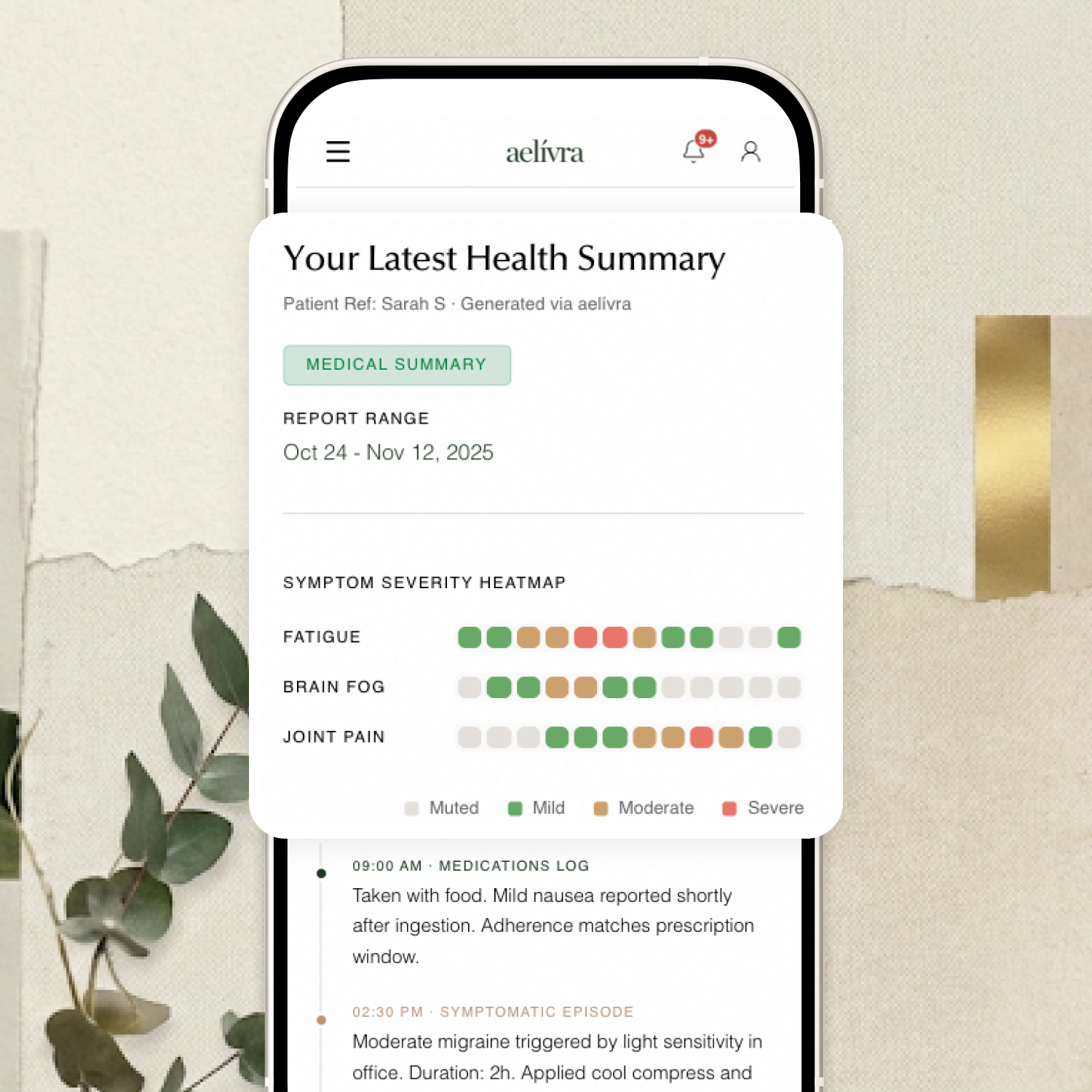
Shift the conversation from "I just don't feel right" to clear data your doctor can act on. aelívra turns weeks of health data into clean, visual summaries — so time-limited consultations focus on patterns, not guesswork.
Frequently Asked Questions
How do you know if your fatigue is caused by stress or cellular dysfunction?
Stress-induced fatigue gradually improves with extended rest, time off work, and better sleep hygiene. Cellular dysfunction, like ME/CFS, causes completely unrefreshing sleep and triggers severe physical crashes after even minor mental or physical exertion.
Can burnout turn into chronic fatigue syndrome?
Prolonged severe stress can heavily weaken the immune system, but burnout does not directly evolve into ME/CFS. ME/CFS usually begins abruptly after a viral infection, physical trauma, or a major immunological event.
What is the first step in treating severe fatigue?
The first step involves a comprehensive medical evaluation to rule out highly treatable conditions like anemia or thyroid disorders. Tracking your daily energy levels alongside your activities helps doctors distinguish between standard exhaustion and post-exertional malaise.
Sources

Cameron founded aelívra after years of living an unknown no one could answer — navigating chronic health complexity through a medical system that wasn't built for it. That experience became a conviction: everyone deserves to feel truly alive, and no one should have to accept not knowing as a way of life. His work sits at the intersection of data science and functional health and wellbeing, turning the latest trusted medical research across news, health, wearables, biomarkers, and more into advice everyday people can use on their journeys toward feeling better. Every article is grounded in peer-reviewed evidence and linked to its primary source. This content is for informational purposes only and does not replace medical advice.