Summary at a glance
An erythrocyte sedimentation rate (ESR) blood test detects systemic inflammation by measuring how quickly red blood cells sink.
Normal sedimentation rates vary based on age and biological sex, naturally increasing as people grow older.
A high ESR indicates active immune system responses, often driven by autoimmune conditions or severe infections.
ESR moves slower than other markers like CRP, meaning it can stay elevated for weeks after an illness clears.
What does an ESR blood test measure?
An erythrocyte sedimentation rate (ESR) blood test measures how quickly red blood cells sink in a test tube over one hour. When systemic inflammation is present, abnormal proteins cause these cells to clump together. These heavier clumps fall faster. A faster settlement rate indicates higher levels of inflammation.
This basic laboratory evaluation is frequently called a sed rate.
StatPearls (2023) reports that the test measures how far red blood cells settle over a span of one hour ncbi.nlm.nih.gov. It serves as a broad indicator of immune system activity.
The National Library of Medicine (2024) states that "inflammation makes red blood cells stick together in clumps which are heavier than single cells and sink faster" medlineplus.gov. The test acts like a fire alarm in a large building. It alerts doctors that a fire exists, but it cannot pinpoint the exact room.
The ESR test is frequently referred to as the Westergren method, named after the specific laboratory technique used to measure blood cell settlement.
What is a normal ESR range for my age and sex?
A normal sedimentation rate depends heavily on age and biological sex. Blood chemistry naturally shifts as people grow older.
Women generally have slightly higher baseline rates than men. University of Rochester Medical Center (2024) reports that the normal rate for men under 50 is 0 to 15 mm/hr urmc.rochester.edu.
| Group | Reference Range (mm/hr) |
|---|---|
| Men under 50 | 0 – 15 |
| Men 50 and older | 0 – 20 |
| Women under 50 | 0 – 20 |
| Women 50 and older | 0 – 30 |
| Children | 0 – 10 |
A mildly elevated result does not guarantee a disease is present. Factors like pregnancy and certain prescription medications can temporarily alter blood proteins healthline.com. Healthcare providers never diagnose a condition based on a sed rate alone.
They always interpret this number alongside physical symptoms and other diagnostic tests.

What does a high sed rate (ESR) mean for your health?
A high ESR result shows that the immune system is currently fighting an internal battle.
Active inflammation triggers the release of fibrinogen into the bloodstream. This specific protein acts like a biological glue. It forces individual red blood cells to stack together into dense structures called rouleaux. These heavy stacks sink rapidly to the bottom of the test tube.
Autoimmune disorders are a major driver of this clumping process. Conditions like rheumatoid arthritis and lupus generate consistent systemic inflammation rheumatology.org.
Severe bacterial infections also push these numbers up quickly. Bone infections or heart valve infections trigger a massive immune response. StatPearls (2023) reports that extreme elevations often exceed 100 mm/hr ncbi.nlm.nih.gov.
This extreme threshold usually prompts immediate investigation for specific vascular diseases. Exploring everyday triggers for persistent inflammation often starts with evaluating daily nutrition.
Understanding patterns like Histamine Intolerance: The Hidden Trigger Behind Hives, Headaches, and Gut Issues helps explain mysterious reactions that accompany elevated blood markers.
An elevated sedimentation rate confirms inflammation is present but cannot diagnose a specific disease on its own.
Why is my ESR high but my CRP normal?
Doctors frequently order an ESR test alongside a C-reactive protein (CRP) test. Both blood tests track systemic inflammation. They operate on completely different biological timelines.
CRP is an acute-phase reactant. It surges within hours of an inflammatory event and drops just as rapidly once the immediate threat resolves.
The sedimentation rate moves much slower.
An ESR can take days to rise and weeks to fall back to baseline. This creates a distinct lag effect. A high ESR paired with a normal CRP usually means the body is in the recovery phase of a recent illness labcorp.com.
Think of CRP as a live news update and ESR as a weekly summary. Both provide essential context for understanding overall health.
How long does it take for ESR levels to go down?
It takes several weeks for ESR levels to drop after inflammation subsides. The proteins that cause blood cells to clump have a long lifespan in circulation.
Doctors rarely retest this marker daily. They usually wait a month or more to verify if a new treatment is working urmc.rochester.edu.
Frequent monitoring only occurs when establishing a baseline for a newly diagnosed autoimmune condition.
Patience is essential because this test tracks long-term shifts. A slow downward trend proves that the underlying inflammation is resolving. Supporting physical recovery with the best immune system supplements may help stabilise the immune response over the long term.
Bring the answers into your Next Appointment
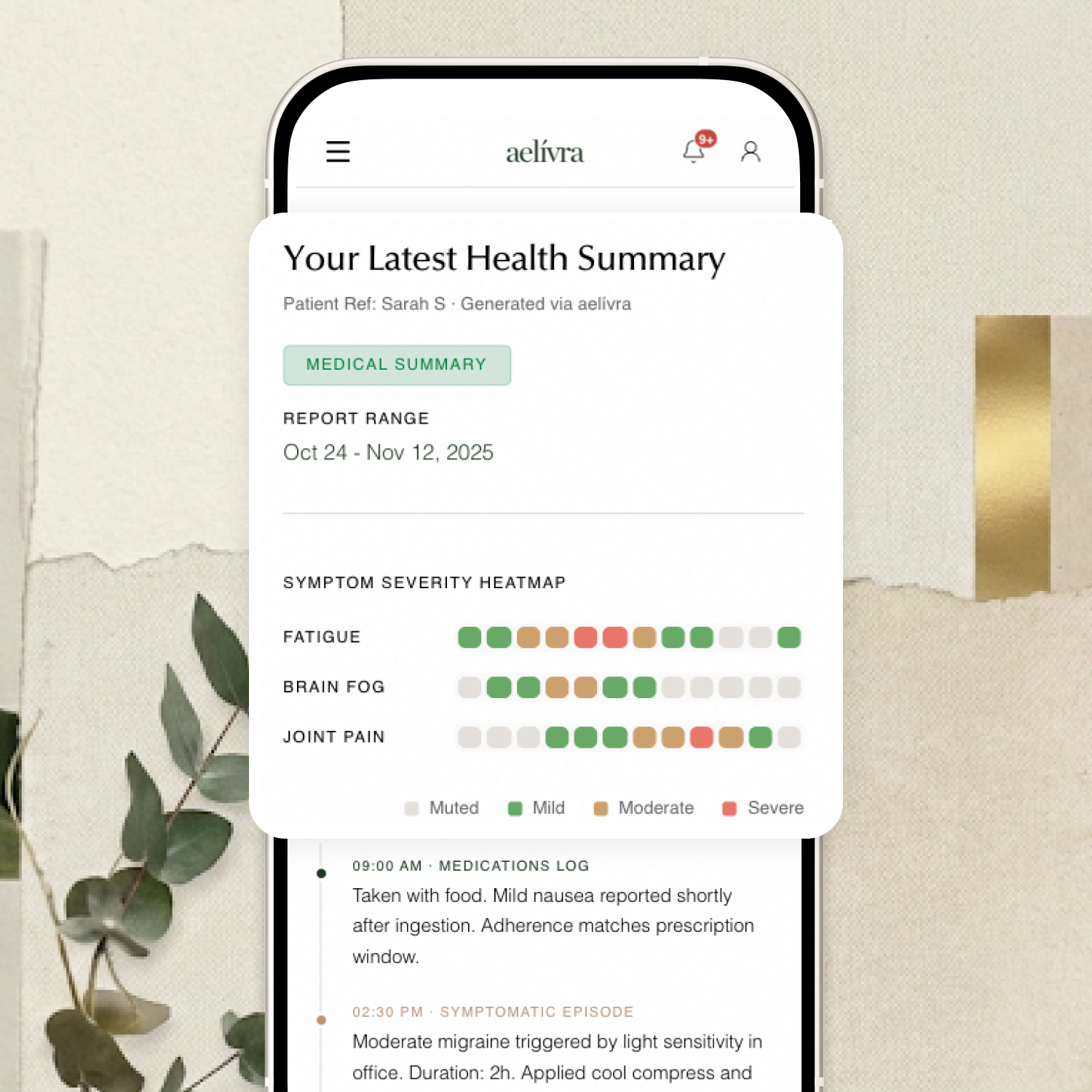
Shift the conversation from "I just don't feel right" to clear data your doctor can act on. aelívra turns weeks of health data into clean, visual summaries — so time-limited consultations focus on patterns, not guesswork.
What are the most common questions about ESR results?
Can stress cause a high ESR?
Severe physical stress from a major injury or surgery definitely raises sedimentation rates. There is no clinical evidence that psychological stress alone elevates this specific blood marker.
Is a low ESR a bad sign?
A very low sedimentation rate is perfectly healthy for most people. In rare situations it points to blood cell abnormalities like sickle cell disease ncbi.nlm.nih.gov.
Should I fast before an ESR blood test?
Fasting is not required for a standalone ESR test. If a healthcare provider orders a comprehensive lipid panel at the exact same time, fasting will be required healthline.com.