Summary at a glance
Food allergies trigger an immediate immune system response, while intolerances involve an inability to digest specific foods.
Sensitivities cause delayed, systemic inflammation that can appear as brain fog or joint pain up to 48 hours after eating.
Commercial IgG food sensitivity tests are clinically unvalidated and simply indicate recent exposure rather than an actual reaction.
An elimination diet paired with a detailed symptom diary remains the gold standard for identifying delayed food triggers.
This article discusses food allergies, sensitivities, and intolerances. It is for informational purposes only and does not replace a clinical diagnosis from a certified allergist or gastroenterologist. If you experience difficulty breathing, sudden throat swelling, or a rapid pulse after eating, seek emergency medical care immediately.
What is the biological difference between an allergy and a food intolerance?
An allergy is an immune system response that can cause life-threatening reactions. A food intolerance is a digestive issue where the body cannot break down certain foods. A sensitivity triggers delayed systemic inflammation. They involve entirely different biological pathways.
Food hypersensitivity covers both immune and non-immune reactions pmc.ncbi.nlm.nih.gov. True allergies happen when the immune system misidentifies a harmless protein as a dangerous invader. This creates an immediate and fierce defense. The reaction often includes visible signs like hives or swelling. The Johns Hopkins Medicine (2025) reports that 90% of all food allergies stem from nine major allergens, including milk and peanuts hopkinsmedicine.org.
Intolerances sit strictly in the digestive tract. The body lacks a specific enzyme to process a substance. Lactose intolerance serves as the most frequent example. Symptoms stay localized to the stomach and intestines. They typically include painful gas, bloating, or sudden diarrhea my.clevelandclinic.org.
Sensitivities bridge a confusing middle ground. They do not trigger the immediate immune response of a true allergy. They do, however, create low-grade inflammation. This inflammation ripples through the entire body. It produces vague symptoms that confuse patients and doctors alike.
According to a 2024 study in PMC, between 2% and 10% of the population experiences true food hypersensitivity pmc.ncbi.nlm.nih.gov. Yet many more people assume they have an allergy when they actually face an intolerance.
| Feature | Food Allergy | Food Intolerance | Food Sensitivity |
|---|---|---|---|
| Biological System | Immune (IgE antibodies) | Digestive (Enzyme lack) | Immune/Inflammatory |
| Reaction Time | Immediate (minutes) | Delayed (30m - 2h) | Highly delayed (up to 48h) |
| Dose Dependency | Minimal dose triggers reaction | Dependent on amount eaten | Often dose-dependent |
| Severity | Can be fatal | Uncomfortable | Chronic and disruptive |
Can food sensitivities cause symptoms that are not related to digestion?
Yes. Food sensitivities frequently cause systemic symptoms like joint pain, fatigue, and brain fog. These reactions stem from low-grade immune inflammation rather than simple poor digestion. The symptoms often surface far away from the stomach. This makes them incredibly difficult to trace back to a specific meal.
An intolerance traps distress in the gut. A sensitivity sends distress signals throughout the entire body. The delay in these signals causes massive confusion for anyone trying to find the root cause. A reaction might appear two full days after eating a trigger food.
This timing makes pinpointing the exact cause difficult. People often assume their diet is fine because they do not feel immediate stomach pain after lunch. Yet they wake up exhausted the next morning. They experience unexplained skin flare-ups or aching joints. They might even read about The Gut-Brain Axis: How Microbiome Imbalance Causes Brain Fog and wonder if their diet plays a role.
Researchers G. Hage and Y. Sacre from the Holy Spirit University of Kaslik note that food hypersensitivity encompasses complex non-immunological reactions pmc.ncbi.nlm.nih.gov. The body struggles with specific food components. These components drive underlying, silent inflammation.
The inflammation affects daily energy levels. It alters resting mood. It disrupts deep sleep cycles. Tracking these seemingly unrelated symptoms over time reveals the hidden dietary connection.
Skin breakouts and sudden acne can actually be delayed signs of a food sensitivity rather than a topical skin issue.

Uncover what you've been searching for. aelívra guides you through wellbeing explorations across sleep, diet, stress, symptoms and more so you can finally act on what's actually going on, one day at a time, every step at your own pace.
Why are commercial food sensitivity tests often considered unreliable?
Commercial food sensitivity panels measure IgG antibodies, which simply indicate you have eaten a food recently. Major medical organizations do not validate these tests for diagnosing sensitivities. They routinely return long lists of false positives that lead to unnecessary and stressful dietary restrictions.
Blood tests excel at finding true allergies. They accurately detect the IgE antibodies responsible for rapid, dangerous reactions carnivorelifestyles.com. Sensitivity tests operate on a completely different premise. They look for IgG antibodies in the blood.
IgG antibodies form a normal part of daily immune function. Their presence means prior exposure rather than active intolerance carnivorelifestyles.com. A high test result for almonds usually just means you eat almonds often, and it does not prove the nuts cause your chronic fatigue.
These unvalidated tests carry a steep financial price. A 2024 report in Carnivore Lifestyles states that invalid IgG panels often cost consumers between $200 and $600 carnivorelifestyles.com. They lead to severe dietary restrictions based on flawed data.
A heavily restricted diet creates new health problems. People cut out dozens of healthy, nutrient-dense foods based on a printed report. They miss out on crucial vitamins and minerals. They experience heightened anxiety around every meal. The test provides confusion instead of the promised clarity.
Major medical organizations advise against using commercial IgG blood panels to diagnose food sensitivities or intolerances.
How do you track delayed food reactions that happen 48 hours later?
The most reliable method is an elimination diet combined with a detailed symptom diary. This involves removing suspected triggers for a few weeks. You then reintroduce them one by one while monitoring subtle changes in your energy, mood, and daily digestion.
Finding a delayed trigger requires structured and patient observation. A sudden reaction on Tuesday morning might stem from Sunday night's dinner. Memory alone fails to capture these wide gaps. You cannot rely on guessing.
You need a reliable tracking system. Record exactly what you eat at each meal. Log your afternoon energy levels. Note any joint stiffness upon waking or sudden mood shifts. The patterns will slowly emerge from the data.
aelívra maps sleep, stress, diet, and symptoms against each other. It surfaces the hidden connections so you can finally act on what is actually going on. This transforms isolated symptoms into a clear plan.
Clinical elimination remains the gold standard for diagnosis. You completely remove common triggers like gluten or dairy. The body gets a chance to rest and calm down. You then test one food item at a time. The physical response becomes undeniable.
 Tracking meals and symptoms in a digital journal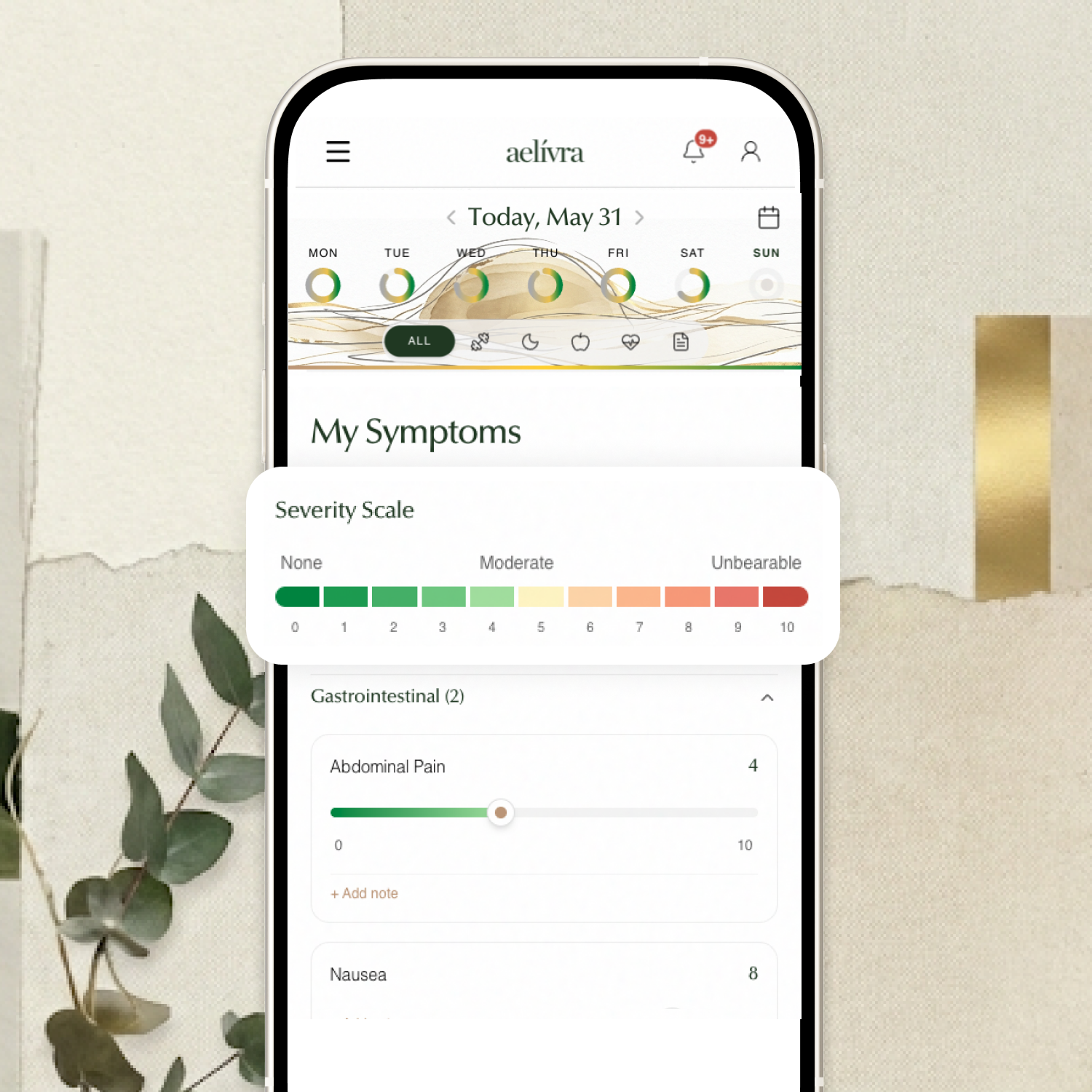
Every check-in brings you closer to answers. Effortlessly build a clear picture of energy, mood, pain, and sleep over time — so you can see exactly what's improving, what's not, and feel confident you're doing the right things to feel better.
Is it possible for a food intolerance to become a life-threatening allergy?
No. An intolerance will never evolve into an allergy. They operate on completely separate biological systems. An intolerance is an enzyme deficiency, while an allergy is an immune system error. One condition cannot biologically transform into the other over time.
People often worry that ignoring an intolerance will provoke a dangerous reaction later. This fear is biologically unfounded. Eating dairy with lactose intolerance causes severe and painful discomfort. It will not cause sudden anaphylaxis my.clevelandclinic.org.
Allergies require a very specific immune mistake. The body must produce IgE antibodies against a harmless protein clevelandclinicabudhabi.ae. Intolerances lack this immune mechanism entirely, ensuring the two conditions do not cross paths.
However, true allergies themselves demand strict and constant vigilance. The Johns Hopkins Medicine (2025) reports that nearly 8% of children under five suffer from true food allergies hopkinsmedicine.org. Total avoidance is the only safe strategy for these severe immune reactions hopkinsmedicine.org.
You can manage an intolerance with smart portion control. You can take over-the-counter enzyme supplements before a meal. Allergies offer no such flexibility. Knowing the exact difference dictates the appropriate level of caution required.
Enzyme supplements like lactase can prevent intolerance symptoms, but they provide absolutely no protection against a true food allergy.
Common Questions About Food Reactions
What causes a sudden food intolerance in adults?
Changes in gut bacteria or severe intestinal infections can alter digestive enzymes. Aging also naturally reduces the body's production of enzymes like lactase over time.
Can stress make a food sensitivity worse?
Yes. Chronic stress increases intestinal permeability. This allows more food particles to cross the gut barrier and trigger inflammatory immune responses.
Does cooking a food prevent an allergic reaction?
No. Heat alters the shape of some proteins, but most major allergens easily survive the cooking process. Cooking does not make an allergen safe to eat.
How quickly does an intolerance symptom appear?
Intolerance symptoms usually start within 30 minutes to two hours. This timeframe strictly aligns with the time it takes food to reach the intestines.
Can you cure a food sensitivity?
You cannot outright cure it, but you can drastically improve your tolerance. Healing the gut lining often reduces the severity of the inflammatory reaction.
Sources

Cameron founded aelívra after years of living an unknown no one could answer — navigating chronic health complexity through a medical system that wasn't built for it. That experience became a conviction: everyone deserves to feel truly alive, and no one should have to accept not knowing as a way of life. His work sits at the intersection of data science and functional health and wellbeing, turning the latest trusted medical research across news, health, wearables, biomarkers, and more into advice everyday people can use on their journeys toward feeling better. Every article is grounded in peer-reviewed evidence and linked to its primary source. This content is for informational purposes only and does not replace medical advice.