Summary at a glance
Hematocrit measures the volume of red blood cells compared to your total fluid plasma.
Mild dehydration frequently causes falsely elevated hematocrit levels by shrinking your plasma volume.
Iron deficiency often develops long before your hematocrit drops into the clinical anemia range.
Lifestyle factors like smoking and sleep apnea force your body to thicken your blood to capture more oxygen.
True polycythemia involves the active overproduction of red blood cells and requires medical monitoring.
What Does a High or Low Hematocrit Level Actually Mean?
A hematocrit blood test evaluates the proportion of your blood comprised of red blood cells. This metric functions as a ratio. Your blood contains red cells alongside white cells, platelets and liquid plasma. Hematocrit simply compares the volume of red cells against your total plasma volume.
If your fluid volume drops, your hematocrit percentage naturally rises. This fluid dynamic explains why your results fluctuate based on your water intake right before the blood draw.
| Demographic | Standard Hematocrit Range |
|---|---|
| Adult Males | 41.0% – 53.0% |
| Adult Females | 36.0% – 46.0% |
Seattle Children's Hospital (2024) reports that standard adult testing requires just 0.25 mL of whole blood for an accurate analysis seattlechildrenslab.testcatalog.org. You might notice slight variations in these reference ranges depending on the specific laboratory processing your sample.
Hematocrit is a ratio, not a fixed count. Your hydration levels directly change the math of your test result.
Is My High Hematocrit From Dehydration or Polycythemia?
Seeing a flagged high result often sparks immediate anxiety. You might wonder if you have a serious bone marrow condition. Most of the time, the culprit is simple dehydration.
StatPearls (2026) reports that plasma volume contraction creates relative polycythemia ncbi.nlm.nih.gov. When you sweat heavily or drink too little water, your plasma volume shrinks. Your red blood cell count remains identical. However, those cells now occupy a much larger percentage of the available fluid. This dynamic triggers a high hematocrit reading.
True polycythemia involves your body actively overproducing red blood cells. This absolute polycythemia requires clinical investigation and consistent monitoring. A simple glass of water will not resolve an absolute overproduction of cells.
Drink plenty of water in the 24 hours leading up to your blood test to prevent a falsely elevated reading.
Why Is My Hematocrit Low if My Iron Is Normal?
A low hematocrit reading frequently points toward anemia. It can also indicate acute blood loss or a nutrient deficiency. Cleveland Clinic (2025) notes that a low hematocrit percentage serves as a primary clinical sign of anemia my.clevelandclinic.org. However, you might see a low result even when your basic circulating iron looks completely fine.
Iron deficiency usually develops in distinct stages. A literature review in PMC (2024) reports that iron deficiency causes 1.3% of global disability-adjusted life years and frequently precedes the clinical onset of anemia pmc.ncbi.nlm.nih.gov. Your body will exhaust its stored iron reserves long before your circulating iron levels crash.
If you experience heavy menstrual cycles, your hematocrit might dip temporarily. Your body simply needs time to rebuild its red blood cell volume after an acute loss of blood mayoclinic.org.
How Do Smoking and Sleep Apnea Affect Hematocrit Results?
Your daily habits directly shape your blood composition. If your body senses a lack of oxygen, it compensates by manufacturing more red blood cells. It does this to carry whatever limited oxygen remains available.
Mayo Clinic (2026) states that living at high altitude naturally causes elevated hematocrit values mayoclinic.org. Your body adapts to the thinner air by aggressively boosting its oxygen-carrying capacity.
Smoking and sleep apnea trigger a similar physiological panic. Chronic smoking introduces carbon monoxide into your bloodstream. This starves your tissues of oxygen. Sleep apnea repeatedly halts your breathing at night. Both scenarios force your bone marrow into overdrive. This thickens your blood and drives your hematocrit higher. Understanding these respiratory triggers helps explain why your numbers shift while you learn what is a good hrv for your daily recovery.
Your body treats sleep apnea just like living on a high mountain. It thickens your blood to survive the nightly drop in oxygen.
What Symptoms Should You Track Alongside Your Hct Results?
Your lab results tell a much richer story when you pair them with your daily physical sensations. Tracking specific symptoms helps you differentiate between a harmless fluid fluctuation and an underlying issue.
MedlinePlus (2024) reports that symptoms of polycythemia may include intense itching after a warm shower and unusual bleeding medlineplus.gov. You might also experience heavy sweating during sleep. Persistent headaches often occur as thicker blood moves more sluggishly through your vessels.
Conversely, if your numbers run low, you will likely feel the classic signs of poor oxygen delivery. Look out for chronic fatigue. You might also notice cold hands and sudden dizziness when standing up. You can often see these systemic stressors reflected in your daily resting metrics. Tracking your physical baseline helps make sense of it all, much like having HRV Explained: What Your Number Actually Means for Recovery and Stress.
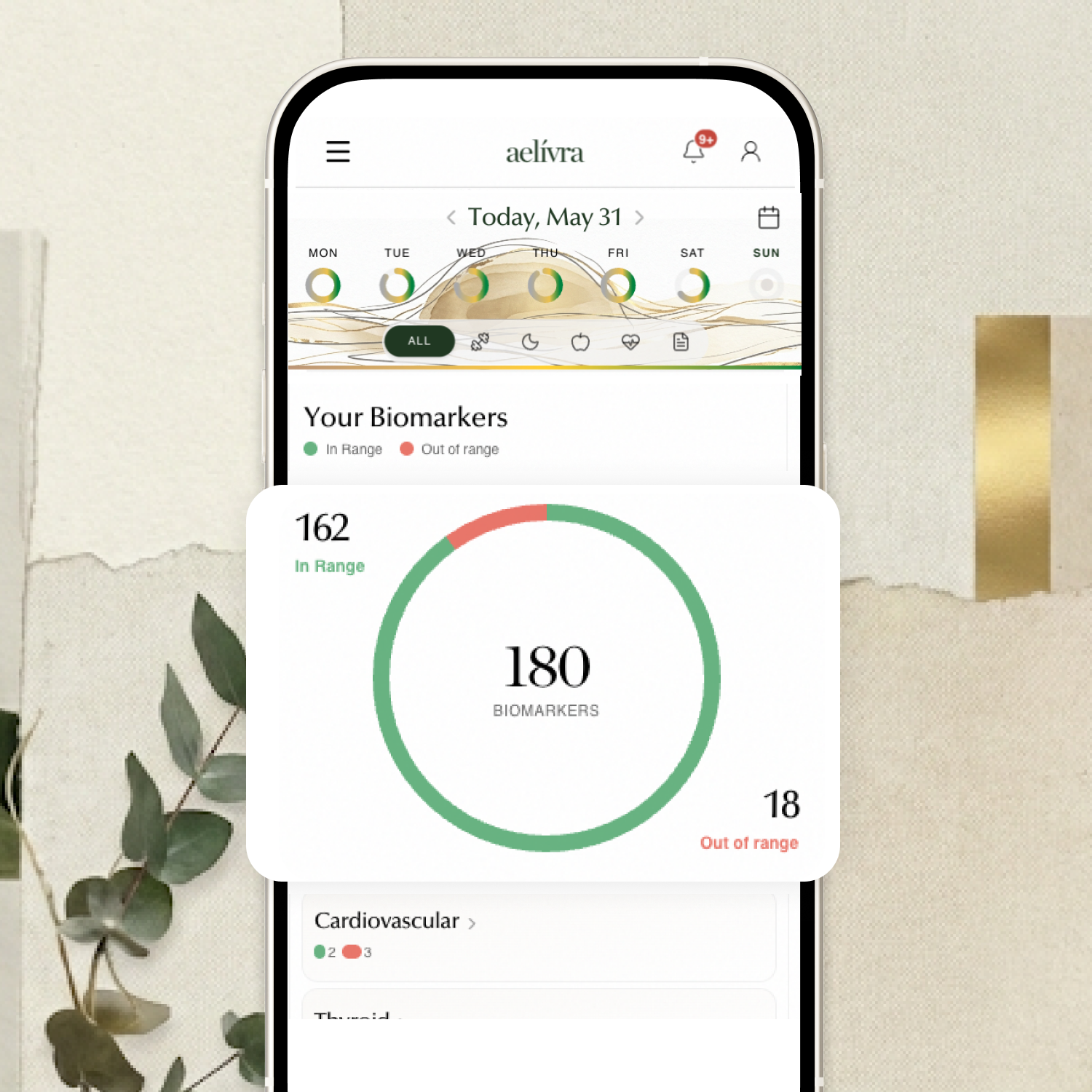
Blood work, scans, test results, medical reports — finally in one place and connected to how you actually feel. aelívra tracks biomarkers and health records over time, so you can see what's trending in the right direction and walk into your next appointment knowing exactly what to discuss.
Frequently Asked Questions
Can drinking water lower my hematocrit before a test? Yes. Being well-hydrated normalises your plasma volume. This prevents a falsely elevated hematocrit reading caused by simple dehydration.
Is a hematocrit of 35 dangerously low? A level of 35% sits just below the standard adult female range of 36.0% seattlechildrenslab.testcatalog.org. It indicates mild anemia but rarely represents an immediate clinical emergency.
What is the difference between hemoglobin and hematocrit? Hemoglobin measures the actual protein inside your red blood cells that carries oxygen. Hematocrit measures the physical volume those cells take up in your total blood supply.
How fast can hematocrit levels change? Your levels can shift within hours if the change relates to acute hydration or acute bleeding. Changes driven by nutritional status or altitude adaptation generally take several weeks to reflect in a blood draw.
Never attempt to donate blood purely to lower a high hematocrit result without consulting your doctor first.