
Summary at a glance
An MCV blood test measures the physical size of your red blood cells to determine how efficiently your body transports oxygen.
A low MCV reading typically signals iron deficiency or chronic inflammation, resulting in smaller cells that leave you feeling perpetually exhausted.
A high MCV reading indicates oversized, fragile cells, most commonly caused by Vitamin B12 deficiency, folate deficiency, or regular alcohol consumption.
You can experience abnormal red blood cell sizes and the associated fatigue even if your overall haemoglobin levels remain completely normal.
What Is an MCV Blood Test and What Do the Numbers Mean?
An MCV blood test measures the average size of your red blood cells to uncover why your energy levels might be crashing. A normal result falls between 80 and 100 femtoliters. When your cells are too small or too large, they struggle to carry oxygen efficiently, leaving you exhausted.
An MCV (Mean Corpuscular Volume) test reveals the physical size of your red blood cells. The National Library of Medicine (2024) reports that an MCV blood test takes less than five minutes and serves as a primary signpost for blood disorders medlineplus.gov.
Your body relies on these cells to ferry oxygen to every tissue. When they deviate from their optimal size, your oxygen delivery system falters. This translates directly into everyday fatigue, brain fog, and shortness of breath.
| MCV Result | Cell Size | Medical Term | Common Causes |
|---|---|---|---|
| Below 80 fL | Too small | Microcytosis | Iron deficiency, chronic disease |
| 80 - 100 fL | Normal | Normocytosis | Healthy oxygen transport |
| Above 100 fL | Too large | Macrocytosis | B12 deficiency, folate deficiency |
Mito Health (2026) reports that normal MCV values sit strictly between 80 and 100 fL mitohealth.com. Values outside this window point toward specific nutritional gaps or lifestyle factors that demand your attention.
Why Is My MCV Low if My Iron Levels Are Normal?
A low MCV reading indicates your red blood cells are smaller than average. This state is known as microcytosis. While iron deficiency stands as the most frequent global cause, your MCV can plummet even when your iron stores appear adequate mitohealth.com.
When your body battles long-term inflammation, it intentionally sequesters iron away from your bloodstream. This defense mechanism starves your red blood cells of the raw materials they need to grow. The result is smaller cells that carry less oxygen, leaving you perpetually drained. Labcorp OnDemand (2026) reports that anaemia affects 9.3% of people in the U.S. ondemand.labcorp.com.
Your doctor will likely look beyond standard iron panels. Clinical guidelines suggest a diagnostic trial of iron treatment to clarify whether low MCV stems from poor absorption or an underlying inflammatory response best.barnsleyccg.nhs.uk. Resolving microcytosis requires identifying the specific roadblock preventing your body from utilizing the nutrients you consume.
Never start high-dose iron supplements based on a low MCV alone. Too much iron causes oxidative stress and requires a doctor's guidance to dose safely.
What Does a High MCV Level Mean for Your Energy?
A high MCV reading means your red blood cells have grown unusually large. This condition is called macrocytosis. These oversized cells become fragile and inefficient. They struggle to squeeze through tiny capillaries to deliver oxygen where it matters most.
Vitamin B12 and folate deficiencies frequently drive this cellular expansion. Without sufficient amounts of these crucial vitamins, your cells cannot divide properly during their creation in the bone marrow. They continue to grow in size without finalizing their structure ondemand.labcorp.com.
This inefficiency forces your heart to work harder. Understanding how oxygen delivery impacts your cardiovascular system helps contextualize other metrics. Exploring what is a good hrv provides deeper insight into how your heart handles this extra strain. Correcting the nutritional deficit allows your bone marrow to resume producing normal-sized cells.
Red blood cells live for about 120 days. Any lifestyle or dietary changes you make today will take several months to fully reflect in your MCV numbers.
Can You Have a High MCV Without Being Anaemic?
You can absolutely present with elevated MCV while maintaining perfectly normal haemoglobin levels. This scenario serves as an early warning system for your metabolic health. It is known as isolated macrocytosis.
The Royal Australian College of General Practitioners (2007) reports that among 2801 patients, an elevated MCV frequently highlights lifestyle factors like alcohol consumption racgp.org.au. Alcohol acts as a direct toxin to your bone marrow. It interferes with red blood cell production long before it impacts your overall blood count.
Certain daily medications also alter cell size behind the scenes. Seeing an out-of-range flag on your lab report without a formal diagnosis feels frustrating. However, it offers a valuable window to adjust your lifestyle. Monitoring these shifts over time provides clarity on how your daily habits influence your cellular health.
 Patient reviewing lab test results
What Should You Track Alongside Your MCV Lab Results?
Looking at MCV in isolation rarely tells the whole story. Your red blood cell size works in concert with other vital markers to paint a complete picture of your metabolic function.
Pairing your MCV with your Red Cell Distribution Width (RDW) reveals how much your cell sizes vary from one another. A high RDW alongside an abnormal MCV often confirms a nutritional deficiency noul.com. Tracking your ferritin levels simultaneously helps pinpoint exactly where your iron stores stand before your cells begin to shrink.
Connecting your blood work to your daily energy patterns makes the numbers actionable. As you make dietary adjustments, you will likely notice changes in your physical stamina weeks before your next blood draw. Monitoring these daily shifts—as detailed in HRV Explained: What Your Number Actually Means for Recovery and Stress—bridges the gap between clinical data and how you actually feel.
Always request a copy of your full iron panel. Tracking your ferritin alongside your MCV provides a much clearer picture of your actual iron stores.
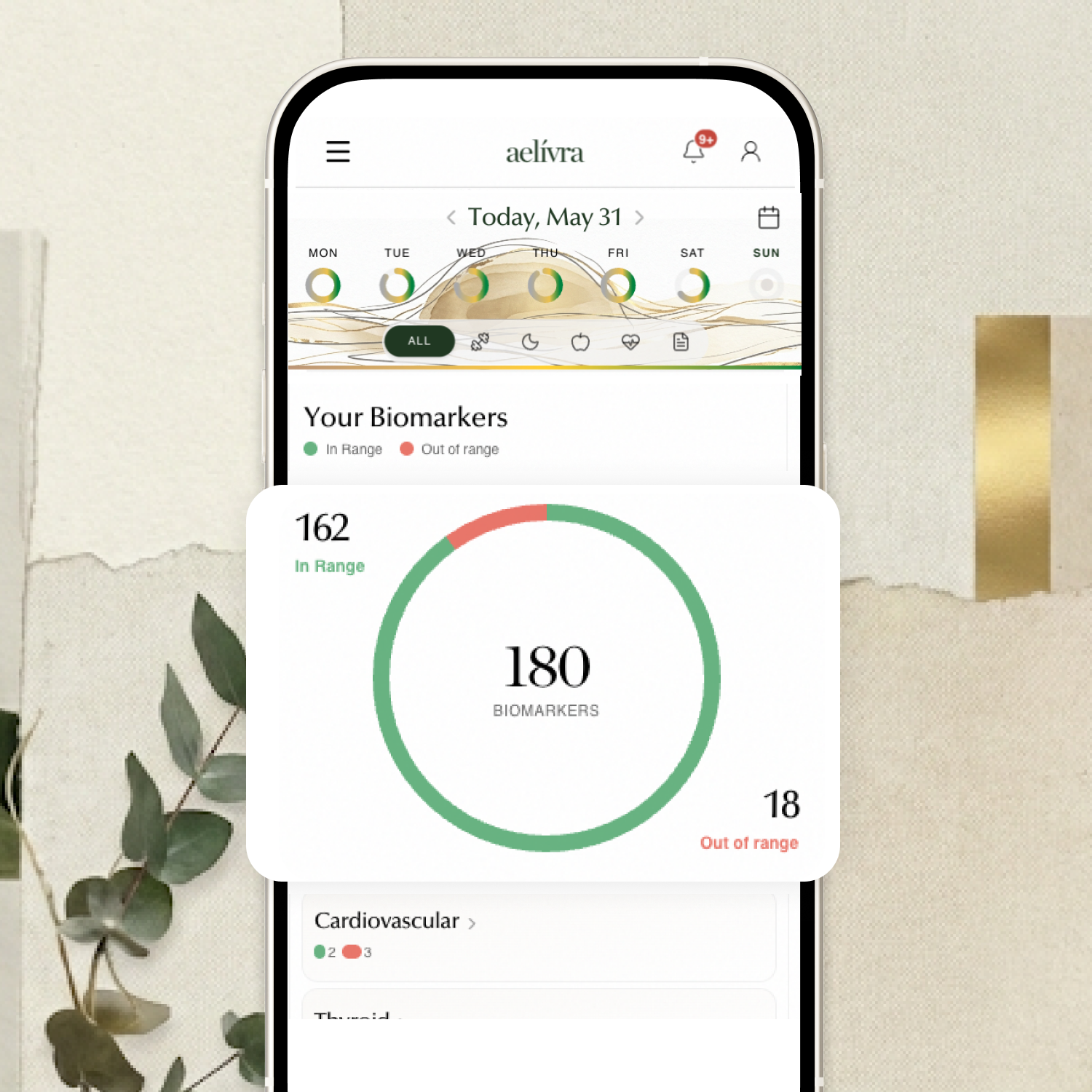
Blood work, scans, test results, medical reports — finally in one place and connected to how you actually feel. aelívra tracks biomarkers and health records over time, so you can see what's trending in the right direction and walk into your next appointment knowing exactly what to discuss.
Frequently Asked Questions
What causes a suddenly high MCV on a blood test? A rapid increase in MCV usually points to a sudden depletion of Vitamin B12 or folate. It can also follow a recent period of heavy alcohol consumption that temporarily impairs your bone marrow.
How long does it take to fix abnormal MCV levels? Red blood cells live for approximately 120 days. Once you address the underlying nutritional or lifestyle cause, it typically takes three to four months for your MCV to completely normalize.
Does dehydration affect MCV results? Dehydration alters the concentration of your blood but does not significantly change the physical size of the cells themselves. Your MCV remains a stable indicator regardless of your daily water intake.
Can stress make your MCV high or low? While emotional stress does not directly alter cell size, chronic stress drives inflammation that interferes with nutrient absorption. This malabsorption eventually leads to the cellular changes seen in microcytosis or macrocytosis.