Summary at a glance
The protein ENPP1 acts as a molecular brake that forces injured kidneys to form permanent scar tissue instead of regenerating new cells.
Blocking ENPP1 with the humanised antibody AD-NP1 allows the renal system to switch from fibrosis back to active cellular repair.
Roughly 1 in 7 adults face chronic kidney disease, largely driven by unresolved acute injuries that fail to heal properly.
Catching early downward trends in metabolic markers like eGFR provides the best opportunity to intervene before scarring becomes permanent.
Can Damaged Kidneys Actually Regenerate Themselves?
UCLA researchers published a 2026 study revealing that damaged kidneys can regenerate when a specific protein is blocked. The research was featured in the journal Cell Stem Cell. It shows that inhibiting the ENPP1 protein with an experimental drug allows kidney tissue to repair itself rather than forming permanent scars (link unavailable).
This discovery challenges everything previously known about renal failure.
For years, scientists believed severe kidney scarring was permanent. Now, evidence points to a dormant healing process that just needs the right signal to activate. Acute kidney injury often triggers a downward spiral, pushing healthy tissue toward chronic failure.
UCLA Broad Stem Cell Research Center Director Dr. Arjun Deb notes that the kidneys naturally heal (link unavailable). However, the body inexplicably hits the brakes on this process after trauma.
Finding a way to release that brake offers real hope for millions facing dialysis.
The 2026 study marks the first time scientists have successfully triggered the body's own mechanisms to regrow functional kidney cells by blocking a specific protein.
What Is the ENPP1 Protein and How Does It Block Healing?
ENPP1 is a protein that acts as a molecular brake on the body's natural cellular regeneration. When an acute injury strikes, this protein surges and actively prevents healthy cells from multiplying, choosing instead to lay down stiff scar tissue (link unavailable).
According to the UCLA Newsroom (2026), roughly 1 in 7 adults in the US suffer from chronic kidney disease (link unavailable). Many of these cases stem from unresolved acute injuries that spiral out of control. Instead of rebuilding healthy filtration units, the tissue gets bogged down in fibrosis.
Blocking this protein shifts the entire cellular environment.
Researchers discovered that when ENPP1 is out of the picture, the kidney switches from permanent scarring back to active tissue repair (link unavailable). It effectively turns off the overzealous defense mechanism so proper healing can resume.

How Does the New UCLA Drug AD-NP1 Work for Kidney Repair?
The experimental drug AD-NP1 is a humanized monoclonal antibody designed specifically to neutralise the ENPP1 protein. Interestingly, scientists initially developed this compound to repair damaged heart tissue before discovering its profound impact on renal recovery (link unavailable).
Giving AD-NP1 after an injury removes the chemical barriers preventing cell division.
In the 2026 preclinical trials, inhibiting ENPP1 successfully restored kidney filtration capacity (link unavailable). The drug stops the progression from acute injury to chronic disease by halting the accumulation of scar tissue (link unavailable).
| Tissue Response | Without AD-NP1 Treatment | With AD-NP1 Blockade |
|---|---|---|
| Cellular Action | Fibrosis and permanent scarring | Active nephron regeneration |
| Filtration Capacity | Progressive decline | Restored filtration function |
| Long-Term Outlook | High risk of chronic disease | Reduced structural damage |
Seeing this transition from permanent scarring to functional recovery opens the door for entirely new treatment pathways.
The drug AD-NP1 was originally developed at UCLA to repair heart tissue before researchers realized it had the same regenerative effect on the kidneys.
Which Blood Markers Reveal Kidney Health Trends?
While regenerative drugs move through clinical trials, monitoring a routine metabolic panel remains the best way to catch kidney stress early. Catching a decline in function before it becomes severe scarring provides a massive advantage. Intervention can happen before the damage sets in.
Understanding an egfr blood test meaning provides a clear picture of how efficiently the kidneys filter waste. The number drops when the filtration units struggle.
Similarly, tracking what does high BUN mean, BUN to creatinine ratio and what it tells you about kidney health highlights the balance between protein intake and renal clearance.
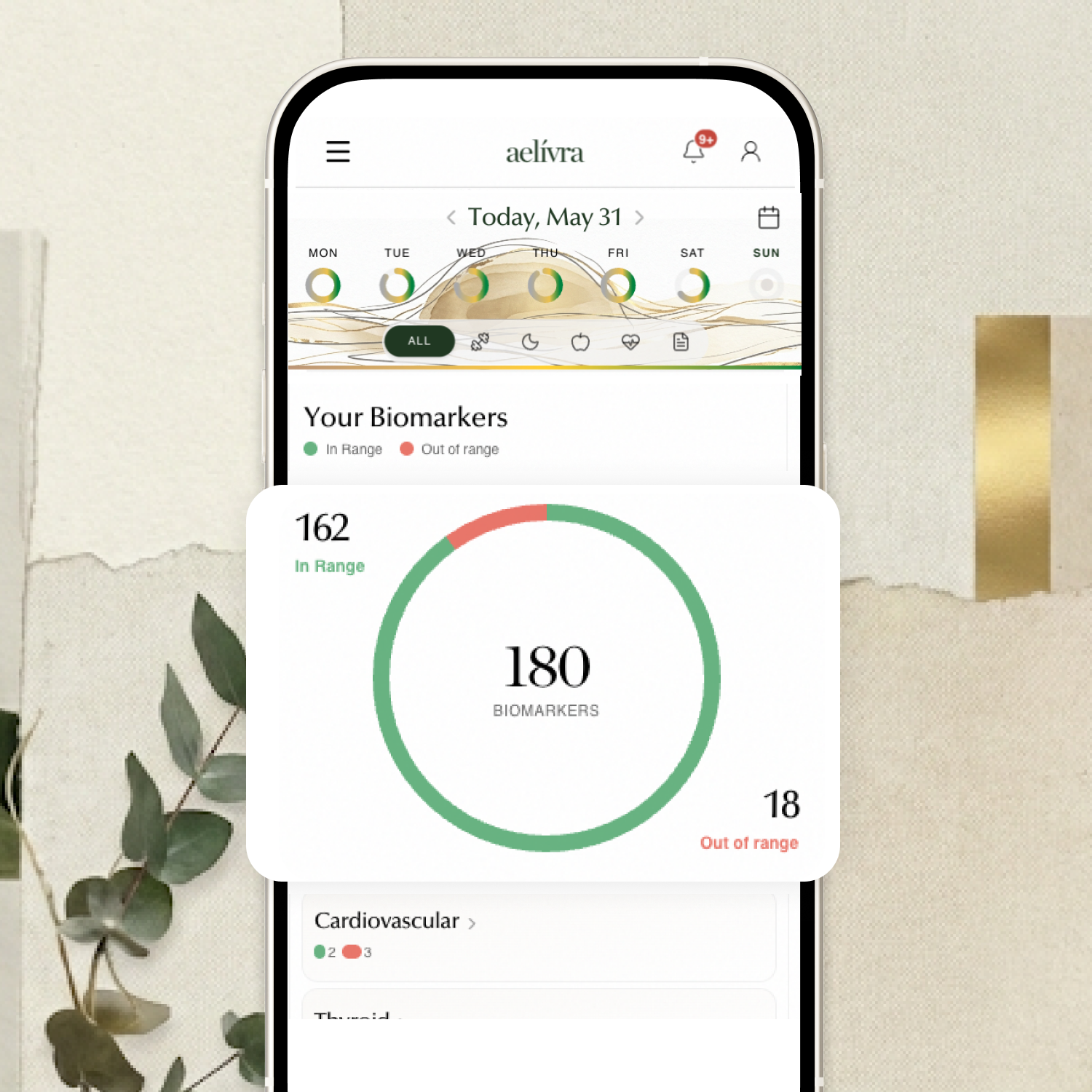
Getting clarity on kidney health makes it possible to finally act on what is actually happening inside the body. aelívra connects lab results like eGFR and BUN to daily symptoms, mapping out the trends over time. This helps spot subtle shifts in renal clearance early, bringing the focus to addressing the stress before it turns into chronic scarring.
All Your Health Records, Evaluated Together
Blood work, scans, test results, medical reports — finally in one place and connected to how you actually feel. aelívra tracks biomarkers and health records over time, so you can see what's trending in the right direction and walk into your next appointment knowing exactly what to discuss.
What Are the Next Steps for ENPP1 Kidney Repair Treatments?
When will AD-NP1 be available for patients?
The drug is currently moving through preclinical evaluation after the successful 2026 UCLA study (link unavailable). It will require rigorous human clinical trials before becoming widely accessible.
Can ENPP1 blockers reverse existing chronic kidney disease?
Current research focuses heavily on preventing scarring after an acute injury (link unavailable). Researchers continue to test whether these treatments can safely break down older established fibrosis.
Why does the body produce ENPP1 if it stops healing?
After an acute injury, the body triggers an aggressive defense mechanism. ENPP1 levels spike rapidly and act as a strict molecular brake on the healing process, forcing the tissue to lay down stiff scars instead of new cells (link unavailable).