
Summary at a glance
Solve M.E. announced 2026 funding to evaluate semaglutide for myalgic encephalomyelitis/chronic fatigue syndrome (ME/CFS) symptoms.
Researchers believe GLP-1 drugs may repair vascular dysregulation and improve capillary blood flow, addressing the root of post-viral energy crashes.
The upcoming observational study prioritises physical function improvements measured by the SF-36 questionnaire over standard metabolic changes.
Roughly 10% of people carry genetic markers associated with GLP-1 resistance, meaning they may not respond to semaglutide treatments.
The information provided is for educational purposes only and is not intended as medical advice. Clinical trials for GLP-1 medications in ME/CFS are ongoing, and semaglutide is not currently approved for the treatment of chronic fatigue syndrome. Always consult a healthcare provider before making changes to your medication or treatment plan.
What is the 2026 semaglutide trial for ME/CFS?
In February 2026, Solve M.E. announced new funding to test if the GLP-1 receptor agonist semaglutide can reduce symptoms of myalgic encephalomyelitis/chronic fatigue syndrome (ME/CFS) solvecfs.org. Led by researchers at Charité, this observational study shifts the focus of GLP-1 medications directly toward resolving post-viral vascular dysfunction and fatigue.
The trial targets a very specific mechanism. Post-infectious ME/CFS involves profound neuro-inflammation, sympathetic overactivity, and vascular dysregulation solvecfs.org. Rather than treating the drug as a simple weight-loss tool, the 2026 research explores whether it can repair the immune and vascular systems.
The upcoming observational study in Germany evaluating semaglutide focuses on post-infectious ME/CFS patients with a body mass index over 27 meresearch.org.uk. Instead of looking solely at metabolic markers, the study focuses on functional recovery.
ME Research UK (2026) notes that the primary outcome for the planned semaglutide study is physical function improvement, measured by the SF-36 questionnaire meresearch.org.uk. This represents a significant shift toward treating the debilitating loss of energy that defines the condition.
The 2026 trials measure success through physical function and energy restoration, not just weight loss.
Can GLP-1 drugs improve blood flow and vascular issues in chronic fatigue?
Semaglutide might help repair the broken energy delivery systems seen in chronic fatigue. ME Research UK (2026) reports that the proposed theoretical benefits of GLP-1 agonists for ME/CFS include improved endothelial function and capillary perfusion meresearch.org.uk.
People living with ME/CFS often experience poor microcirculation. The tiny blood vessels fail to dilate properly during exertion, starving muscles and the brain of necessary oxygen.
If a medication can restore normal endothelial function, blood can flow freely to tissues that desperately need it. This could potentially reduce the severity of post-exertional crashes and help clear cognitive brain fog.
| Application | Primary Goal | Target Mechanism |
|---|---|---|
| Metabolic (Traditional) | Weight and glucose management | Insulin sensitivity and delayed gastric emptying |
| ME/CFS (2026 Trials) | Physical function and energy | Endothelial repair and reduced neuro-inflammation |
This vascular focus also ties into related post-viral conditions. For instance, the NIH RECOVER initiative is currently evaluating semaglutide for Long COVID inflammation and metabolic effects in adults and adolescents autoimmuneinstitute.org.
 A researcher analyzing vascular data patterns related to chronic fatigue syndrome.
Why do some people not respond to GLP-1 treatments for fatigue?
While the vascular theory is promising, semaglutide is not a universal solution. Some bodies naturally resist the medication.
A 2026 report from Stanford Medicine reveals that approximately 10% of the population carries genetic variants linked to GLP-1 resistance sciencedaily.com. Individuals with these specific genetic variants actually produce higher levels of the hormone naturally, but their cells do not respond effectively to it sciencedaily.com.
This genetic factor explains why a certain subset of patients experiences no symptom relief from these medications. It highlights the complex reality of ME/CFS vs burnout and the necessity of targeted, personalised treatment approaches.
Approximately 10% of people carry a genetic variant that makes their bodies resistant to the effects of GLP-1.
What should you track if you are using semaglutide for fatigue symptoms?
Identifying whether a new treatment improves a chronic condition requires detailed contextual data. Relying on memory to measure fatigue levels often leads to frustration.
Finding out if a medication improves baseline energy requires tracking the subtle shifts in daily function. It demands a wider view of how a treatment interacts with sleep, digestion, and stress.
aelívra helps connect daily symptom logs to broader lifestyle factors. It maps sleep quality, daytime energy, and daily routines against each other, surfacing the specific triggers and recovery patterns that feel invisible until you see them. This context allows people to walk into appointments with clear, visual summaries of what is actually working.
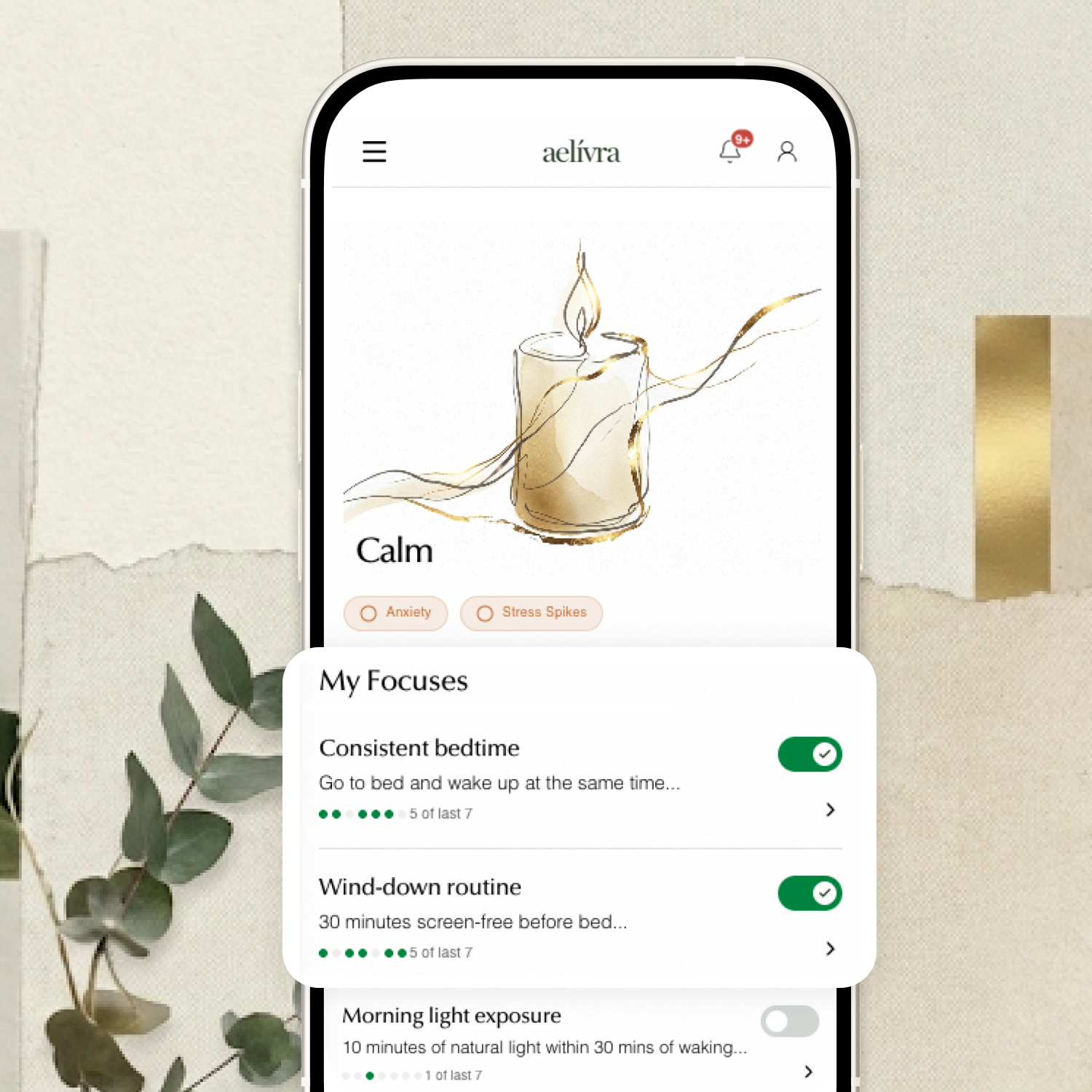
Uncover what you've been searching for. aelívra guides you through wellbeing explorations across sleep, diet, stress, symptoms and more so you can finally act on what's actually going on, one day at a time, every step at your own pace.
Frequently asked questions about semaglutide and ME/CFS
Is semaglutide currently approved for chronic fatigue syndrome? No. Semaglutide is currently approved for diabetes and weight management, while its use for ME/CFS remains strictly investigational in 2026 clinical trials.
How do researchers measure if the drug works for ME/CFS? Instead of tracking weight, current observational trials measure improvements in daily physical function and energy capacity using standardized medical questionnaires.
Can GLP-1 medications cause fatigue? Yes. Some people experience temporary fatigue as a side effect when starting GLP-1 receptor agonists, often related to delayed gastric emptying and shifting metabolic states.
Sources

Cameron founded aelívra after years of living an unknown no one could answer — navigating chronic health complexity through a medical system that wasn't built for it. That experience became a conviction: everyone deserves to feel truly alive, and no one should have to accept not knowing as a way of life. His work sits at the intersection of data science and functional health and wellbeing, turning the latest trusted medical research across news, health, wearables, biomarkers, and more into advice everyday people can use on their journeys toward feeling better. Every article is grounded in peer-reviewed evidence and linked to its primary source. This content is for informational purposes only and does not replace medical advice.