Summary at a glance
The 2026 clinical guidelines prioritize the 10-minute active stand test as the primary diagnostic tool for POTS due to its accessibility in primary care settings.
A confirmed POTS diagnosis requires a heart rate increase of at least 30 beats per minute (40 bpm for adolescents) within 10 minutes of standing.
Active standing provides a more physiologically accurate stressor than traditional tilt table tests by engaging the skeletal muscle pump against gravity.
Tracking daily heart rate and HRV patterns bridges the gap between home symptom logging and official diagnostic criteria.
This article discusses the 2026 diagnostic criteria for Postural Orthostatic Tachycardia Syndrome (POTS), including heart rate thresholds and the active stand test. It is for informational purposes only and does not replace professional medical evaluation. Always consult a healthcare provider to evaluate symptoms of orthostatic intolerance, dizziness, or abnormal heart rate spikes.
What are the official 2026 POTS diagnostic guidelines?
The 2026 guidelines establish the 10-minute active stand test as the primary diagnostic standard for Postural Orthostatic Tachycardia Syndrome. This accessible bedside test has largely replaced specialized tilt-table testing. It allows general practitioners to identify orthostatic heart rate spikes without referring patients to specialized laboratories.
In early 2026, updated clinical protocols endorsed by major medical institutions prioritized the active stand test over the traditional head-up tilt test (link unavailable).
This shift addresses the prolonged wait times patients historically faced when seeking a formal diagnosis (link unavailable). By moving testing into primary care settings, doctors can evaluate autonomic function much earlier.
The 2026 clinical guidelines confirm that an active stand test is sufficient for a POTS diagnosis, often making the tilt table test unnecessary.
How does the 10-minute active stand test work?
The active stand test requires patients to lie flat for several minutes before standing quietly for 10 minutes. A clinician records heart rate and blood pressure at regular intervals. This monitors the rapid cardiovascular spikes characteristic of POTS (link unavailable).
Engaging leg and core muscles provides a highly relevant physiological stressor. This active muscle-pump engagement closely mimics the daily symptoms people experience while brushing teeth or waiting in line (link unavailable). A 2026 study in BMJ Open reports that active standing effectively replicates real-world orthostatic intolerance (link unavailable).
 A patient undergoing an active stand test in a primary care clinic
Is an active stand test more accurate than a tilt table?
For many patients, the active stand test provides a highly accurate reflection of real-world symptom triggers. While a tilt table passively moves the body, an active stand requires the nervous system to coordinate muscle engagement against gravity (link unavailable).
Robbins (2026) reports that the active stand protocol demonstrates a strong clinical correlation with traditional tilt tests (link unavailable). This makes it a reliable assessment of how the body handles gravity on a daily basis.
| Feature | 10-Minute Active Stand | Head-Up Tilt (HUT) Test |
|---|---|---|
| Primary Mechanism | Active muscle engagement | Passive mechanical tilt |
| Required Equipment | Blood pressure cuff and stopwatch | Motorized specialized table |
| Diagnostic Duration | 10 minutes | Up to 45 minutes |
| Clinical Setting | Primary care or specialist office | Specialized autonomic laboratory |
How much should heart rate increase for a POTS diagnosis?
To confirm POTS, a patient's heart rate must increase by at least 30 beats per minute within the first 10 minutes of standing. For adolescents under 19, the diagnostic threshold increases to 40 beats per minute (link unavailable).
Mayo Clinic (2026) reports that this sustained spike must occur without a significant drop in blood pressure (link unavailable). Meeting these specific criteria ensures that the diagnosis accurately reflects an abnormal heart rate response.
Before undergoing an active stand test, avoid caffeine or heavy exercise for 24 hours. These factors can temporarily skew heart rate results.
Why does blood pressure stay stable during a POTS test?
Blood pressure remains relatively stable during a POTS test because the condition primarily affects heart rate regulation rather than blood volume distribution. A significant drop in blood pressure upon standing shifts the diagnosis from POTS to orthostatic hypotension (link unavailable).
Cleveland Clinic (2026) reports that distinguishing between these two conditions proves critical (link unavailable). Their treatment pathways differ entirely. A stable blood pressure reading confirms adequate vascular resistance, isolating the tachycardia as the primary dysfunction.
How can people track symptoms before a diagnostic appointment?
The shift toward accessible in-office testing means patients can use tracked health data to bridge the gap between home tracking and clinical criteria.
Understanding baseline metrics such as what is a good hrv provides valuable context. Knowing HRV Explained: What Your Number Actually Means for Recovery and Stress gives doctors a clearer picture of underlying autonomic function.
Using a platform like aelívra helps track daily symptoms alongside heart rate. People can walk into appointments with answers by presenting a clear picture of what happens upon standing. This turns weeks of health data into clean visual summaries.
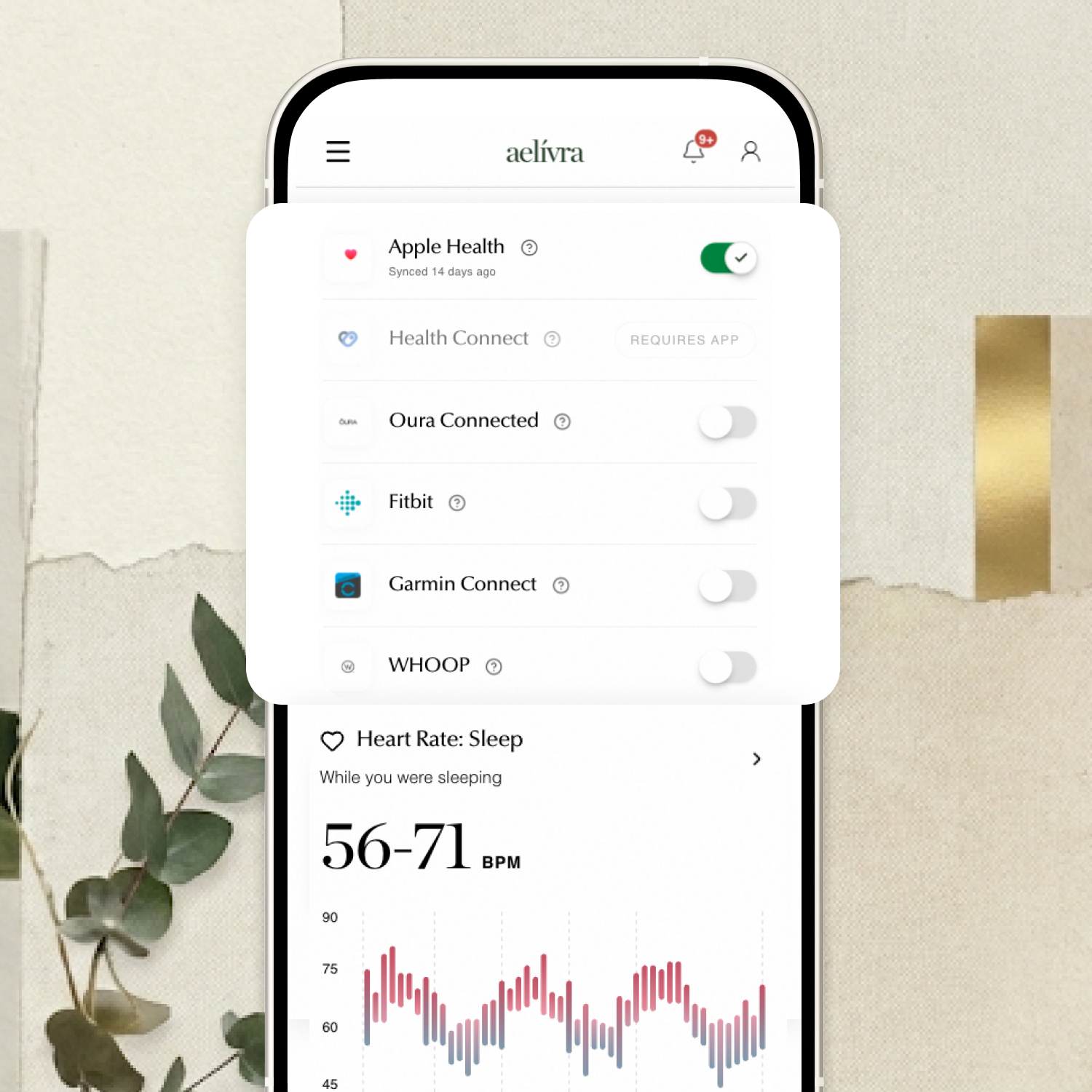
Make the most of your wearables. HRV, resting heart rate, and sleep stages can finally mean something. aelívra connects 500+ wearables and apps (Oura, Apple Health, Garmin, Fitbit, Whoop) and maps that data directly against how you actually feel — your syptoms and your wellbeing first, always.
Frequently asked questions about 2026 POTS testing
Can people perform a POTS test at home? While people can measure heart rate at home using a smart watch to track patterns, an official diagnosis requires clinical evaluation. A doctor must rule out other cardiovascular conditions first (link unavailable).
What if the heart rate only spikes occasionally? POTS symptoms often fluctuate based on hydration, stress, and sleep. Tracking triggers over several days provides a broader picture than a single in-office test (link unavailable).
Will the active stand test cause fainting? Most people with POTS experience dizziness and tachycardia without fainting. If someone feels faint during the 10-minute clinical test, the clinician will immediately instruct them to lie down safely (link unavailable).

Cameron founded aelívra after years of living an unknown no one could answer — navigating chronic health complexity through a medical system that wasn't built for it. That experience became a conviction: everyone deserves to feel truly alive, and no one should have to accept not knowing as a way of life. His work sits at the intersection of data science and functional health and wellbeing, turning the latest trusted medical research across news, health, wearables, biomarkers, and more into advice everyday people can use on their journeys toward feeling better. Every article is grounded in peer-reviewed evidence and linked to its primary source. This content is for informational purposes only and does not replace medical advice.