
Summary at a glance
Summer sun exposure does not raise vitamin D levels enough to reach sufficiency in older adults or minoritised ethnic groups.
A 2026 study published in the European Journal of Clinical Nutrition found that 92.3% of South Asian participants remained deficient even in summer.
Sunlight in northern latitudes is often too weak to replenish nutrient stores for those with darker skin or older age.
Year-round vitamin D supplementation is likely necessary for vulnerable populations, challenging the seasonal supplement myth.
Tracking biomarkers over time provides the only definitive way to confirm if seasonal sunlight meets biological needs.
This article discusses recent research on vitamin D deficiency and is intended for informational purposes only. It does not replace professional medical advice, diagnosis, or treatment. Always seek the advice of a physician or qualified health provider before starting any new supplement regimen or altering health tracking routines.
Can a person have a vitamin D deficiency in summer?
People can easily remain vitamin D deficient during the summer months. A 2026 study published in the European Journal of Clinical Nutrition by Newcastle University found that seasonal sunlight fails to correct deficiency for many demographic groups, particularly older adults and minoritised ethnic populations sciencedaily.com.
This research tracked 292 participants and overturned the popular belief that sunshine guarantees adequate nutrient reserves. The findings highlight a severe circannual risk rather than just a winter dip.
Many individuals assume they can safely pause their supplements when the weather warms up, but the data proves otherwise.
The Newcastle University study revealed that 92.3% of South Asian participants remained deficient throughout the entire summer.
Why does vitamin D stay low even in sunny weather?
Environmental factors and human biology prevent the summer sun from acting as a universal cure. In many northern regions, the specific UV-B radiation required to trigger vitamin D synthesis is only strong enough for a few hours each day sciencedaily.com.
For individuals with darker skin, high melanin levels act as a natural sun filter. This means they require significantly more time in direct sunlight to produce the same amount of the nutrient as someone with lighter skin sciencedaily.com. Age also plays a role, as the body becomes less efficient at creating the vitamin over time.
A closer look at the 2026 Newcastle University data reveals exactly how severe the summer gap remains for different demographics sciencedaily.com.
| Demographic Group | Summer Deficiency Rate | Winter Deficiency Rate |
|---|---|---|
| South Asian Adults | 92.3% | 95.8% |
| White British (Older) | 15.4% | 40.2% |
| Overall Study Average | 32.7% | 51.1% |
Data sourced from the 2026 Newcastle University study sciencedaily.com.
Melanin acts as a natural sun filter, requiring those with darker skin to spend significantly more time outdoors to synthesise the same amount of vitamins.
Why does seasonal vitamin D tracking matter?
Tracking seasonal levels matters because assuming summer weather provides protection leaves immune function and bone health vulnerable (link unavailable). The clinical threshold for sufficiency sits at 50 nmol/L northyorkshireccg.nhs.uk. If blood levels fall below that mark in August, they will likely crash into dangerous territory by February.
"The 'summer boost' is a myth for many," notes Richard Quinton, a Senior Lecturer at Newcastle University sciencedaily.com. The combination of sunscreen use, shade-seeking behavior, and natural skin pigmentation makes it incredibly difficult to reach healthy levels through outdoor time alone (link unavailable).
This is why mapping daily symptoms against lab results provides essential clarity. aelívra helps people evaluate all their health records together, connecting biomarker trends to energy levels and sleep quality. They can observe the actual impact of their sun exposure and determine if they need to read up on vitamin D2 vs D3 interference meta-analysis 2026 to adjust their supplement strategy.
Guessing about sun exposure is no longer a viable approach for long-term health.
Check vitamin D levels at the end of summer to establish a baseline before the winter depletion begins.
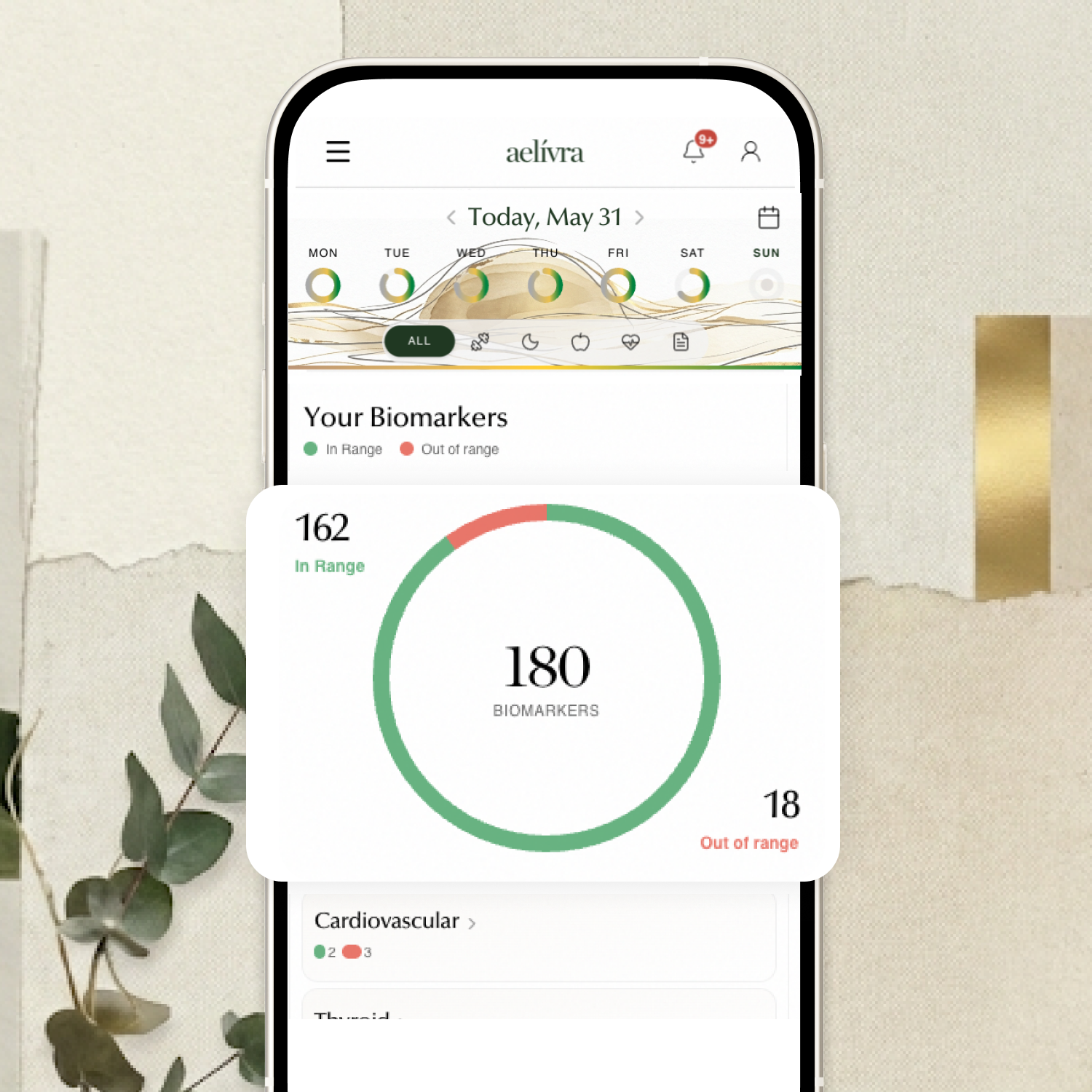
Blood work, scans, test results, medical reports — finally in one place and connected to how you actually feel. aelívra tracks biomarkers and health records over time, so you can see what's trending in the right direction and walk into your next appointment knowing exactly what to discuss.
Common questions about summer vitamin D
Should high-risk groups take vitamin D supplements year-round?
Yes, the recent data suggests that year-round supplementation is necessary for high-risk groups, as summer sun does not close the deficiency gap sciencedaily.com. Relying solely on seasonal changes often leads to chronic deficiency.
What are the symptoms of summer vitamin D deficiency?
Symptoms include persistent fatigue, poor sleep, and low mood that do not improve with warmer weather. Before wellness tracking optimisation backlash fatigue 2026 sets in from logging endless symptoms, checking this single biomarker can often reveal the underlying issue.
Is 15 minutes of sun enough for vitamin D synthesis?
For most people in northern latitudes, 15 minutes is rarely enough. Sunscreen application and shade severely limit production, meaning most individuals fall short of the required UV-B exposure (link unavailable).

Cameron founded aelívra after years of living an unknown no one could answer — navigating chronic health complexity through a medical system that wasn't built for it. That experience became a conviction: everyone deserves to feel truly alive, and no one should have to accept not knowing as a way of life. His work sits at the intersection of data science and functional health and wellbeing, turning the latest trusted medical research across news, health, wearables, biomarkers, and more into advice everyday people can use on their journeys toward feeling better. Every article is grounded in peer-reviewed evidence and linked to its primary source. This content is for informational purposes only and does not replace medical advice.