
Summary at a glance
Standard clinical sufficiency for vitamin D falls between 50 and 125 nmol/L.
Levels below 30 nmol/L indicate a clinical deficiency linked to increased inflammation and chronic fatigue.
Darker skin pigmentation and living far from the equator significantly reduce natural vitamin D synthesis from sunlight.
Retesting blood levels should occur 8 to 12 weeks after starting a supplement to allow fat stores to saturate.
What is the Difference Between Clinical Normal and Optimal Vitamin D Levels?
Normal vitamin D levels sit between 50 and 125 nmol/L (20 to 50 ng/mL) for general health. Levels below 30 nmol/L (12 ng/mL) signal a clinical deficiency. Many health experts suggest optimal immune support requires maintaining levels above 75 nmol/L. Measuring these levels involves a simple 25-hydroxyvitamin D blood test.
Understanding lab results depends entirely on the clinic's location. Most international laboratories measure vitamin D in nanomoles per litre (nmol/L). Clinics in the United States typically use nanograms per millilitre (ng/mL).
| Vitamin D Status | nmol/L (Standard) | ng/mL (US Units) |
|---|---|---|
| Severe Deficiency | < 12.5 | < 5 |
| Deficiency | < 30 | < 12 |
| Insufficient | 30 – 49 | 12 – 19 |
| Sufficient | 50 – 125 | 20 – 50 |
| Elevated | > 125 | > 50 |
A sufficient result simply means the body has enough vitamin D to prevent bone softening. It does not necessarily mean the system has the reserves needed for peak energy production. People often hover at the low end of normal while still feeling exhausted.
If a lab report shows a result of 30 ng/mL, simply multiply that number by 2.5 to convert the reading to 75 nmol/L.
Why Do Your Vitamin D Levels Affect Persistent Fatigue and Energy?
Vitamin D acts more like a systemic hormone than a standard nutrient. It influences nearly every cell in the immune system and plays a direct role in mitochondrial function.
Mitochondria act as the energy-producing centres inside human cells. When vitamin D reserves drop, muscles and tissues lack the biological signaling required for normal performance. This deficit frequently manifests as a persistent sense of lethargy.
Healthline (2024) reports that roughly 41% of people in the United States have a vitamin D insufficiency healthline.com. Yet, people often brush off the resulting fatigue as just another sign of a busy lifestyle.
Restoring these levels serves as a foundational step for overall vitality. When looking for the best immune system supplements, many find that vitamin D acts as the necessary baseline. Other nutrients simply cannot function effectively when a core pro-hormone runs low. It forms the bedrock of cellular energy.
 A person feeling energized and healthy after improving their vitamin D levels
How Does Vitamin D Regulate Your Immune System and Inflammation?
Vitamin D receptors exist on all major immune cells. This includes B cells, T cells, and antigen-presenting cells pmc.ncbi.nlm.nih.gov.
The nutrient modulates the immune response at a cellular level to prevent excessive inflammation.
The English Longitudinal Study of Ageing (2017) reports that older adults with vitamin D levels below 30 nmol/L show a significant increase in inflammatory markers like C-reactive protein pmc.ncbi.nlm.nih.gov. Low reserves force the immune system into a state of chronic stress. This imbalance leaves the body vulnerable to seasonal infections.
Systemic inflammation drives a wide range of everyday symptoms. It can aggravate conditions like histamine intolerance by making the immune system hypersensitive.
Keeping vitamin D within the optimal range stops this overreaction. It helps immune cells distinguish between harmless triggers and genuine threats.
Vitamin D is fat-soluble. Taking a daily supplement alongside a meal containing healthy fats greatly improves how well the body absorbs it.
Why Does Skin Tone and Geographic Location Change Your Vitamin D Needs?
The human body naturally synthesises vitamin D when bare skin absorbs ultraviolet B (UVB) rays from sunlight.
Melanin dictates skin pigmentation and acts as a natural shade. It reduces how much vitamin D the skin can produce from sunlight exposure nutritionsource.hsph.harvard.edu.
Harvard T.H. Chan School of Public Health (2023) reports that in the U.S., about 20% of White adults and 75% of Black adults are deficient nutritionsource.hsph.harvard.edu. People with darker skin tones require significantly more time in the sun to generate the same amount of vitamin D as someone with lighter skin.
Geographic location also dictates the natural supply. People living far from the equator experience long winters with minimal UVB exposure. During these months, sunlight strikes the atmosphere at too low an angle to trigger vitamin D synthesis. Relying on sunlight alone becomes impossible for half the year.
When Should You Retest Your Vitamin D After Starting a Supplement?
Correcting a deficiency takes consistent effort and time. Vitamin D stores inside fat tissues, meaning blood levels rise gradually.
Healthcare providers typically recommend retesting 8 to 12 weeks after starting a new supplementation routine.
Testing too early rarely provides an accurate picture of progress. Waiting three months allows fat stores to saturate and reflect the new baseline in a serum blood test. Once a person reaches their target range, an annual check-up usually provides enough oversight medicalnewstoday.com.
Understanding absorption rates helps people adjust their daily dose safely, preventing high levels that cause calcium buildup in the blood ods.od.nih.gov. Tracking lab results over time removes the guesswork from a daily health routine.
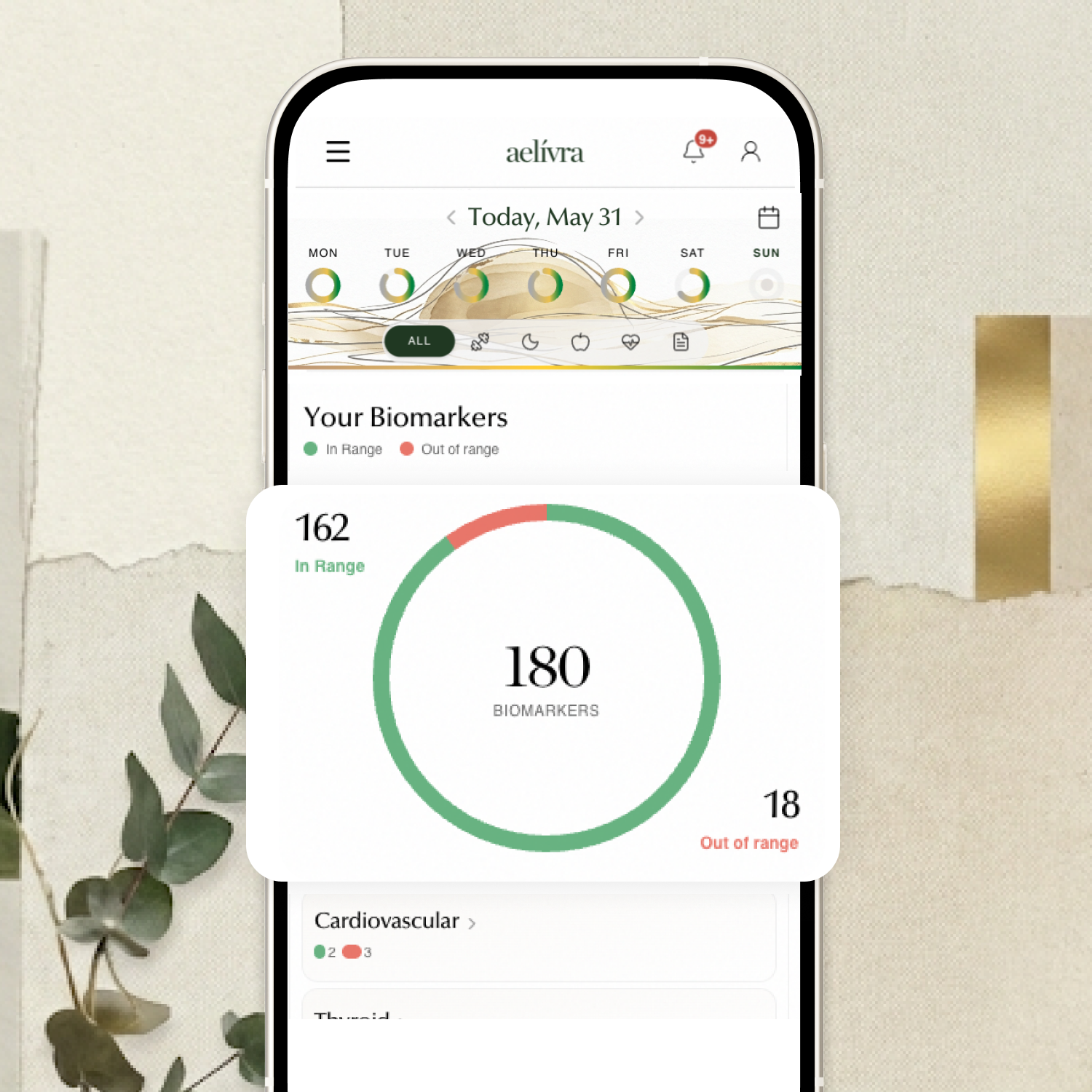
Blood work, scans, test results, medical reports — finally in one place and connected to how you actually feel. aelívra tracks biomarkers and health records over time, so you can see what's trending in the right direction and walk into your next appointment knowing exactly what to discuss.
Frequently Asked Questions
Can people get enough vitamin D from food alone? Few foods naturally contain high amounts of vitamin D. Fatty fish, egg yolks, and fortified cereals offer small amounts, but most people need sunlight or supplements to reach optimal levels nutritionsource.hsph.harvard.edu.
What are the physical symptoms of a vitamin D deficiency? Deficiency symptoms develop slowly and often go unnoticed. People frequently experience chronic fatigue and bone pain. Muscle weakness and frequent respiratory infections are also common my.clevelandclinic.org.
Does sunscreen block vitamin D production? While sunscreen filters out UVB rays, clinical guidelines note that normal sunscreen use during daily activities does not typically cause low vitamin D rch.org.au.
Is 50 ng/mL too high for a vitamin D blood test? A level of 50 ng/mL translates to 125 nmol/L, which sits at the very top of the standard sufficient range. Healthcare providers generally consider this a safe upper limit, though higher levels increase the risk of toxicity medicalnewstoday.com.