
Summary at a glance
An MPV blood test measures the average size of your platelets to help evaluate your bone marrow function and overall circulatory health.
Normal MPV ranges typically fall between 7.5 and 11.5 femtoliters, with values varying slightly between different testing laboratories.
High MPV indicates that your platelets are larger and younger, which often happens when your body increases platelet production to fight systemic inflammation.
A low MPV means your platelets are smaller and older, frequently occurring when your bone marrow slows down new cell production.
Doctors always interpret your MPV alongside your total platelet count, as the combination provides a much clearer picture of your health than either metric alone.
What is a mean platelet volume (MPV) blood test?
A mean platelet volume (MPV) blood test measures the average size of your platelets, which are the specialized cells that help your blood clot. It is performed alongside a complete blood count (CBC) to help your healthcare provider evaluate your bone marrow function and broader health.
Your blood contains several types of cells. Red blood cells carry oxygen. White blood cells fight infections. Platelets stop bleeding when you sustain an injury mayoclinic.org.
The MPV test looks specifically at the physical dimensions of those platelets.
Platelets are produced in your bone marrow. When they are first released into your bloodstream, they are relatively large. As they age, they shrink.
By measuring their average size, your doctor gets a snapshot of how quickly your body is producing and turning over these crucial cells medlineplus.gov.
What is the normal range for MPV in a blood test?
Cleveland Clinic (2022) notes that doctors use normal ranges to evaluate your overall blood health my.clevelandclinic.org. HealthMatters.io (2026) reports that a typical MPV range falls between 7.5 and 11.5 femtoliters healthmatters.io.
A femtoliter is a microscopic unit of measurement used to gauge cellular volume. Reference ranges can vary slightly depending on the specific laboratory analyzing your blood.
| MPV Result | Typical Range | What It Indicates |
|---|---|---|
| Low | Below 7.5 fL | Platelets are smaller and older. May indicate reduced production. |
| Normal | 7.5 to 11.5 fL | Balanced platelet production and turnover. |
| High | Above 11.5 fL | Platelets are larger and younger. Often signals rapid turnover. |
Your doctor will never look at your MPV in isolation. They will compare it against your total platelet count to get a complete picture of your circulatory health healthmatters.io.

What does a high mean platelet volume mean for your health?
A high MPV means your platelets are larger than average. This typically happens when your bone marrow is rapidly producing and releasing new platelets into your bloodstream healthmatters.io.
Larger, younger platelets are highly active. They release significant quantities of pro-thrombotic substances that help form blood clots pmc.ncbi.nlm.nih.gov. Clotting is essential for healing. However, having too many activated platelets can sometimes point to underlying stress in the body.
The National Library of Medicine (2024) states, "Looking at the size of platelets provides information about how well they are working" medlineplus.gov.
According to a 2022 review in the Journal of Inflammation Research, high mean platelet volume directly correlates with inflammatory infections pmc.ncbi.nlm.nih.gov. When your body fights systemic inflammation, it demands more cellular resources. This drives up the turnover rate of your platelets.
Inflammation accelerates platelet turnover, meaning a higher MPV often acts as an early indicator that your immune system is working overtime.
How does MPV relate to heart health and inflammation?
Your cardiovascular system is highly sensitive to systemic inflammation. Because younger platelets are more reactive and prone to clotting, a high MPV can act as a gauge for heart health readiness.
A 2024 meta-analysis in Medicine reviewed 11,647 cases of coronary heart disease. The research reports that increased MPV was associated with a 14% higher risk of long-term major adverse cardiac events pmc.ncbi.nlm.nih.gov.
The same study reveals that elevated MPV was linked to a significant increase in short-term mortality risk, presenting a hazard ratio of 2.10 pmc.ncbi.nlm.nih.gov.
When your body is in a state of constant alert, your circulatory markers shift. You might notice these systemic changes reflecting in other areas of your health. The same inflammatory stress that drives up platelet turnover often impacts your nervous system recovery.
Tracking metrics like your resting heart rate and understanding what is a good hrv can provide a broader context for how your body handles stress.
If you want to dive deeper into how your nervous system responds to inflammation, HRV Explained: What Your Number Actually Means for Recovery and Stress offers a helpful breakdown.
What causes a low mean platelet volume result?
A low MPV means your platelets are smaller and older than average. This typically happens when your bone marrow slows down its production of new platelets healthmatters.io.
Sometimes, a low result is completely normal. Other times, it might point to a condition affecting your bone marrow or a side effect of certain medications.
Abnormal blood test results are not a diagnosis on their own my.clevelandclinic.org. A low MPV is usually only significant if your total platelet count is also abnormal. If your platelet count is fine, a low MPV rarely causes clinical concern.
Your body constantly recycles platelets. A low MPV usually just means your circulating platelets have been in your bloodstream a little longer.
How do doctors interpret MPV and platelet count together?
Your doctor looks at the relationship between your MPV and your total platelet count to uncover the root cause of your symptoms.
If your MPV is high but your platelet count is normal, it often just reflects mild everyday turnover. If your MPV is high and your platelet count is low, it suggests your body is destroying platelets quickly. Your bone marrow is working overtime to replace them healthmatters.io.
Conversely, a low MPV paired with a low platelet count might mean your bone marrow is struggling to produce enough cells.
Every piece of blood work is a clue. When you combine your lab results with how you actually feel day-to-day, the underlying patterns become much easier to spot.
You deserve to walk into appointments with answers. aelívra supports the biomarkers that matter most by tracking your lab results over time and connecting them to how you feel day-to-day. By mapping your MPV trends alongside your energy and stress levels, you can spot what is actually improving and make confident decisions about your health.
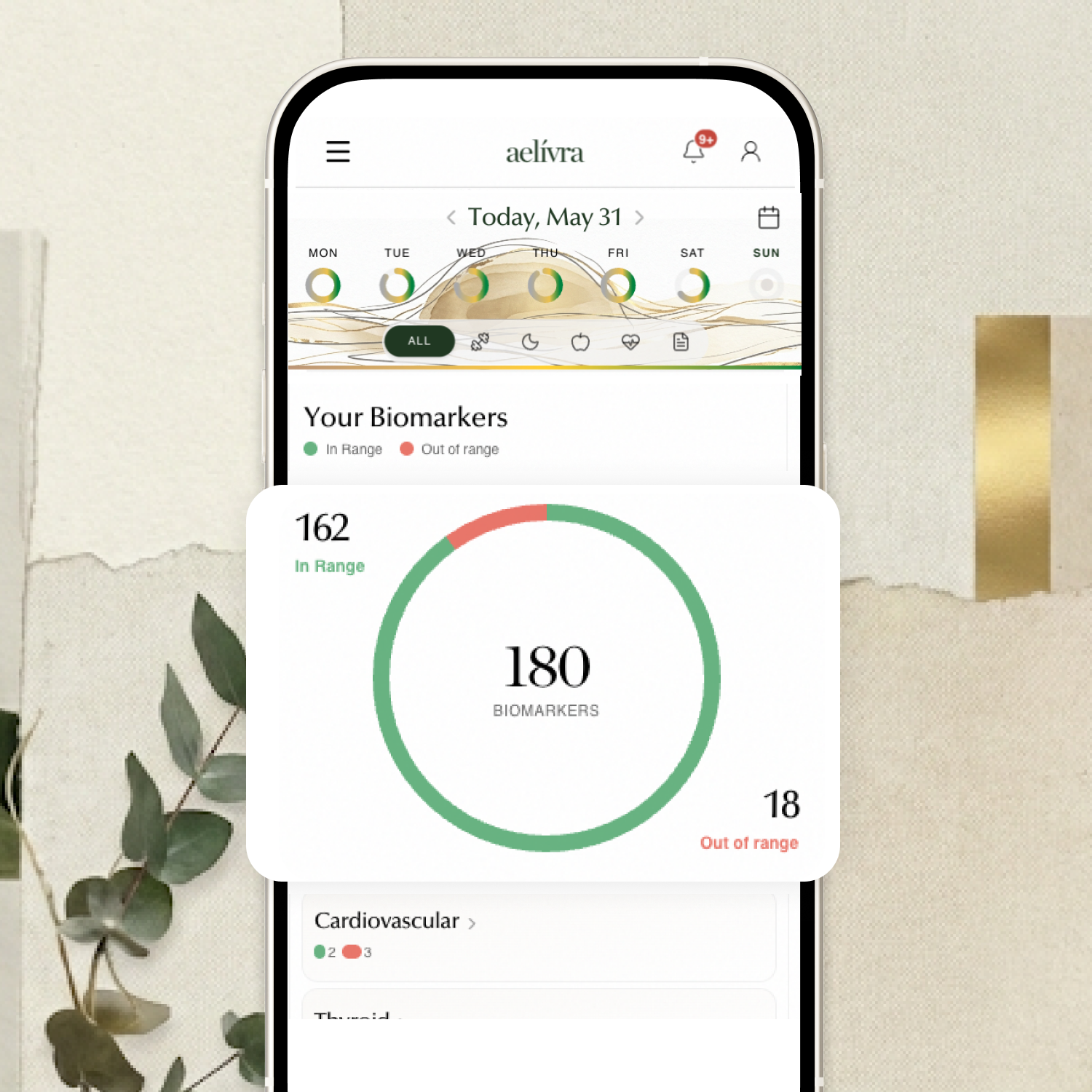
All Your Health Records, Evaluated Together
Blood work, scans, test results, medical reports — finally in one place and connected to how you actually feel. aelívra tracks biomarkers and health records over time, so you can see what's trending in the right direction and walk into your next appointment knowing exactly what to discuss.
Frequently asked questions about MPV blood tests
Do you need to fast for an MPV blood test? You do not need to fast specifically for an MPV test. Because it is usually drawn as part of a broader panel, your doctor might ask you to fast for other measurements medlineplus.gov.
How long does an MPV test take? The blood collection process is quick and usually takes less than five minutes medlineplus.gov.
Can stress cause high MPV levels? Chronic stress drives systemic inflammation, which can indirectly influence your platelet turnover. A single stressful day will not dramatically alter your MPV results.
Should you worry if your MPV is slightly high? A value mildly outside the normal range is often just a natural variation. Your doctor will review it alongside your other CBC markers to determine if any follow-up is needed.