
Summary at a glance
A normal platelet count for adults typically ranges between 150,000 and 450,000 platelets per microliter of blood.
Low platelet counts (thrombocytopenia) make your blood less efficient at clotting and increase your risk of bruising.
High platelet counts (thrombocytosis) are most often a reactive response to stress, infection, or systemic inflammation.
Tracking your platelet trends over time provides valuable insight into your physiological stress and recovery patterns.
What is a normal platelet count for an adult?
A normal platelet count for adults typically ranges from 150,000 to 450,000 platelets per microliter of blood. Platelets are vital cell fragments produced in the bone marrow that help your blood clot. Levels outside this range can indicate underlying health conditions, ranging from temporary infections to chronic inflammation.
Your complete blood count (CBC) test usually measures this biomarker. Platelets work by rushing to the site of an injury and clumping together to form a plug mayoclinic.org. Since each platelet only lives for about 7 to 10 days, your bone marrow constantly produces new ones to keep the supply stable mayoclinic.org.
| Platelet Level | Reference Range (per microliter) | Clinical Meaning |
|---|---|---|
| Low (Thrombocytopenia) | Below 150,000 | Increased risk of bleeding or bruising |
| Normal | 150,000 – 450,000 | Healthy clotting function |
| High (Thrombocytosis) | Above 450,000 | Increased risk of blood clots |
You do not always need to worry about a slight deviation. Test results often fluctuate based on hydration and physical stress. Recent illness can also cause temporary changes. However, significant drops or elevations require further medical investigation.
Your bone marrow is constantly working. Each platelet only lives for about 7 to 10 days before your body replaces it.
Why is my platelet count low on a blood test?
A low platelet count, medically known as thrombocytopenia, happens when your body either destroys platelets too quickly or fails to produce enough of them. This drop makes your blood less efficient at clotting. The severity of the condition depends on how far your numbers fall.
Harvard Health (2025) explains that viral infections and heavy alcohol consumption can suppress your bone marrow function health.harvard.edu. Certain medications also slow down platelet production. In other cases, a faulty immune system mistakenly attacks healthy platelets health.harvard.edu. This autoimmune condition is known as immune thrombocytopenic purpura (ITP).
Karen Arnold-Korzeniowski from OncoLink (2026) notes that you face a greater risk for bleeding anytime your count drops below 50,000 per cubic millimeter oncolink.org.
Symptoms often include easy bruising or prolonged bleeding from minor cuts. You might also notice tiny red spots on your skin called petechiae mayoclinic.org. Bleeding that will not stop is a medical emergency that requires immediate care mayoclinic.org.
If you notice sudden, unexplained bruising or tiny red spots on your lower legs, contact a healthcare provider for a blood test.
What causes a high platelet count besides disease?
A high platelet count, or thrombocytosis, often occurs as a secondary reaction to another condition rather than a primary bone marrow disease. Your body ramps up platelet production in response to infection or trauma. Physical stress can also trigger this reaction.
Common triggers for reactive high platelets include iron deficiency anemia and acute infections. Recent surgery can also cause a temporary spike. Your bone marrow works overtime to produce blood components to help with healing. Once the underlying issue resolves, your count usually returns to the normal range.
Primary thrombocytosis is much rarer. It involves a bone marrow disorder where the body produces too many platelets for no clear reason (link unavailable). Cleveland Clinic (2024) warns that having too many platelets may put you at risk for dangerous blood clots or stroke my.clevelandclinic.org.
Iron deficiency is one of the most common hidden causes of high platelets. Your body overproduces platelets to compensate for low red blood cells.
How does chronic inflammation change your blood results?
Platelets are not just passive clotting fragments. They act as active participants in your immune system. When systemic inflammation occurs, your bone marrow receives signals to pump out more platelets.
Chronic conditions like rheumatoid arthritis or inflammatory bowel disease often keep platelet levels persistently high. Frontiers in Medicine (2020) highlights a strong association between platelet count and elevated inflammatory markers (link unavailable). Your body remains in a heightened state of alert. This chronic stress subtly shifts your baseline numbers over time.
Monitoring your platelets alongside your recovery data helps build a clearer picture of your internal health. Tracking biomarkers over time reveals how your lifestyle impacts your systemic inflammation. You can start connecting the dots between your daily habits and your clinical lab results.

When should you worry about your platelet levels?
Follow up with your doctor if your platelet results consistently fall outside the 150,000 to 450,000 range. A single abnormal test does not immediately signal a crisis. However, persistent trends warrant investigation. Mayo Clinic (2025) suggests that counts that continue to drop or stay elevated require a deeper look into potential underlying causes mayoclinic.org.
Tracking these numbers gives you a window into your long-term health. Knowing your baseline helps you identify changes before they develop into serious symptoms. This perspective shifts the conversation from guesswork to clear, data-driven decisions.
aelívra helps you track symptoms with rich context. You can map the patterns connecting your sleep and diet to your daily energy levels. Tracking your stress also provides missing context. Evaluating all your health records together gives your doctor the complete picture.
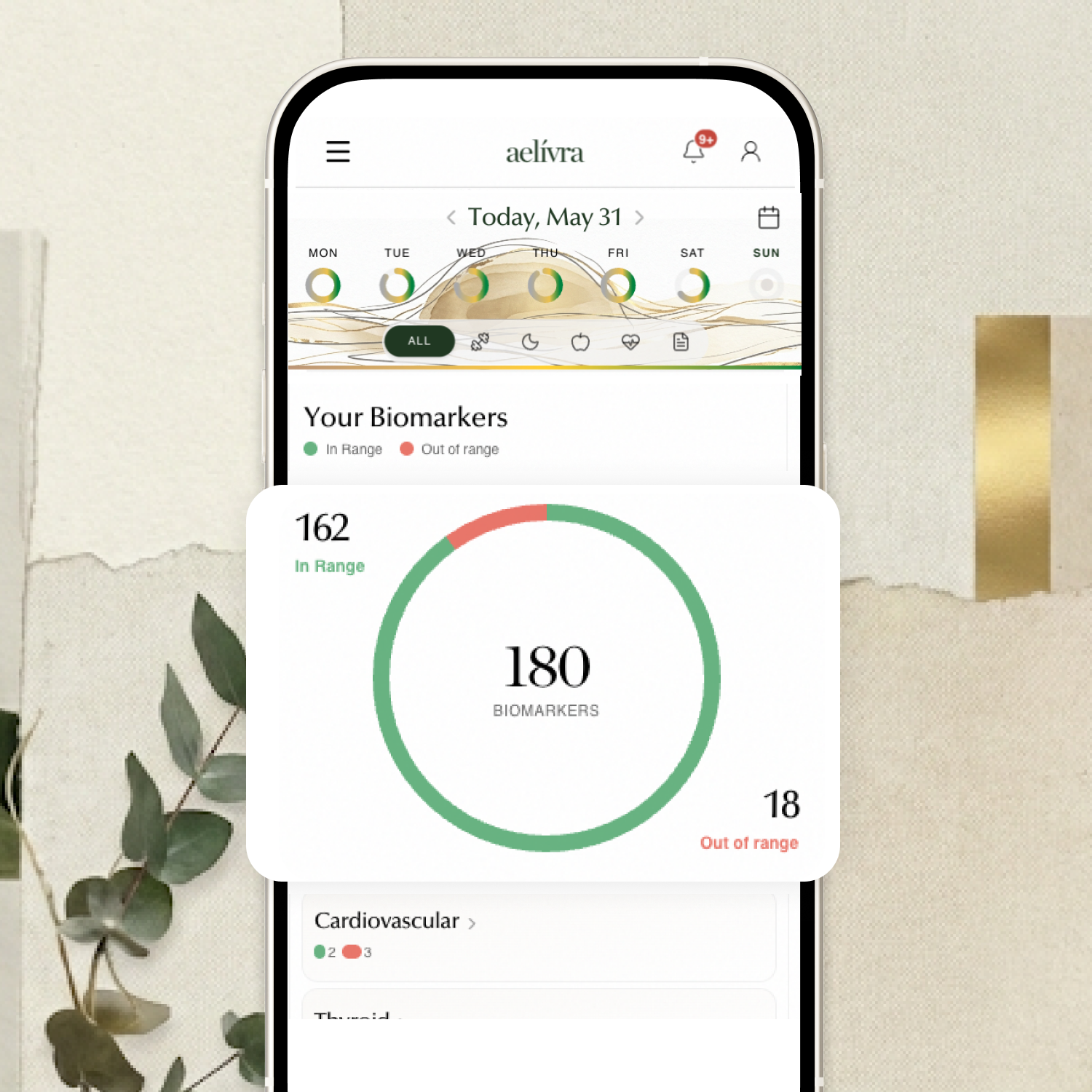
All Your Health Records, Evaluated Together
Blood work, scans, test results, medical reports — finally in one place and connected to how you actually feel. aelívra tracks biomarkers and health records over time, so you can see what's trending in the right direction and walk into your next appointment knowing exactly what to discuss.
Can lifestyle stress and exercise affect your platelet count?
Acute stress and strenuous exercise can cause a temporary spike in your platelet count. Your body stores a reserve of platelets. It releases them into the bloodstream during moments of intense physical exertion.
These transient changes highlight how dynamic your blood markers really are. Your nervous system directly influences your cardiovascular responses.
Learning what is a good hrv helps you see how physical stress impacts your body at a cellular level. Poor sleep and chronic psychological stress drive systemic inflammation. This continuous strain may keep your platelets slightly elevated.
Reviewing HRV Explained: What Your Number Actually Means for Recovery and Stress provides insight into how well your body bounces back from these daily demands. Balancing exertion with adequate recovery keeps your physiological stress in check.
Frequently Asked Questions
What are the symptoms of a low platelet count? Common symptoms include easy bruising, bleeding gums, and nosebleeds. You might also notice tiny red spots on your skin known as petechiae.
What is immune thrombocytopenic purpura (ITP)? ITP is an autoimmune condition where a faulty immune system produces antibodies that attack healthy platelets. It can occur on its own or alongside other immune disorders.
Can heavy drinking cause a low platelet count? Yes, heavy alcohol consumption can slow platelet production in the bone marrow. This suppression often leads to a noticeable decrease in overall platelet levels.
Are high platelets always a sign of bone marrow disease? No, the vast majority of high platelet cases are reactive. Your body simply produces more platelets in response to temporary infections, iron deficiency, or systemic inflammation.